
Sheffield Crown Court has bore witness to details of some of the worst, and most shocking, crimes in South Yorkshire’s history since it opened almost exactly 30 years ago.
After being officially opened by the then Lord Chief Justice of England and Wales, Lord Taylor, on May 17, 1996, thousands upon thousands of criminal court cases have been heard inside the imposing building on West Bar in Sheffield city centre.
Judges have dispensed justice in cases involving criminals convicted of some of the most serious offences on the statute book, the circumstances of which have left people across the county - and indeed the country - in utter disbelief.
Thousands of jury panels have also presided over trials heard at the court, after defendants entered not guilty pleas, triggering the centuries-old right for a case to be heard by a dozen of their peers.
A long line of Star court reporters have also been present in court, furiously noting down every cough and splutter from the press bench, in a bid to be your eyes and ears as cases are heard.
From the pre-internet days when court reporters would dictate copy to the newsroom over a landline telephone, through to providing updates in real time through social media and online blogs, to the months when people were required to stay at home during the Covid-19 pandemic, The Star has been there every step of the way throughout Sheffield Crown Court’s 30-year history.
Court reporting continues to play an important role in open justice; and the principle that “not only must justice be done, justice must be seen to be done,” which was coined more than a century ago by Lord Hewart, the then Lord Chief Justice of England.
The former Sheffield Crown Court building, which was also known as Sheffield Old Town Hall, on Waingate, opposite Castle Market, still stands disused following the move to the new law centre on West Bar. The most recent update in the Grade II listed building’s history came in November 2025, when it failed to sell at auction.
Here, we have delved into The Star’s archives to bring you this collection of the biggest, and most high-profile, cases heard at Sheffield Crown Court over the last three decades.
In this first part, we take a look at cases heard in the first 15 years that have passed since the Crown Court was opened, running from May 1996 through to May 2011.
Below are links to more detailed reports on the cases included within this article:
- Heartbreaking case of vulnerable Sheffield teen murdered by friends armed with farming scythes on camping trip
- Shoe rapist James Lloyd's chilling confession when South Yorkshire Police uncovered his crimes
- Edlington torture brothers: Why pair who tortured and nearly killed two young boys can never be named
- Burngreave crime: The killers who rapped in court after teenage boy was shot dead in city street
- David and Ashley Cohen: Sheffield brothers spend 15 years behind bars for murder they deny
- Jonathan Matondo: The unsolved murder of teenage boy gunned down in Sheffield
- How detectives solved 'body in the bag' murder after remains found in Sheffield
- Gerald Smith: 20 years since nine men were jailed for Sheffield murder after trial that made legal history
- Lester Divers: 20 years since notorious gangland killing which shocked Sheffield
- Sheffield dad dubbed "British Fritzl" made his daughters pregnant 19 times
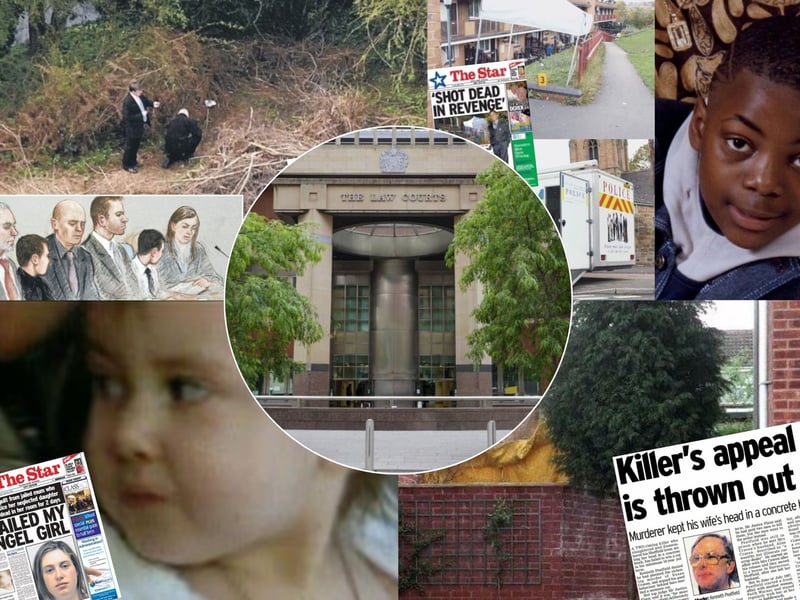
1. Sheffield Crown Court's biggest cases
After being officially opened by the then Lord Chief Justice of England and Wales, Lord Taylor, on May 17, 1996, thousands upon thousands of criminal court cases have been heard inside the imposing building on West Bar in Sheffield city centre. Judges have dispensed justice in scores of cases, involving criminals convicted of some of the most serious offences on the statute book, the circumstances of which have left people across the county - and indeed the country - in utter disbelief | 3rd party
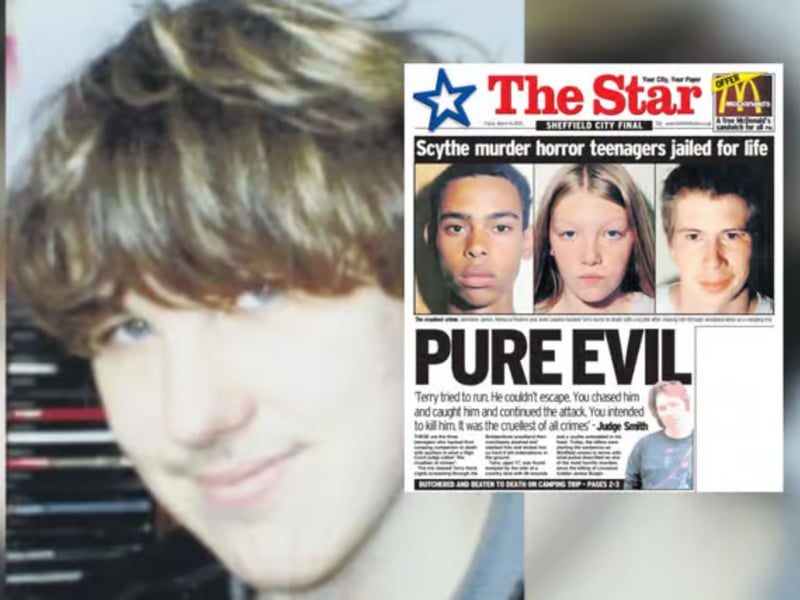
2. Scythe murder: Trio jailed in 2004 for "the cruellest of all crimes"
In July 2004, 17-year-old Terry Lee Hurst was murdered by three of his friends in what a judge described as the "cruellest of all crimes." Terry, who had learning difficulties, was enjoying some time in the great outdoors when he was set upon by three fellow teenagers - Rebecca Peeters, John Sawdon and Jermaine James - all of whom he considered friends. Sawdon and James were 17-years-old, while Peeters was aged just 15, when the trio carried out the murder during the camping trip at Broomhead Reservoir, near Bolsterstone and Stocksbridge, in July 2004. All three were sentenced to life imprisonment in March 2005, when Sheffield Crown Court was told how the three youths, as they were then, stole the scythes from a churchyard. Terry was in his tent during the evening of the trip on July 19, 2004 when the trio returned with the sharp bladed weapons. The court heard how Terry tried to escape twice despite having already suffered horrific injuries but was caught and eventually slaughtered. Presiding over the case, Mr Justice Andrew Smith described the attack as "chilling" and added: "You knew he would be defenceless and you set about him mercilessly. "After the initial assault, Terry Hurst tried in vain to run. He couldn’t escape. You all chased him and caught him and continued the attack." "You intended to kill him. It was the cruellest of all crimes." | Submit/Iconic Media Group Limited

3. Shoe rapist: Attacker who kept sick trophies jailed in 2006 - 20 years on from crimes
Rapist James Lloyd kept his crimes a secret for 20 years, but eventually his past caught up with him in 2006 when he was jailed thanks to advances in forensic science. Women in the Dearne Valley, between Rotherham and Barnsley, lived in fear of being raped in the mid 1980s because of numerous attacks carried out as they made their way home from nights out. James Lloyd’s attacks were carried out between 1983 and 1986. He was never caught and he went on to marry and have children, keeping his evil secret close to his chest. In a sick twist, he used to steal their shoes, stockings or jewellery as a ‘trophy’ of his sex attacks. But although Lloyd believed he had covered his tracks and gotten away with his sex attacks, his past eventually caught up with him two decades later and he was eventually jailed for his heinous crimes. The breakthrough in the case came after l detectives in South Yorkshire Police’s cold case review team re-examined the rapes and all the forensic material they had retained over the years, including semen samples. Checks with police databases brought up a list of 43 people as being possible relatives of the rapist, including his sister, whose DNA had been registered after she was processed for a drink-driving offence. As police systematically made contact with those on the list, asking if they had any close male relatives, Lloyd’s sister told him officers had been in touch. Worried that police were closing in, Lloyd attempted to take his own life later that day. By then he was a married dad-of-two who had stopped offending when he met his wife. He attempted to kill himself in his home in Howell Gardens, Thurnscoe, but his suicide attempt failed and police were alerted. Lloyd subsequently admitted raping four women and two further attempted rapes. He was jailed for life in 2006 and ordered to serve a minimum of 14 years and six months behind bars. He appealed the sentence and it was later reduced to seven years and 263 days. | SYP/Submit
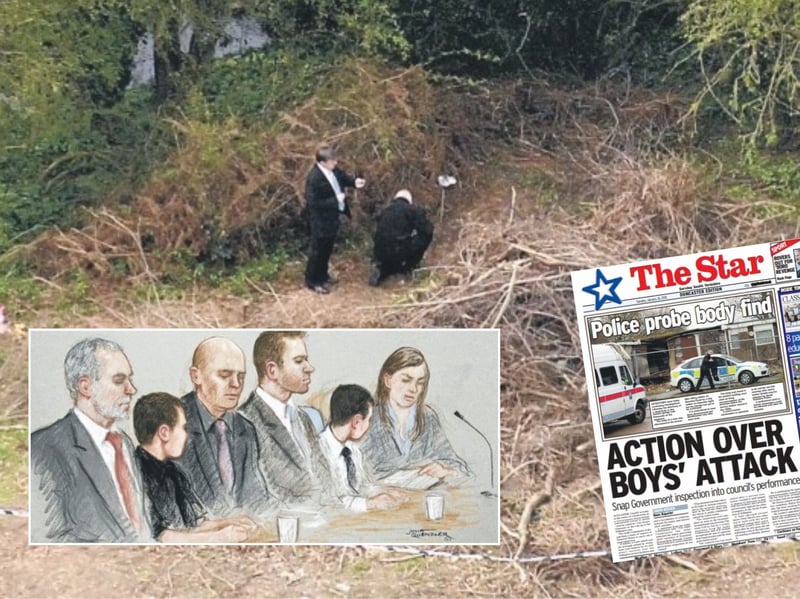
4. Edlington torture brothers: Boys sentenced to minimum term of five years in 2010 for almost killing two other boys
In 2009, in a case with chilling similarities to the infamous murder of toddler Jamie Bulger, two young South Yorkshire boys tortured and almost killed two other boys in Edlington, Doncaster. Two brothers, aged 10 and 11, kicked, punched and stamped on their victims, throttled and cut them, sexually humiliated the boys, hit them with branches and stones and dropped part of an old ceramic sink onto one of their heads. The brothers put cigarettes into wounds and tried to burn one of the young boys, who were both left covered in blood, after 90 minutes of 'prolonged, sadistic violence'. One of the victims pleaded with his attackers to be allowed to die in a desperate bid to end his ordeal. The brothers were each sentenced to a minimum detention period of five years' custody during a Sheffield Crown Court hearing in 2010. The attackers spent six years in custody following the violence they inflicted and just before the younger brother turned 18, when they could have both been named by the media for the first time, they were granted lifelong anonymity. It is understood they have new identities. The pair were freed and granted “truly exceptional” lifelong anonymity when it was ruled both were “committed to the path of rehabilitation”. The High Court granted lifelong anonymity on the grounds the brothers would be “at serious risk of attack” if named. When they were sentenced at Sheffield Crown Court, Judge Justice Keith said the pair got a 'real kick out of hurting and humiliating' their victims. The court heard they had grown up in a 'toxic' home environment of 'routine aggression, violence and chaos' before moving to Edlington to live with foster carers. Main picture is an an aerialshot of the BrickPonds attack area being searched by police. Inset is an artist’simpression of the two child attackers, flanked by adults, in court, along with a Star front page story on the case from 2010 | 3rd party