
10 of the most shocking cases heard at Sheffield Crown Court in its 30-year history
Court reporting continues to play an important role in open justice and the principle that “not only must justice be done, justice must be seen to be done”
Sheffield Crown Court has bore witness to details of some of the most shocking crimes in South Yorkshire’s history since it opened 30 years ago.
Judges have dispensed justice in cases involving criminals convicted of some of the most serious offences on the statute book, the circumstances of which have left people across the county - and indeed the country - in utter disbelief.
Thousands of jury panels have also presided over trials heard at the court, after defendants entered not guilty pleas, triggering the centuries-old right for a case to be heard by a dozen of their peers.
A long line of Star court reporters have also been present in court in a bid to be your eyes and ears as cases are heard.
From the pre-internet days when court reporters would dictate copy to the newsroom over a landline telephone, through to providing updates in real time through social media and online blogs, to the months when people were required to stay at home during the Covid-19 pandemic, The Star has been there every step of the way throughout Sheffield Crown Court’s 30-year history.
Court reporting continues to play an important role in open justice; and the principle that “not only must justice be done, justice must be seen to be done,” which was coined more than a century ago by Lord Hewart, the then Lord Chief Justice of England.
Here, we have delved into The Star’s archives to bring you this collection of the biggest, and most high-profile, cases heard at Sheffield Crown Court over the last three decades.
These cases were heard in the 15 year period between May 1996 and May 2011.
Shoe rapist:


Rapist James Lloyd kept his crimes a secret for 20 years, but eventually his past caught up with him in 2006 when he was jailed thanks to advances in forensic science.
Women in the Dearne Valley lived in fear of being raped in the mid 1980s because of attacks carried out as they made their way home from nights out.
The attacks were carried out between 1983 and 1986 and in a sick twist, Lloyd used to steal his victims’ shoes, stockings or jewellery as a ‘trophy’ of his sex attacks.
Lloyd admitted raping four women and two attempted rapes and was jailed for life in 2006 and ordered to serve a minimum of 14 years and six months behind bars. He appealed the sentence and it was reduced to seven years and 263 days.
Edlington torture case:
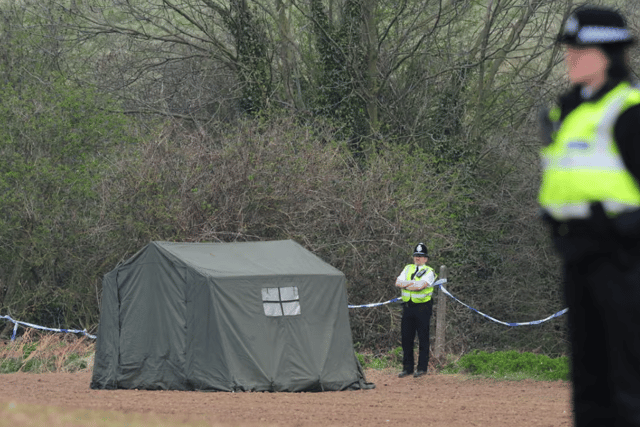
In 2009, in a case with chilling similarities to the infamous murder of toddler Jamie Bulger, two young South Yorkshire boys tortured and almost killed two other boys in Edlington, Doncaster.
Two brothers, aged 10 and 11, kicked, punched and stamped on their victims, throttled and cut them, sexually humiliated the boys, hit them with branches and stones and dropped part of an old ceramic sink onto one of their heads. The brothers put cigarettes into wounds and tried to burn one of the young boys, who were both left covered in blood, after 90 minutes of 'prolonged, sadistic violence'.
The brothers were each sentenced to a minimum detention period of five years' custody in 2010.
The attackers spent six years in custody and were released with new identities.
Barber shop murder:

Tarek Chaiboub was just 17 years old when he was killed in broad daylight outside a barber’s on Spital Street, Burngreave, in July 2008
He was targeted as part of a feud between different factions of the S3 gang which operated in Burngreave and neighbouring Pitsmoor at that time.

Tarek, known on the streets as ‘GT’ or ‘Global Threat’ was carrying a gun himself on the day he was tracked down and shot dead in what was described as a “cold-blooded” killing.
The judge who sentenced those involved said: “Britain is not broken, although certain communities are being plagued by the lawless activities of the likes of you and gangs such as S3.”
Four men convicted of murder were jailed for a combined total of 110 years.
Taxi driver murder:

Brothers David and Ashley Cohen were convicted of the murder of city taxi driver Youis Khan in April 2008 after denying the charge and standing trial together.
They were convicted on a ‘joint enterprise’ basis in that the prosecution did not suggest either of the men pulled the trigger of the gun used to kill 53-year-old Mr Khan but alleged they were aware of the plan and therefore just as culpable as the shooter.
The brothers have always denied responsibility.
South Yorkshire Police said was a revenge attack after the taxi driver's son, Imran, fired shots at David Cohen's house.
David, who was 28 when he was jailed and Ashley, who was 25, were sentenced to 64 years between them.
Postcode gang murder:
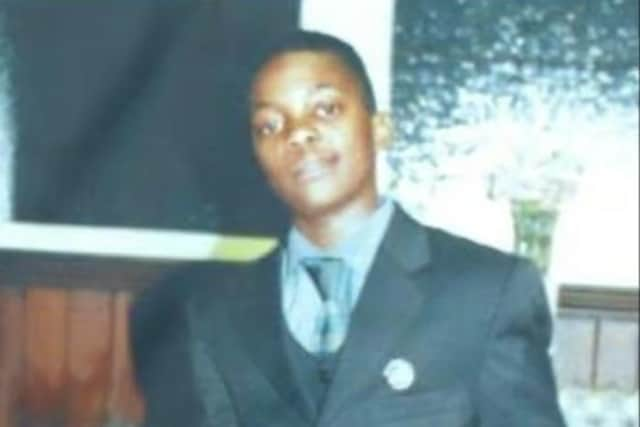
16-year-old Jonathan Matondo came to Sheffield for a better life as a young boy to escape a civil war in the Democratic Republic of Congo.
But on October 18, 2007, his family’s dreams were shattered after Jonathan paid the price for becoming embroiled with a postcode gang operating in Sheffield at that time.
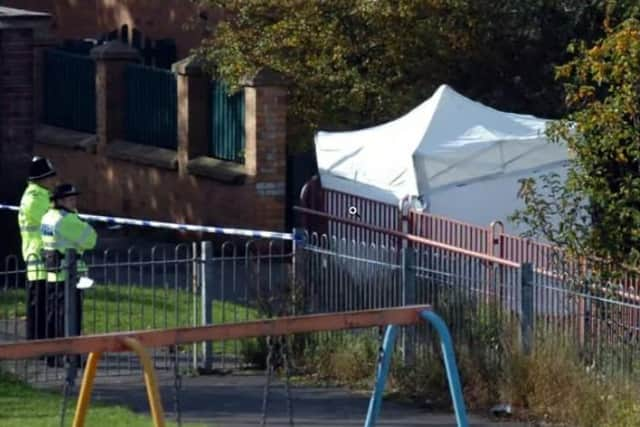
On the day S3 member Jonathan was killed - on the Nottingham Cliff recreation ground in Burngreave - there had been another failed attempt to shoot the teenager just hours earlier, when shots were fired at him as he visited a friend’s flat.
It is believed that he was targeted that day after a house belonging to relatives of an S4 gang member was fired at the night before.
A suspect was charged over Jonathan’s murder and stood trial twice.
Jurors were unable to reach a verdict after the first trial and found him not guilty after a second trial in 2008.
Body in the bag murder:

In January 2000, two men found a sports bag dumped at the side of a road in Sheffield, opened it and made the shocking discovery of human remains - triggering one of the most difficult investigations ever conducted locally.
It became known as the ‘body in the bag’ case and initially detectives had no idea who the dead man was because his remains were so badly decomposed.
Sheffield University had specialists in facial reconstruction techniques and they were called in to create an image of how the mystery man would have looked when he was alive.
He was later identified as retired cutler and steel worker Mohammed Nasser Ali, who was 75 when he died.
Mr Ali's son, Hassan Mohammed Nasser told police his father was alive and living in Saudi Arabia, but detectives were suspicious.
He and his son, Kassan Hassan Mohammed, were both found guilty of murder and were jailed for life.
Jurors heard that after the OAP was killed, the pair had continued to claim benefits to the tune of £9,500 which Mr Ali had been entitled to.
Scythe murder:

In July 2004, 17-year-old Terry Lee Hurst was murdered by three of his friends in what a judge described as the "cruellest of all crimes."
Terry, who had learning difficulties, was enjoying some time in the great outdoors when he was attacked by Rebecca Peeters, John Sawdon and Jermaine James using scythes.
Sawdon and James were 17-years-old, while Peeters was just 15, when the trio carried out the murder during the camping trip at Broomhead Reservoir, near Stocksbridge, in July 2004.
Case which made legal history

In 2004, nine men were all jailed for murder in Sheffield - though it was not known which one of them fired the fatal shots that killed an innocent man.
All nine clung to a gangland code of silence and would not point the finger at the true killer - so all were deemed guilty by joint enterprise of the murder of Sheffield father-of-seven Gerald Smith.
The 42-year-old was simply in the wrong place at the wrong time when he was gunned down in the doorway of the Afro Caribbean Club in Spital Hill, Burngreave, in a drive-by shooting in December 2002.
Sheffield Crown Court heard the murder had been triggered by an incident earlier in the day, when four members of a drugs gang from Nottingham were robbed of mobile phones and gold chains during a trip to Meadowhall shopping centre. Their robbers turned out to be a gang from the West Midlands, not Sheffield. But, nonetheless, and in a tragic bungled case of revenge, they headed that night to Burngreave to 'gain respect' - and selected at random Mr Smith upon whom to unleash their firepower.
At Sheffield Crown Court the following year, as the killers were finally sentenced - and in the first case of its kind - Judge Mr Justice Wakerley told them: "I don't know who fired the shots. But you're all responsible for what happened."
Lester Divers
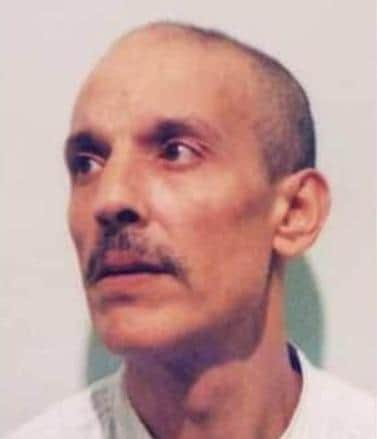
In 2003, Sheffield was shocked by a gangland execution which led to an outpouring of grief for the well known victim, Lester Divers.
The 32-year-old, originally from the Burngreave and Pitsmoor areas of Sheffield, was shot dead at point blank range as he sat in his Lexus car outside his home in Freedom Road, Walkley, on New Year’s Day 2003.
During the trial of suspects accused of involvement in his death, it was claimed that Lester was killed in a ‘well planned and cold blooded execution’ as a result of a turf war between rival drug gangs.
Michael Ullah, formerly of Honeysuckle Road, Wincobank, was jailed for life over the shooting and ordered to serve a minimum of 16 years behind bars.
Tiffany Wright:

When police and paramedics found the body of three-year-old Tiffany Wright she was so tiny and undernourished she was described as looking like a fragile ‘porcelain doll’.
Shockingly, the blonde haired tot had been dead for at least two days before her mum and stepdad raised the alarm.
An investigation into the circumstances surrounding Tiffany’s death, above a Sheffield pub, laid bare a heartbreakingly sad existance, where the little girl’s mum had cared more about her dogs than her own daughter.
Tiffany’s mum, Sabrina Hirst and stepdad, Robert Hirst, raised the alarm when discovering the frail tot’s lifeless body.
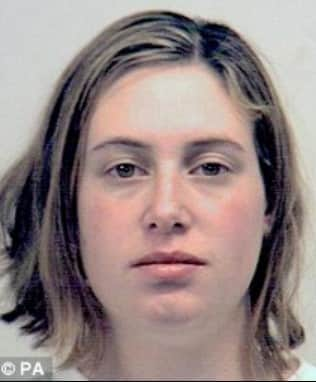
The pair ran the Scarborough Arms pub in Upperthorpe together and CCTV cameras recorded conversations between the pair where they had discussed whether their dogs had been fed while little Tiffany was being starved to death.
Sabrina Hirst, who was 22 at the time of the court case into Tiffany’s death, was sentenced to 12 years after admitting manslaughter and child cruelty.
Her then 44-year-old husband admitted two counts of child cruelty and was jailed for five years.