On the Wildside with Ian Rotherham: The beautiful Green Elf Cup
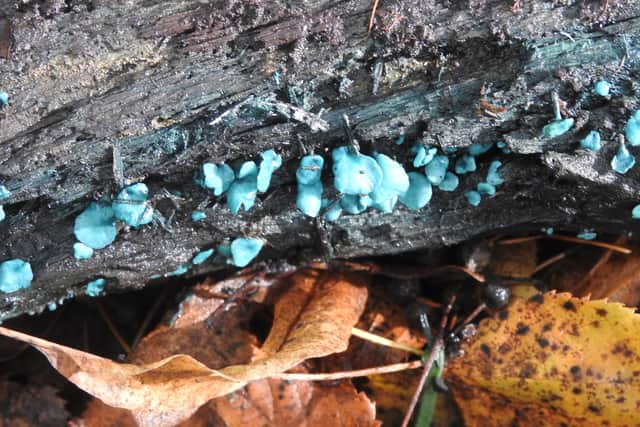
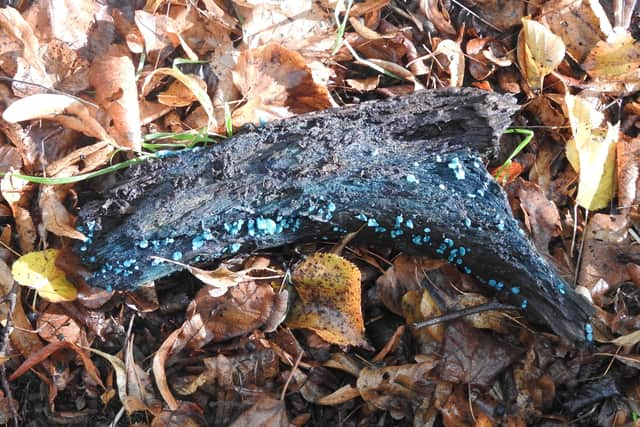
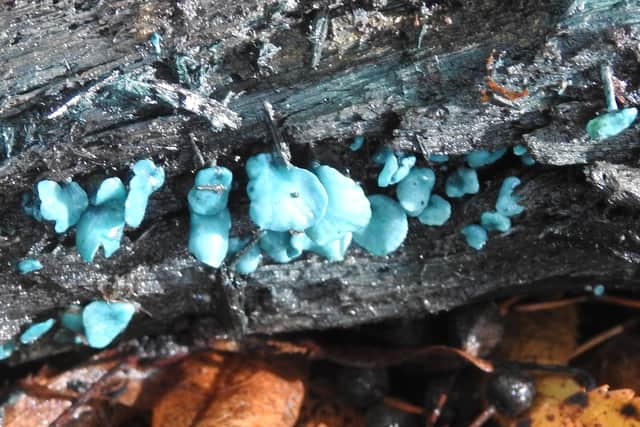
From Autumn though winter around September to February local woodlands have a wealth of sometimes understated, overlooked fungi. However, on a walk through a park or wood then you might think somebody has been daubing pieces of deadwood with a turquoise paint. But on closer inspection the distinctive greenish blue almost glowing colour is a mass of tiny toadstools i.e., a fungus. This pigmentation is due to a unique and rather enchanting mushroom called the Green Elf Cup or Chlorociboria aeruginascens. Other common names include Green Elf Cap, Green Wood Cup, Green Stain Fungus, Blue Stain Fungus, and Turquoise Elf Cup. This beautiful, tiny fungus, is commonly found on decomposing wood from deciduous trees in woods, parks and gardens. Indeed, there are few green mushrooms in the fungus world and there are no others like these unique little cups. On close inspection the tiny mushrooms are attached to the dead, rotting wood by a very short stem with their cups flattened out as they age like small discs. The stained wood is relatively common to find but the actual fruit-body mushrooms are less so.
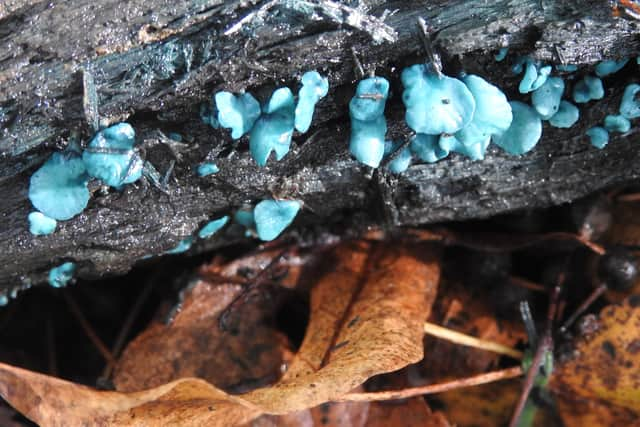

The fungus hyphae or mycelium turns the deadwood a vivid blue green or turquoise colour. Indeed, wood infected by this fungus and known as 'green oak' was much prized by high-quality British woodworkers in the eighteenth and nineteenth centuries. These craftworkers used the stained wood in delicate and distinctive mosaic inlays for decorative wooden boxes. In Kent, this was the signature type of so-called 'Tonbridge Ware'. Green Elf Caps are not merely used for dying wood but are also used to colour cloth and yarn. Other possible uses include as an algaecide, termite repellent in tropical areas, and even as a semi-conductor! The latter is based on the blue-staining chemical called xylindein. This is a natural blue-green pigment secreted by this wood-consuming fungus currently being researched as a sustainable, flexible organic semiconductor. The material produced shows extreme resistance to light, heat, and electrical stress potentially offering low-cost, non-toxic, biodegradable alternatives to established, traditional inorganic semiconductors such as silicon or gallium arsenide.
Professor Ian D. Rotherham, researcher, writer & broadcaster on wildlife & environmental issues, is contactable on [email protected]