
Meet the murdered man who became a Sheffield folk hero a century ago - whose impact is still felt today
Who was William Plommer and why is his story inextricably connected to Sheffield? Chris Hallam heads to Attercliffe to find out more...
I took an historical walk on Princess Street in the industrial area of Attercliffe to see the William Plommer Memorial. But why was he so revered in Sheffield?
Plommer is a Sheffield folk hero with a tragic story.
Local historian and author John Stocks met up with me as we explored Sheffield’s storied streets.
John begins to tell me of the tragic story of the man who has been memorialised at 35 Princess Street.
“We’re on the site of one of the most notorious events in Sheffield’s history,” he says. “The murder of William Plommer.”


The memorial plaque in front of us was made in a spring swage with a power hammer and put in place by local blacksmith and sculptor Sam Sherbourne in 2023. Its placement brought to the fore, once more, conversation about a man who is remembered for his bravery. Sadly, his legacy is tied to his untimely murder at the hands and blades of gang members.
Plommer was not a gangster, he was a family man and an ex-soldier who fought in the First World War. Originally from Manchester and born to Scottish parents, he worked at Bessemer & Co steelworks.
Plommer was a man of principles, he had taken exception to a Park Brigade members’ mistreatment of a barmaid and gave him a good hiding. As a result of this public embarrassment, the gang sought out Plommer and two of his associates with the intention of dishing out some retribution.
John expanded on how this situation was beginning to unfold in his book, ‘1925 Gang Wars and Wembley Glory: Sheffield's Most Turbulent Year’, where he wrote: “In the pubs and clubs, strangers were being approached and asked if they knew the address of three men: Plommer, Liversidge and Cooper. One was easily located; William Plommer lived in Sheffield’s version of New York’s Hell’s Kitchen, at number 42 Princess Street.”
The gang - numbering around a dozen - descended on the house of William Plommer. One of the members, Lawrence Fowler had a poker in one hand and a razor in the other.
Plommer was not only an army veteran but a very capable boxer, he offered to take them on one at a time to settle it once and for all.
It was not to be, instead of a fair fight he was attacked by a crowd of men, and hit over the head with a bottle, then a child’s scooter, before being stabbed with what was said to be a bayonet. The murder weapon was never found.

“He was murdered by members of the Park Brigade,” said John. “It was a murder orchestrated by the Moriarty of Sheffield crime, Sam Garvin.
”After this murder, a huge crowd of people from Attercliffe and the West Bar area went to William Plommer’s funeral in Burngreave.”
It has been said that between 10,000 and 20,000 residents marched in solidarity to the funeral.
Plommer left a child of only three-weeks-old; his eldest son who witnessed the murder of his father was just eleven-years-old.
As a city mourned and newspapers across the country ran headlines highlighting the horrors of gang warfare, with journalists expressing their confidence that their respective cities were much safer than Britain’s ‘Little Chicago’.
Not long after the funeral, William Plommer’s family left the city. They moved to Glasgow, before later emigrating to Canada.
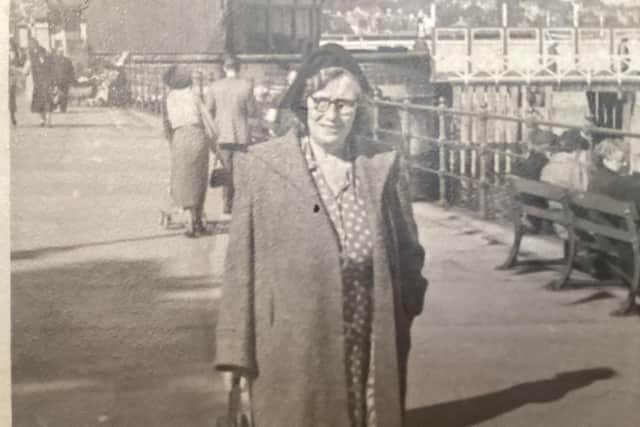
Betty Lambie, 83, is Mr Plommer’s granddaughter and aged 14 found out about the horrific circumstances when she discovered a newspaper cutting in a drawer.
Speaking to the Yorkshire Post in 2025, she noted that her father Alec could not discuss the matter without becoming very upset.
“The reality is that there is no question that the tragedy created a black cloud over the immediate family that never went away,” says Betty, from Scotland, where Mr Plommer’s widow, Elizabeth, fled after his killing.
“It is something that I never really thought of,” John said to me as we walked around the Attercliffe area. “How the legacy of murder can impact generations.”
It’s an undeniably sombre tone from a man who revels in unearthing historical stories, facts and knowledge from the city’s heritage.
Sometimes the stories that are revealed are not quite so easy to digest, especially when you consider the human impact, an impact that is still felt to this day.
But what happened to the perpetrators of this horrific and unnecessary crime going back over a 100-years?
The two brothers Wilfred and Lawrence Fowler were found guilty of murder and were both hanged.
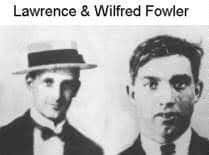
Three other members of the gang were sentenced to between seven and 10 years in prison for manslaughter.
John says: “William Plommer was a brave man, we had a memorial event here for him in 2025, where his relatives from Canada and Scotland came down.
“It was very much a healing process for the family. We had a blessing as well.
“Although it was a very sad story, it was also a story of community resilience as well. Where people began standing up to gangs in their own community.
“They were standing side-by-side to say they’d had enough of the gangs, enough of the intimidation, and they wanted the police to do something about it.
“So, it was a turning point in the Sheffield gang saga.”
Before I leave, I take one more look at the memorial plaque, one thing that sticks out to me are the six figures in the upper left of the plaque. What is the intent here I wonder? That’s something I’d like to find out...