
Exclusive:'Fire on Furnace Hill' - The tale of a historical gangland shootout in Sheffield's 'Little Chicago'
We took a walk around Sheffield’s notorious ‘Little Chicago’ with historian John Stocks, who told us about some of the community history of Furnace Hill and the 1925 gang wars
If you were to stand at the top of Furnace Hill on the junction of Scotland Street today with your back towards the Grade II listed Littlewood Memorial, you’d be standing right at the scene of one of the most dramatic incidents in the Sheffield gang wars of 1925.
Interested in finding out more about the history of the city, I arranged to meet up with local historian and author John Stocks, who wrote the book ‘1925 Gang Wars and Wembley Glory: Sheffield's Most Turbulent Year’. John kindly took me for a history walk around the Furnace Hill Conservation Area, an area referred to in John’s book as ‘Little Chicago’.
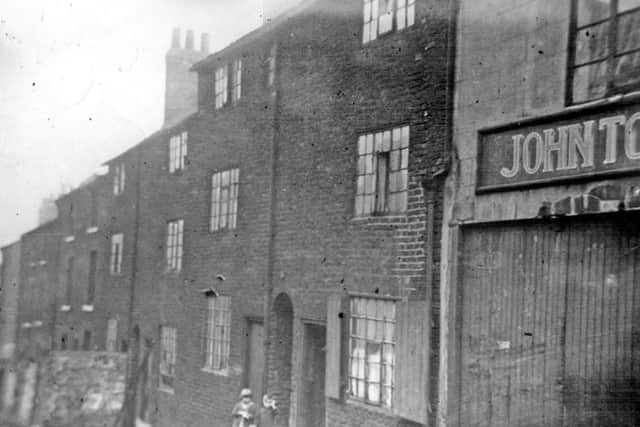

As we made our way through the many storied streets, we stopped at the top of Furnace Hill and John shared a story
“Furnace Hill was the scene of one of the most drastic incidents in the Sheffield gang wars of 1925, involving members of the Mooney Gang who were in the house of Thomas Rippon. Rippon himself was also a member of the Mooney Gang.
“They were raided by the Park Brigade who thought that a member of their gang had been captured.”
The Park Brigade were wrong in this instance and the Mooney Gang hadn’t taken anyone hostage at this time.
At the scene, John points in the direction of what was quite a spectacular shootout, where guns were fired and the building was smashed up.
“There was quite a lot of dramatic activity,” he adds.
In 1925, Sheffield was in the midst of an incredibly tense gangland battle for control between two warring factions, the Mooney Gang and the Park Brigade. But who were these gangs and what was going on?
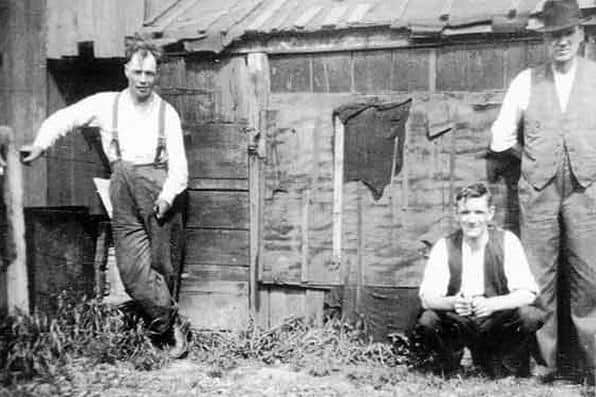
Formed sometime in the early 1920s, the Mooney Gang were a notorious criminal organisation that ran illegal, high stakes, pitch-and-toss gambling rings, particularly in Skye Edge, a ridge of wasteland overlooking what was the Park district slums (where the Park Hill flats now stand).
The Mooney Gang extorted money for protection rackets and engaged in high-levels of criminality over multiple decades – Led by George Mooney, described as the ‘Generalissimo’ of Sheffield crime with a rap sheet populated with multiple crimes from the age of 18-years-old.
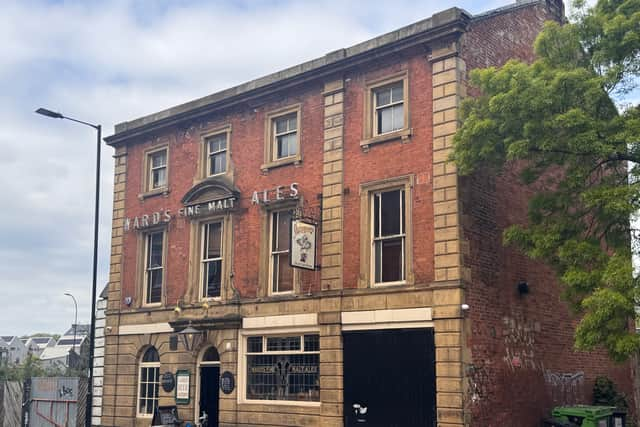
The Mooney Gangs’ rivals were known as the Park Brigade. This was a group put together by Samuel Garvin, a former henchman/foot soldier for the Mooney Gang, who formed the rival outfit after unemployment impacted the money being made from the gambling syndicate.
The formation of the Park Brigade started a violent battle for territory taking place over two years, from 1923 - 1925. This tit-for-tat back and forth raged on furiously as gang members attacked one another, people’s homes (including that of Mooney himself).
They involved beatings to razor slashing, knives and bricks and even the use of guns – like at the Furnace Hill shoot-out.
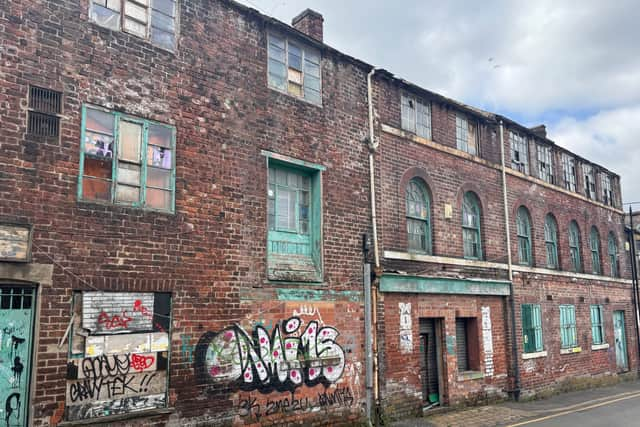
Today, Furnace Hill is an area of redevelopment and also one partly of conservation with many Grade II-listed buildings dotted in and around it.
The ‘Little Chicago’ area of old is one that is changing. Brand new eco-friendly buildings are being constructed on nearby Copper Street – a name that is quite apt considering the criminals and miscreants that once frequented these streets.

What happened to the Mooney Gang and the Park Brigade after the Furnace Hill shootout, you may ask?
Infighting amongst the Mooney Gang saw it weakened in the ongoing gang warfare, the Park Brigade became the dominant gang in that part of the city and the attacks continued.
This pattern of violence continuing unabated until it reached a pivotal point, culminating in the murder of a family man, an ex-soldier and talented boxer, William Plommer.
A tragic story we will return to next time...
‘1925 Gang Wars and Wembley Glory: Sheffield's Most Turbulent Year’ by John Stocks can be purchased from https://labiblioteka.co/