
The legacy of a Sheffield cutler dynasty, its legal battle with knock-off merchants and how it founded a bank
Some famous pieces produced by the company remain in Sheffield today
The Joseph Rodgers & Sons family business was a historic Sheffield dynasty of cutlers and silversmiths that built a major cutlery manufacturing empire before founding a prominent local bank.


The legacy of the Rodgers family began in the late 17th century.
The famous Star and Maltese Cross trademark, which would become synonymous with the family's finest cutlery, was originally registered by Benjamin Rich in 1682.
In 1724, a workshop was rented to John Rodgers (1701 to January 15, 1785) for seven guineas a year. It was here the cutlery business was established in Hawley (or ‘Holy’) Croft, a backstreet off Campo Lane, near Sheffield Cathedral.
That same year, The Company of Cutlers in Hallamshire ‘let’ a mark to John Rodgers - the Star and Maltese Cross trademark - which the business would make world-famous.
It wasn’t until 1764 that the mark was officially associated. The famous name ‘Joseph Rodgers & Sons’ would come later, in 1800.
In 1730 his two sons Maurice and Joseph took over the business and the firm initially gained fame for producing high-quality pen and pocketknives, before expanding into table cutlery – colloquially referred to as ‘edge tools’ and ‘fine steel cutlery’.
In 1776, Maurice registered a silver mark. By 1780, the business expanded to Sycamore Street and soon occupied 6 Norfolk Street.
Following growth in table cutlery and scissors production after 1800, Joseph and Maurice dissolved their partnership in 1811.
The following year, Joseph Rodgers & Sons registered a silver mark at Norfolk Street, and later listed in the 1817 General Sheffield Directory as merchants, factors, and cutlery manufacturers.
Earlier, in 1731, John Rodgers joined the expanding firm, followed by his brothers Joseph (1785), Maurice (1787), and George (1789).
Following the death of Joseph Rodgers in 1821, John Rodgers assumed control of the firm.
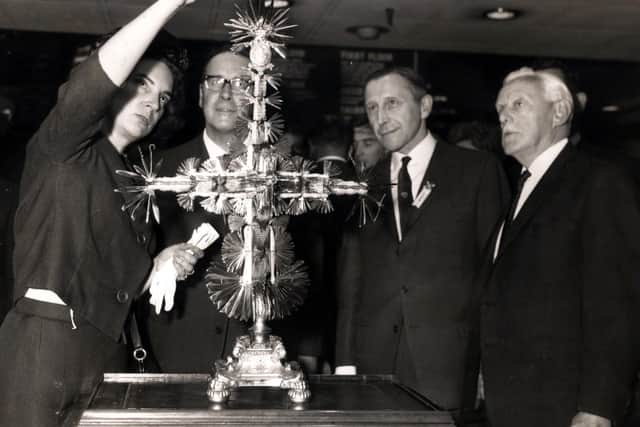
That same year, the company began crafting the renowned 'Year Knife', designed to add one blade for every year of the Christian era. It began with 1,821 blades with one being added each year, as well as for special occasions.
The firm's second masterpiece, the Norfolk Knife, was crafted for The Great Exhibition of 1851. Taking two years to build, it is a giant multi-blade pocketknife with intricate etchings of Queen Victoria, Chatsworth House, and the White House.
In 1821, following a personal introduction to the Prince Regent by MP Stuart Wortley, Joseph Rodgers & Sons received a Royal Warrant as cutlers to the royal household – a distinction they maintained across five successive British monarchs.
John Rodgers was a fierce protector of the firm's Sheffield heritage, and as a result, he refused to stamp third-party London shop names on his goods.
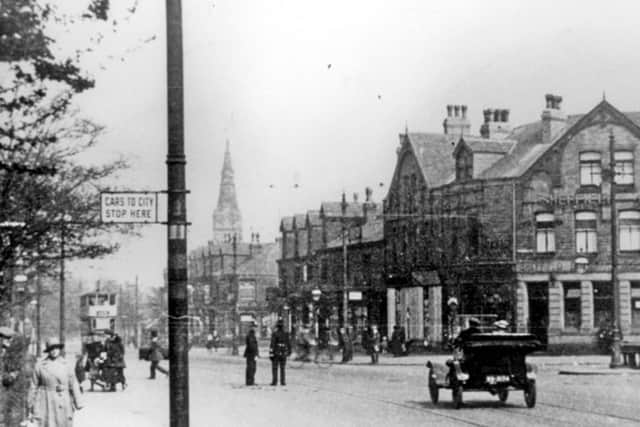
On July 1, 1831, seeking to invest in and safeguard the region's commercial growth, John Rodgers co-founded the Sheffield Banking Company alongside prominent local figures including Samuel Bailey, Edward Smith, and Thomas Watson.
The bank prospered by maintaining strong capital reserves rather than pursuing high-risk speculation.
As the firm's global reputation grew throughout the 19th century, copycats routinely targeted the Rodgers name and mark and in 1846, Joseph Rodgers & Sons successfully sued John Rodgers & Sons for passing off table knives.
Similar legal battles followed in later years, including a case in 1889 against German manufacturer Röttgen for copying Rodgers labels in Indian export markets, and a 1903 suit against Hearnshaw Brothers for stamping 'Rodgers Bros, Sheffield'.
John Rodgers retired from active management around 1856 in his mid-70s. He died on October 14, 1859, following a severe chest infection, and was buried in the family vault at Ecclesall.
His passing was honoured by a funeral procession of 400 of his workmen. He had served as a director of the Sheffield Banking Company for nearly 28 years until his death.

The firm's relentless defence against counterfeiters culminated in a landmark 1924 suit that defined the classic common-law limits regarding the 'own name defence' in trade mark disputes.
Furthermore, the company's extensive experience in fighting passing-off cases helped shape the foundation of Britain's statutory mark registry system.
The family's financial venture also evolved; in 1919, the Sheffield Banking Company was absorbed by the National Provincial Bank, which ultimately merged into modern-day NatWest.

Despite its storied legacy, Joseph Rodgers & Sons suffered severe blows from American tariffs in the 1890s, the disruption of the First World War, and aggressive international rivalry. The enterprise was eventually bought by Archford in 1968 and subsequently taken over by Richards in 1975, prior to shutting its doors in 1983.
In 1986, the venerable Rodgers title and its iconic Star and Maltese Cross marks were acquired by Egginton Brothers, which proudly manufactures fine steel tools under the celebrated name today.
As for the masterpiece items, such as the 2,000+ blade Year Knife and the Norfolk Knife, these remain preserved under the care of the Cutlers' Company and the Hawley Collection, the latter of which can be seen at Kelham Island Museum.