
Watch as we go behind the scenes to discover more about Sheffield's historic Cutlers' Hall
This article contains affiliate links. We may earn a small commission on items purchased through this article, but that does not affect our editorial judgement.
Cutlers’ Hall serves as the home of The Company of Cutlers in Hallamshire
If you happen to be walking along Church Street, at the lower-end of Fargate, opposite to Sheffield Cathedral, you will see a number of buildings with a grand frontage.
One of these buildings is Cutlers’ Hall, one of the city’s finest with a history extending back over 400-years.
But why is this building so significant?
We took a peek behind the grand stainless steel doors to find out more about the extensive history of The Company of Cutlers in Hallamshire, in a guided tour with The Cutlers’ Company archivist and curator, Emma Paragreen.
For more than 400-years, The Company of Cutlers in Hallamshire has acted as the ‘Voice of Manufacturing’ in Sheffield and South Yorkshire. Ensuring that only the highest quality of standards are adhered to in the Sheffield-manufacturing of cutlery and steel products – while also continually promoting the name of Sheffield.
Cutlers’ Hall serves as the home of The Company of Cutlers in Hallamshire, which was established in 1624 by government decree.

Sheffield is a city long associated with cutlery, as far back as the 14th century when the poet Geoffrey Chaucer wrote: ‘A Sheffeld thwitle baar he in his hose’ about the aggressive working of the Miller in ‘The Reeve’s Tale’.
However, Sheffield’s connection to cutlery, as in ‘anything with a metal edge that will cut’ goes back to 1297 according to historians, also referenced in Julie MacDonald’s ‘The Company of Cutlers of Hallamshire: 1624-2024’.
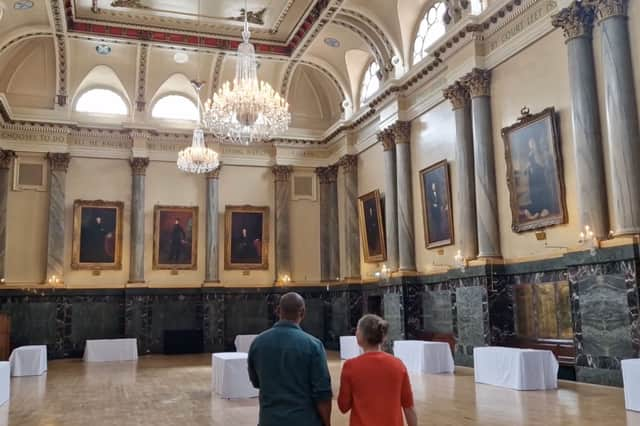
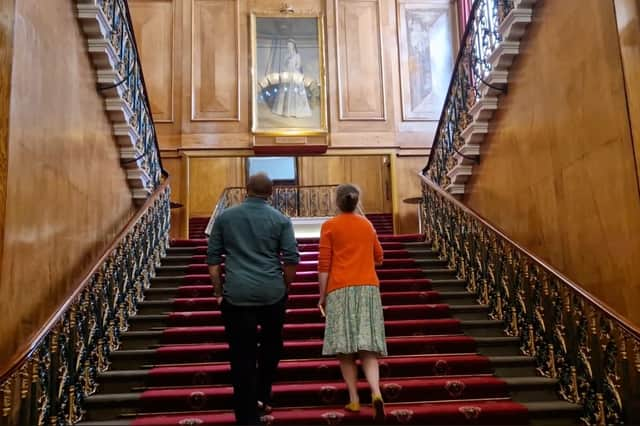
“It’s scissors, it’s scythes, it’s sickles, it’s swords,” Emma explains as we make our way through this stunning historical building, delving further into the building and the company’s history.
The place upon which Sheffield was to be eventually built was naturally suited to the production of cutlery with the local area rich in coal, sandstone (for grinding stones) and fast flowing water from the five rivers (the Don, Sheaf, Porter, Rivelin and Loxley) to power production.
It was an act of parliament that established The Company of Cutlers in Hallamshire granting it jurisdiction of manufacture of cutlery, as well as the ability to destroy substandard work. To this day they retain the right to destroy 'shoddy goods' in Paradise Square.
Regulation of the cutlery trade meant marks were granted to signify the place of origin.
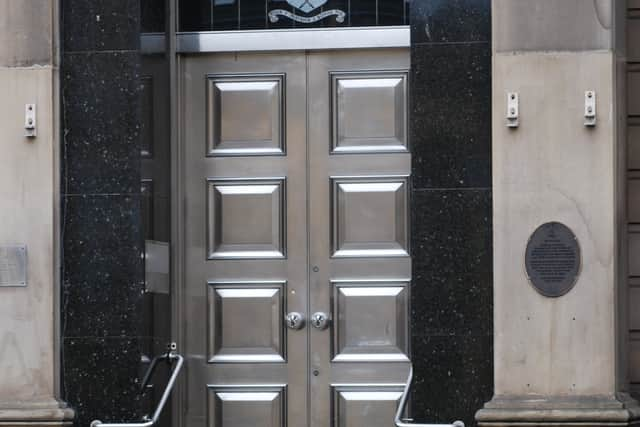
Originally, The Company of Cutlers in Hallamshire operated out of a pub on Fargate, but in 1638 the first of three Cutlers’ Halls was built, and demolished in 1725 with a new hall built. The second Hall was replaced in 1832 and expanded by the architects Samuel Worth and Benjamin Broomhead Taylor — who designed a grand stone building in a classical style.
It is rumoured that the duo only collaborated because a decision couldn’t be made on the best design.
This building remains in situ to this date, with the frontage of the now Grade II-listing building being added in 1881. The stainless steel doors were added later in 1964.
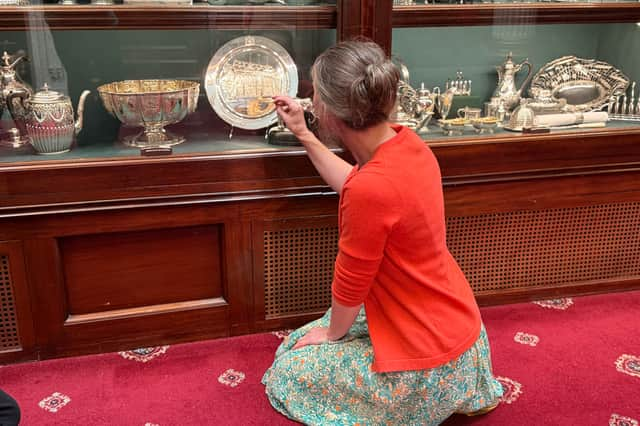
Today, the building houses extensive collections, including metalwork, silverware, and historical fittings, such as a light fixture from the RMS Olympic. Each of these items were designed and manufactured in Sheffield. They’re not just for display; many are used during the annual Cutlers’ Feast and the Forfeit Feast.
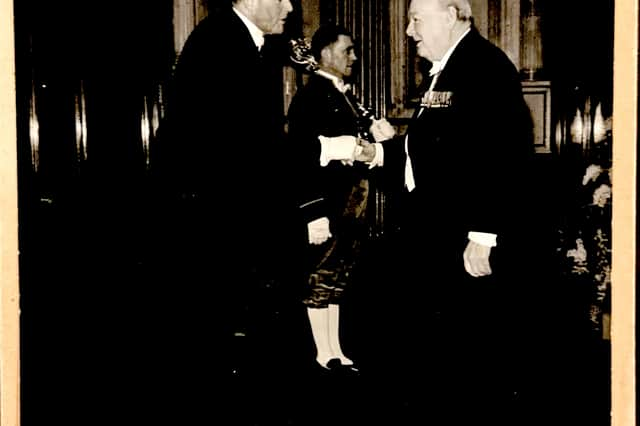
Speaking about the company, Emma explained that each ‘Freeman’ would serve a seven-year apprenticeship before they were allowed to manufacture cutlery on their own merit, “it was only when they were granted a mark that they could then make a knife and sell it.”
“We go from Little Mesters today to major manufacturers, and now we still have specialists in the city that make items with the (prestigious) ‘Made in Sheffield’ marking.

“The Cutlers’ and the Master Cutlers role is to be the voice and ambassador of Sheffield’s manufacturing prowess. That is his role for the year.”
As we make our way around the magnificent Cutlers’ Hall, it is impossible to not be taken aback by not just the level of craftsmanship on display. But to be able to experience a building steeped in such rich history, stretching back over 400-years is a sight to behold, and something that many people from Sheffield and beyond should experience.
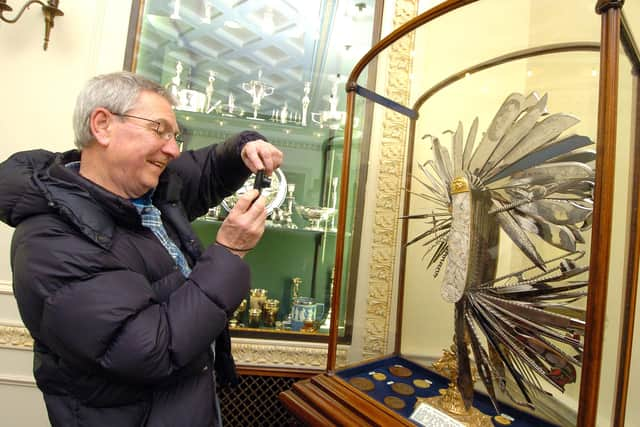
Fortunately, the public will be able to step through the grand doors of the Cutlers’ Hall and witness the history of Sheffield’s craftsmanship for themselves.
The Company of Cutlers in Hallamshire will be opening its doors for visitors as part of the FREE Heritage Open Days Guided Tours, which will take place at various times on Saturday September 19, 2026 and you can book your place here: https://www.eventbrite.com/e/1993459209157?aff=oddtdtcreator
Watch our guided tour of Cutlers’ Hall with historical insights from The Company of Cutlers in Hallamshire’s archivist Emma Paragreen on YouTube: https://youtu.be/aBwBA-2q84M