
Sheffield University: £86m 'super-lab' hits trouble over plan to fell mature trees

Plans for an £86m Sheffield University science laboratories building have run into trouble over chopping down trees.
Sheffield Tree Action Group is opposed to felling to make way for a five-storey building on Upper Hanover Street, overlooking the university tram stop near Glossop Road.
The university has submitted plans for labs which it hopes will be ready by the start of the 2027 academic year.
But objectors have called for a rethink.
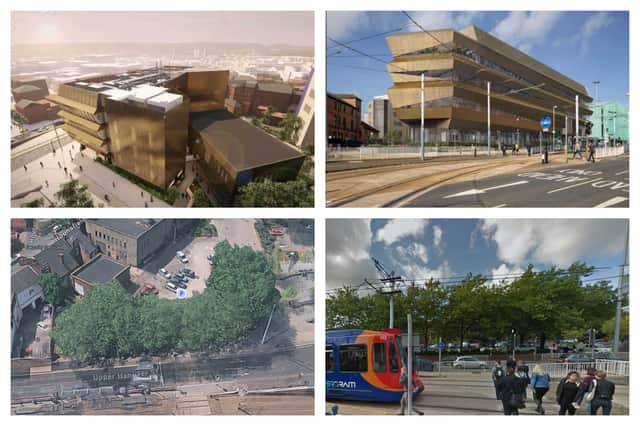

Christine King, of Sheffield Tree Action Group, said the street had poor air quality and removing mature trees would ‘make matters worse’.
She added: “This proposal will damage the health and wellbeing of the University's students, by removing greenery at a point of very high footfall.”
She also criticised claims it would be a 'carbon neutral' building’ because of the years it would take for replacement planting to absorb the same amount of carbon.

She added: “I've heard that this is about creating a "statement gateway"; as someone from the university said to me, why can't that statement entrance be a garden or a copse? The city's’ Grey to Green’ scheme is a fine example of a non-building gateway.
“Accordingly, we oppose this application as it stands and urge a rethink in line with the realities of the current climate and nature emergency and of the health and welfare of the students the university should serve.”
STAG was set up following the street tree scandal. An inquiry found Sheffield City Council had misled the courts and public over a plan to cut down half of the city's 35,000 street trees as part of a highways improvement contract with Amey. It led to council leader Terry Fox and Coun Bryan Lodge being forced from office.
The university’s application is for teaching laboratories, a 'pocket park' and parking.
A planning report states: “The proposed Central Teaching Laboratories building represents a significant investment of approximately £86m by the University of Sheffield towards improving and consolidating its campus-wide teaching laboratories.
“This investment will further strengthen the university’s educational offering and the prominence of the education sector to the city economy, as well as continuing towards promoting its reputation as a global ranking university.”
It would have two 300-student teaching laboratories and accommodate lab teaching for the Faculty of Science, the Medical Teaching Unit, Faculty of Arts and Humanities, Social Sciences and facilities for medicine, dentistry and health.