
"I cannot forgive them": Doncaster mum criticises son's friends who left him to die after taking drugs together

“They were supposed to be his friends, but left him in a time of need”
A Doncaster mum has said she “cannot forgive” a group of teenagers who failed to call for help on the day her young son died.
In August, 2024, three teenagers were arrested on suspicion of murder after the death of 15-year-old Darius Popan, who died in hospital due to multiple organ failure.
He was found unresponsive on the Trans Pennine Trail and his death was initially treated as suspicious due to some bruising.
But it later transpired that Darius had been part of a small group of teens who had each taken MDMA pills together.
Witness statements, recovered messages and CCTV footage revealed that the teenagers had met along the Trans Pennine Trail near Sprotbrough in Doncaster at around 3pm on July 27, with it believed that each took one pill.
Pathology reports discovered a fatal level of MDMA in Darius’ system.
On the day the teens took the drug, Darius later took his bike and walked away, leaving behind his phone - an inquest into his death heard.
He was seen on his own looking “intoxicated” by a witness at around 6.10pm.
He was later found by a pair of strangers at around 7.30pm and paramedics were called.
Under interview, the teenagers arrested over the death initially said Darius had brought the pills however later said that wasn’t the case.
Ultimately, police dropped the murder investigation.
DCI Simon Cartwright told the court that police originally treated Darius’ death as suspicious after an initial examination returned inconclusive results due to the presence of a number of injuries on his body.
Both Darius’ parents attended the hearing court, with mum Mihaela wiping away tears as her statement was read.
The teenager was described as being passionate about fishing, riding his bike and particularly his role in the army cadets.
“Darius’ passion was for the army cadets - it was Darius’ dream to attend the army college after school and ultimately join the army after this,” a statement from mum, read out by a coroner’s officer, explained.
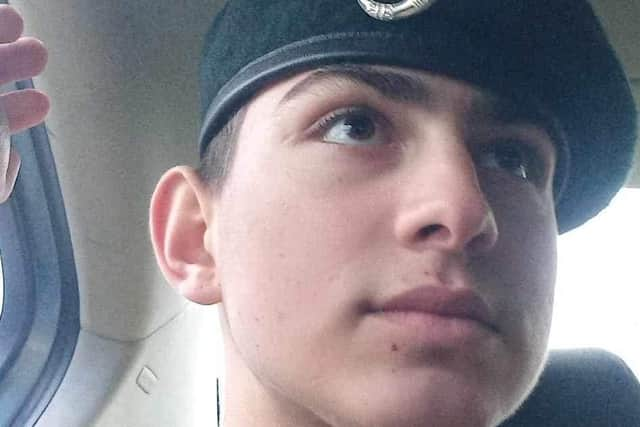

She said that she couldn’t understand why her son would use drugs, especially due to the fact that his “life revolved around” the army.
“This is certainly not a reflection of the person we know,” her statement added.
When asked whether the other teenagers should have called for help when Darius first went missing, DCI Cartwright told the court: “There’s no legal duty to call for help, even if you consider somebody is in need.”
He went on to say: “Morally it’s highly wrong, but criminally there’s no responsibility.”
But Mihaela said she still struggled to forgive the others who were there that day.
“If they had stayed with him or contacted one of us for help then we could have ensured an ambulance was called,” she said.
“They were supposed to be his friends, but [they] left him in a time of need, which I cannot forgive.”
DCI Cartwright said while the murder investigation was dropped, officers are actively investigating the supplier of the drug Darius and his friends consumed.
Two men found Darius in a wooded area on the day he fell ill, and stayed to support the teen as aid was administered.
The good Samaritans reported seeing a group of three people showing up during that time and showing an interest in the events, before leaving.
A paramedic also provided a statement, which was read in court, in which she said: “I remember thinking ‘you lot know him’.”
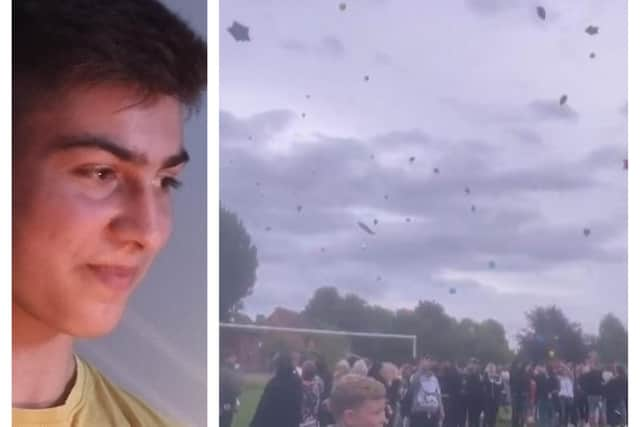
Police interviews later revealed that they were the individuals who had taken drugs with Darius.
Darius remained unidentified as he was rushed to Doncaster Royal Infirmary.
As he was receiving treatment in the intensive care unit, the teen’s family had started searching for him after not hearing from him for hours.
A statement from Darius' mum explained how he would always return home by the curfew his parents set.
“He would always find a way to let us know,” she said.
After failing to find him, the family called police at around 10.30pm and were asked to go to hospital to identify a patient, the inquest heard.
“When I first saw Darius I didn’t believe it to be him due to the swelling on his face,” Mihaela’s statement continued.
Consultant forensic pathologist, Dr Jamie Edward Robinson, explained to the court that due to his use of MDMA, Darius suffered from Disseminated Intravascular Coagulation (DIC), an issue with clotting in the blood which meant that medical treatments were causing bruising.
He went on to say that this had caused the initial confusion in the investigation into the teenager’s cause of death, as pathologists were concerned that he may have sustained extensive trauma before he died.
Subsequent toxicology reports discovered the MDMA in his system, with the court being told this led to multiple cardiac arrests and eventual organ failure.
In summing up the evidence, Coroner Louise Slater accepted the police’s evidence that there was no third party involvement with Darius’ death, adding that his actions had “the most unexpected consequences”.
She ruled the death as one of misadventure.
Before leaving court, she said to the family: “I’m so very sorry we meet in these circumstances and I’m so very very sorry for your loss.
“I would like to commend the dignified way you have conducted yourself today in the most difficult circumstances.”