
'Low number of crimes' solved by South Yorkshire Police after investigation, inspectorate finds
The police inspectorate has told South Yorkshire Police it must improve how it investigates crime, with concerns raised that the funding the force receives in areas such as solving crimes is failing to ‘bring about a good service for the public’.
The recommendation has been made as part of an inspection from His Majesty’s Inspectorate of Constabulary and Fire & Rescue Services (HMICFRS), in which South Yorkshire Police was graded on its performance across nine different areas of policing.
The inspectorate found the force was ‘good’ in one area, ‘adequate’ in five areas and ‘requires improvement’ in two areas.
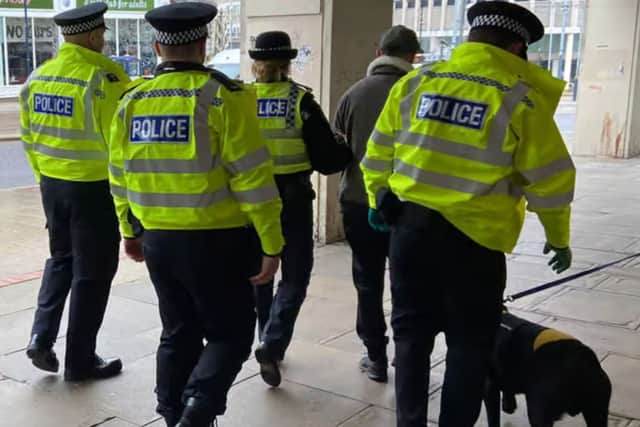

One of the areas judged as requiring improvement is investigating crime, ‘particularly as a low number of crimes are solved following investigation’.
The report stated: “It needs to work to understand the reasons for this and to achieve better outcomes for victims. This includes making sure it remains victim focused throughout its investigations and that they are regularly updated.”
The inspectorate found that high workloads were also affecting officers’ well-being and their ability to investigate crime. It says the force needs to make sure it understands its workforce challenges, has effective systems in place, and uses them consistently to monitor workloads and to provide support to its officers.
Michelle Skeer of His Majesty’s Inspector of Constabulary said: “The funding it receives isn’t bringing about a good service for the public in some important areas, such as investigating and solving crimes. It also must do more to support, build and protect its workforce, particularly on those facing high demand and workloads. It needs to make sure it is providing consistent well-being support for officers.”
South Yorkshire Police was also graded as being ‘good’ at crime prevention.
HMICFRS said the force is committed to neighbourhood policing and is continuing to invest in its policing model, which focuses on prevention of crime, antisocial behaviour and vulnerability. It has developed initiatives designed to provide early intervention and to prevent and deter crime. For example, the force has carried out a trial of targeted digital advertising to give crime prevention information within areas identified as burglary hotspots.
The force also has a strong evidence-based policing ethos that is clear across all of its functions. It maximises opportunities to prevent public harm and reduce demand by using problem-solving techniques.
Ms Skeer continued: “I am pleased with some aspects of the performance of South Yorkshire Police in keeping people safe, reducing crime and providing victims with an effective service. I recognise the efforts of individual officers and staff who are clearly working hard to manage high workloads and to help victims.
“We found the force particularly good at preventing and deterring crime, with a clear commitment to neighbourhood policing. The force also answers 999 calls more quickly but doesn’t always respond to calls for service as quickly as it should. While the force has tried to address this issue, it needs to do more to meet the public’s needs.
Inspectors also found the force makes good use of stop and search, and it records reasonable grounds for the search in almost all cases. But there is more work to do to improve officers’ recording of use of force, and it would benefit from gathering data from its supervisory reviews to improve analysis and further development.
HMICFRS also said that the force needs to improve the way it investigates crime. It needs to work to understand the reasons for this and to achieve better outcomes for victims. This includes making sure it remains victim focused throughout its investigations and that they are regularly updated.
The inspectorate found that high workloads were also affecting officers’ well-being and their ability to investigate crime. The force needs to make sure it understands its workforce challenges, has effective systems in place, and uses them consistently to monitor workloads and to provide support to its officers.
“The force has faced significant challenges, including experiencing significant disorder following the tragic Southport murders and financial issues reported by the South Yorkshire Mayor last year. They have carried out work to address this and we are encouraged by the preparations and planning already made.
“I will be monitoring the force’s progress closely and I hope that changes made will result in improvements that help it better meet the public’s needs,” added Ms Skeer.
Responding to the Inspectorate’s findings, South Yorkshire Police’s Deputy Chief Constable Sarah Poolman said: “As the public’s expectations of policing increase, so too do the expectations of His Majesty’s Inspectorate of Constabulary and Fire and Rescue Services, and rightly so if we are to provide efficient and effective policing services which evolve alongside society.
“Some gradings have lowered. This is not a sign that we are holding ourselves to lower standards than before but rather that a new higher bar has been set by HMICFRS prior to this round of inspections and that we need to address our outstanding challenges and embed some recently identified innovative practices into our ways of working.
“We are thankful to the inspectors for the time they spent in force and on this report to help inform our focusses for the coming years. Based on their findings, work is already underway to develop an action plan to improve the service we are delivering to South Yorkshire.
“We are also thankful for the recognition that some of our work is promising and innovative.
“Whilst we face some challenges in the investigation of crime and in building, supporting, and protecting the workforce – posed by demand, the financial deficit, and shortage of detectives, we commit to continue being an ambitious force which aims to be the best we can be at preventing crime and disorder, responding to the needs of victims and communities, and focussing on those who cause the most harm."