
Club Garden Road: Faces of callous and predatory drug gang who took over vulnerable man's Sheffield home
Members of a predatory and callous Sheffield drug gang who took over the home of a vulnerable man, holding him there as they subjected him to ‘humiliating’ and ‘degrading’ treatment, have received jail terms totalling over 32 years.
The organised crime group responsible for the ‘Montana’ drugs telephone line, believed to be a reference to the Tony Montana drug lord character from the film Scarface, forced the complainant - a man in his early 50s - to hand over the keys to his flat in Club Garden Road, Sharrow.
Mohammed Othman, Mohammed Ali, Sanad Ali, Kian Bruff, Mckenzie Bouzin, Muad Kulaib, Callum Mayo, Christian Mayamba, Masimba Mwanjira and Jenade Brown were all linked and charged over their involvement to the drugs conspiracy, involving the Class A drugs heroin and crack cocaine, sold through the Montana line.


All 10 defendants initially denied any wrongdoing and the case was sent for trial in November 2024, before each of the defendants pleaded guilty to the charges they faced, relating to a conspiracy to supply the Class A drugs crack cocaine and heroin, at various stages.
Mayamba was also brought before the court to be to be sentenced for fraud, relating to his withdrawal of the complainant’s money after stealing his bank card. He was also sentenced for an offence of grievous bodily harm, relating to an unrelated assault in Barnsley in June 2023 that left his victim with numerous head fractures, following which he had to have part of his skull removed in order for appropriate treatment to be administered.
‘Cuckooing’
Judge Peter Hampton described the group’s invasion of the complainant’s home as ‘cuckooing,’ involving the majority of defendants, and added that he regarded it to be a ‘very serious aggravating factor’.
The practice of taking over a person’s property through force, coercion or deceit is referred to as ‘cuckooing’ and is regularly used by organised crime groups, or gangs (OCGs).
“[The complainant] had been reduced, by the group who took over the flat to live in terrible conditions. Those involved in the conspiracy had reduced his flat to a drug den,” continued Judge Hampton, in a resumed sentencing hearing held on February 24, 2025.
Judge Hampton continued: “It’s clear he was identified by the group as a weak and desperate individual who could be exploited.”
“He explained his home had been taken over by a local gang for drug supply. In his words they were ‘slapping him about,’ they had taken his keys, controlled who could come in. Held him in his property, whilst subjecting him to humiliating and degrading treatment. They brought weapons in, and forced him to give them his bank card.”
He told the defendants: “All of this, simply to satisfy your own desire for fast cash.”
After taking the complainant’s keys and setting up shop in his home for the next two weeks, he was not able to leave their sight, and was forced to sit or sleep on the kitchen floor as they weighed up and packaged drugs or ‘partied’ in his home, Sheffield Crown Court heard.
Prosecutor Matthew Burdon, during a sentencing hearing which began on January 30, 2025, detailed how the group went on to tell the complainant that the flat was now theirs, that they were, in effect, his ‘landlords’; and claimed he owed them a drug debt for the substances they forced him to consume.
The gang also took the complainant’s bank card and withdrew all of his money, before forcing him to take crack cocaine, in what prosecutor Matthew Burdon suggested was a method of subduing, and making, him easier to control.
The only two defendants deemed to have not participated in the cuckooing, through ‘threats, violence or damage of the property’ were Bruff and Bouzin.
The scale of the ‘Montana’ drug line operation
The Montana line was in operation for 24 hours a day, seven days a week, during the time covered by the offending period in June and July 2023.
The phone number used for the ‘Montana’ line was analysed by police specialists, over a 48-day period, during which it was used by, or diverted to, six different phone handsets.
Mr Burdon explained this was to allow ‘different people to be in control of the number at different times,’ or in effect, work ‘different shift’ patterns.
During the same time period, the Montana line was shown to be ‘frequently’ in use in the Sharrow area of the city, with an average of 204 ‘events’ logged per day.
“It was in use 24 hours a day, it was in contact with 407 different numbers during a 48-day period,” Mr Burdon told the court.
Judge Hampton conceeded it had not been possible to assess the true extent of the operation, and acknowledged that only £2,230 of Class A drugs were found to be physically present at the flat.
The gang’s roles in the drugs conspiracy
Describing the roles of each member of the gang, Judge Hampton said he regarded Ali and Othman to have management functions within the gang.
Mohammed Ali came to the flat ‘infrequently, every two or three days to see what those lower down were doing,” Judge Hampton said, adding: “You threatened [the complainant]...you were the one who told him the flat now belonged to the group, and would be used for drug supply.”
The role of Othman, said Judge Hampton, was to collect ‘money from those working in the flat’. Othman was observed to be taking thousands of pounds at a time, on occasion; and was overheard discussing his ‘illicit trade’ in phone calls made while he was at the flat.
Judge Hampton said it was noteworthy that in messages taken from Othman’s phone, he referred to ‘my operation in Sharrow’.
Sanad Ali and Kulaib were deemed to have a ‘significant role,’ but lesser than their colleagues with a ‘management’ function.
Sanad Ali, who also visited the flat infrequently, threatened the complainant with violence, plied him with cannabis; and has admitted to dealing directly to street users.
Kulaib, meanwhile, was the one who took the complainant’s keys, and had the role of cutting and bagging up the drugs for sale.
Mayo, Mwanjira and Mayamba had a ‘constant presence’ at the flat, said Judge Hampton, adding that each of them had a role, which was above that of a ‘runner’ and involved some understanding of the scale of the operation, but were seemingly unable to influence those above them.
Bouzin, Brown and Bruff were all said to have lesser roles, with involvement said to be borne out of ‘naivety’ and ‘immaturity’ and did not possess knowledge of the scale of the operation.
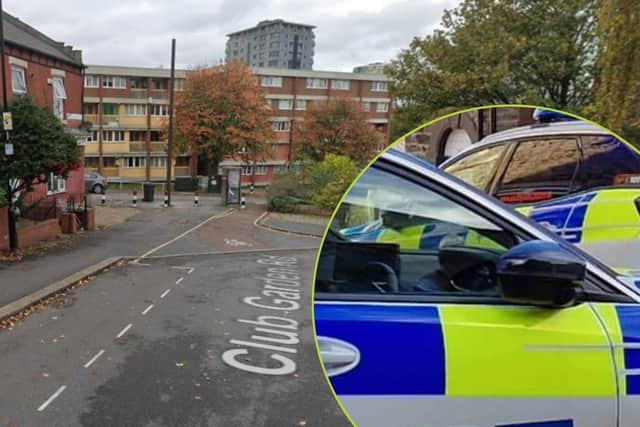
Vulnerable victim feared he would be shot or stabbed before gang left his flat
In his victim impact statement, the complainant described how he has a number of physical and mental health issues, including paranoid schizophrenia, which is controlled through medication, and said he believed he was targeted for this reason.
The gang were snared after the complainant managed to escape the flat, flag down a patrolling police officer and explain what was happening.
In a heartbreaking statement read to the court, the complainant said he did not think any of the gang ‘saw me as a person’; and believed he would either be stabbed or shot before they moved on from his flat.
“I remember thinking I just want them to kill me,” the complainant said.
He described being constantly mocked, ‘slapped about’, and the court also heard how the complainant was threatened with the point of a knife on one occasion.
“I was in total fear of them, there was nothing I could do.
“They took everything I needed to exist, even my own home.”
“They gave me crack cocaine to keep me quiet…they would bark at me and say I needed to be ‘cracked up’.
He described how the practical consequences of the OCG commandeering his flat have been that he has been forced to move to a different part of the country.
Aside from a couple of bags of clothes the police were able to recover, the rest of the complainant’s worldly possessions were either taken or damaged by the gang, or left behind in the flat.
“I’ve lost almost everything I had along the way,” he said.
The complainant revealed how he first had contact with members of the gang after coming across them ‘on the estate’ and buying some crack cocaine from one of them.
He believes they quickly sensed his vulnerability, something which informed their decision to take over, and use, his flat as a base for their operation.

Remaining defendants’ mitigation
Mitigation for defendants Othman, Ali, Mayo, Mwanjira, Bruff, Brown was heard during the first part of the sentencing hearing over January 30 and 31, 2025.
Amanda Denton and Francis Edusei advanced mitigation on behalf of their clients, Bouzin and Mayamba, respectively, during the resumed hearing on February 24, 2025.
Ms Denton told the court that Bouzin was effectively ‘homeless’ at the time he became involved in the drugs conspiracy, resorting to sleeping in wooded areas and the stairwells of Sheffield flat blocks. She suggested this came after Bouzin had left his mother’s home address and had found staying at the Roundabout Hostel, which is located in the Highfield area of Sheffield, too ‘difficult’.
Ms Denton acknowledged that Bouzin had received some financial reward for his role in the conspiracy, but emphasised that this was at a time when he was homeless, and also ‘heavily addicted’ to cannabis.
Bouzin, who Ms Denton described as enduring a ‘difficult childhood,’ has spent the last eight months in custody on remand, during which time he has ‘withdrawn from cannabis’ and now hopes he will be able to isolate himself from his past behaviour, ‘move on have a job, and have a home’.
Ms Denton urged Judge Hampton to either deal with Bouzin by way of a community order or if that is not possible, to pass a short enough sentence for him to be able to ‘hold firm’ on the progress he has been making.
Mr Edusei described Mayamba as someone who was ‘hard-working’ and ‘intelligent’ and, shortly before becoming involved in this drugs conspiracy, had achieved exam passes in college subjects including history and business.
He agreed with Judge Hampton that his ‘enthusiastic’ involvement in the drugs conspiracy; and the use of violence - both through his role in the gang and another, unrelated assault amounting to grievous bodily harm - was all the more surprising.
Mr Edusei asserted that the GBH his client involved himself in, which left his victim with numerous skull fractures, took place after he was called the ‘n-word’. Judge Hampton said that while he does not have evidence of the racist slur being used, he will sentence him for the GBH offence on the basis there was ‘provocation’ for the assault.
Mr Edusei suggested Mayamba’s ‘enthusiastic’ participation in the gang was indicative of his level of immaturity, and stressed he was 18-years-old, both at the time of the offences and at the time of the arrest. He added that Mayamba has been in custody on remand for the last ‘19, 20 months’.
Seven of the 10 defendants received immediate prison sentences, while the other three were handed suspended custodial terms.
Sentences passed down to the 10 gang members
- Muad Kulaib, aged 25, formerly of Washington Road, Sharrow, Sheffield: sentenced to four years, six months’ imprisonment
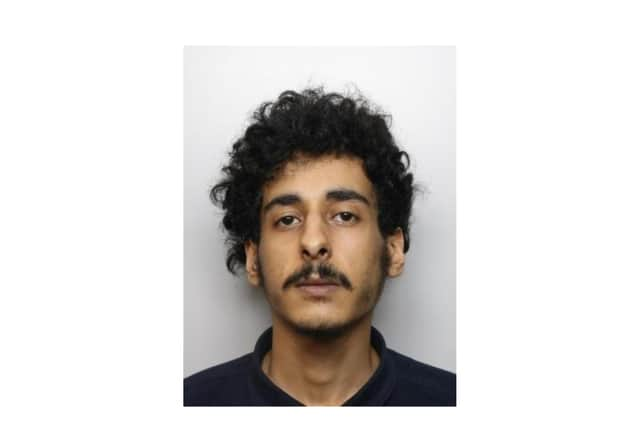
- Masimba Mwanjira, aged 19, formerly of Roberts Road, Colchester: sentenced to 27 months’ detention in a young offenders’ institute

- Mohammed Ali, aged 36, formerly of Charlotte Road, Bramall Lane, Sheffield: sentenced to five years, 10 months’ imprisonment
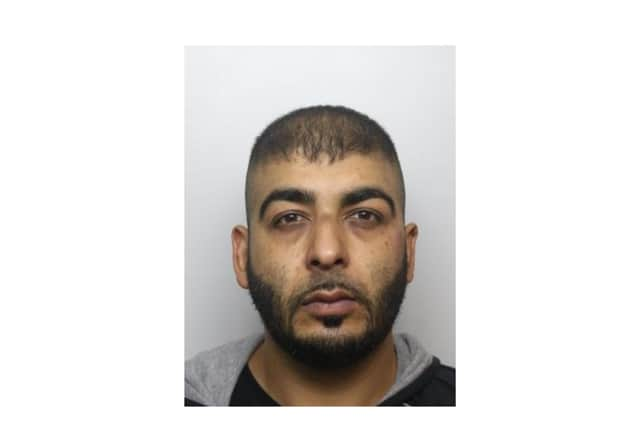
- Mohammed Othman, aged 29, formerly of Sharrow Lane, Sharrow, Sheffield: sentenced to six years, three months’ imprisonment

- Christian Mayamba, aged 19, formerly of Wood Street, Barnsley: sentenced to 51 months’ detention in a young offenders’ institute

- Sanad Ali, aged 23, formerly of Washington Road, Sharrow, Sheffield: sentenced to four years’ imprisonment
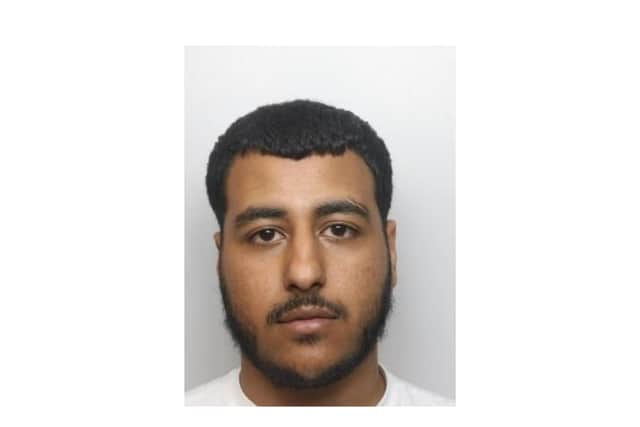
- Callum Mayo, aged 19, formerly of Mapplebeck Road, High Green, Sheffield: sentenced to 27 months’ in a young offenders’ institute

- Kian Bruff, aged 18, formerly of Coventry Road, Ilford: sentenced to 22 months’ detention in a young offenders’ institute, suspended for two years, with a requirement to complete a 25-day rehabilitation activity requirement, along with 200 hours unpaid work
- Mckenzie Bouzin, aged 19, formerly of Middle Hay Place, Gleadless, Sheffield: sentenced to 22 months’ detention in a young offenders’ institute, suspended for two years, with a requirement to complete a 25-day rehabilitation activity requirement along with 200 hours unpaid work and a requirement to complete an accredited programme
- Jenade Brown, aged 20, formerly of Fifth Avenue, Wolverhampton: sentenced to 18 months’ detention in a young offenders’ institute, suspended for two years, with a requirement to complete a 26-day requirement on an accredited programme, along with 180 hours unpaid work
Judge Hampton told the defendants their time spent on remand and qualifying curfews would count towards their sentences.
Judge Hampton also ordered restraining orders, prohbiting all 10 defendants from contacting the complainant for a period of 10 years.