
Club Garden Road: Predatory drugs gang took over vulnerable man's Sheffield home & used it as base for weeks
A predatory Sheffield crime gang took over the flat of a vulnerable man with paranoid schizophrenia, forcing him to remain there and keeping him docile through the use of Class A drugs, while they used his home as a base for their illegal operation.
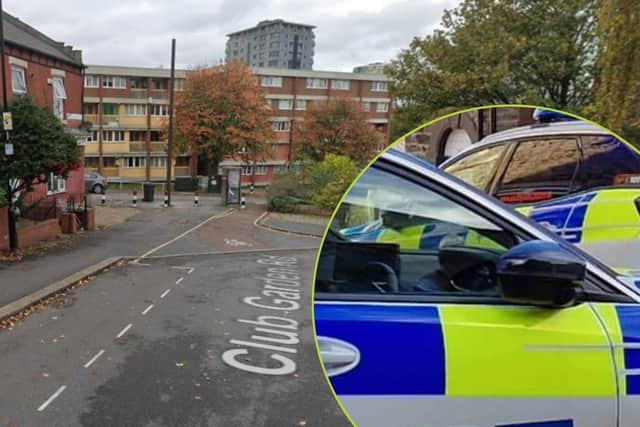
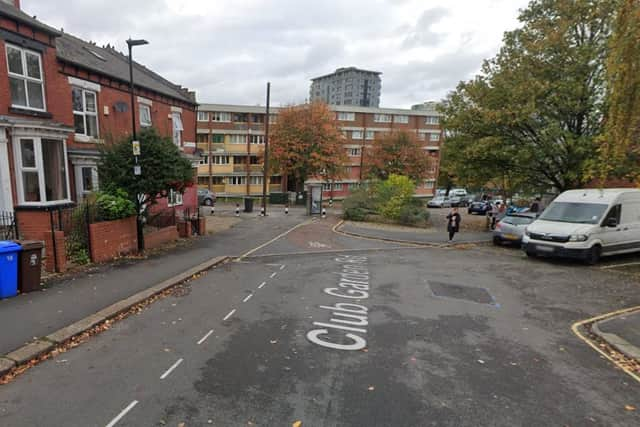
The organised crime group responsible for the ‘Montana’ drugs telephone line, believed to be a reference to the Tony Montana drug lord character from the film Scarface, forced the complainant - a man in his early 50s - to hand over the keys to his flat in Club Garden Road, Sharrow.
The practice of taking over a person’s property through force, coercion or deceit is referred to as ‘cuckooing’ and is regularly used by organised crime groups, or gangs (OCGs).

‘Echoes of cuckooing’
Both Judge Peter Hampton and prosecutor Katherine White agreed there were ‘echoes of cuckooing’ in the ‘Montana’ OCG’s Sheffield operation.
After taking the complainant’s keys and setting up shop in his home for the next two weeks, he was not able to leave their sight, and was forced to sit or sleep on the floor as they weighed up and packaged drugs or ‘partied’ in his bedroom, Sheffield Crown Court heard.
The Montana line was in operation for 24 hours a day, seven days a week, during the time covered by the offending period in June and July 2023, the court heard.
The gang also took the complainant’s bank card and withdrew all of his money, before forcing him to take crack cocaine, in what prosecutor Matthew Burdon suggested was a method of subduing, and making, him easier to control.
In his victim impact statement, the complainant described how he has a number of physical and mental health issues, including paranoid schizophrenia, which is controlled through medication, and said he believed he was targeted for this reason.
Mr Burdon, during a sentencing hearing which began on January 30, 2025, detailed how the group went on to tell the complainant that the flat was now theirs, that they were, in effect, his ‘landlords’; and claimed he owed them a drug debt for the substances they forced him to consume.
Conspiracy to supply crack cocaine and heroin
Mohammed Othman, Mohammed Ali, Sanad Ali, Kian Bruff, Mckenzie Bouzin, Muad Kulaib, Callum Mayo, Christian Mayamba, Masimba Mwanjira and Jenade Brown were all linked and charged over their involvement to the drugs conspiracy relating to the Montana line.
All 10 defendants initially denied any wrongdoing and the case was sent for trial in November 2024, before each of the defendants pleaded guilty to the charges they faced, relating to a conspiracy to supply the Class A drugs crack cocaine and heroin, at various stages.

In addition, Mayamba pleaded guilty to theft and fraud charges relating to the theft and use of the complainant’s bank card.
He also admitted a Section 20 wounding offence, relating to an unrelated assault in Barnsley in June 2023 that left his victim with numerous head fractures, following which he had to have part of his skull removed in order for appropriate treatment to be administered.
Each member of the OCG had different roles in the ‘Montana’ line
In evidence outlined by Mr Burdon, the complainant revealed how he observed how each member of the group - said to have armed themselves with weapons including various knives and machetes, a hand gun and an axe - each had a different role in the Montana drugs operation.
“This group, like any organisation, has a hierarchy, with people at the top of the operational level, and those who do all the work,” Mr Burdon told the court.
Defendants ‘close to, or at at the top of’ the OCG
36-year-old Mohammed Ali and Mohammed Othman, aged 29, were both described as being ‘close to, or at the top of, the organisation’.
“Mohammed Ali attended every couple of days to talk to numerous members of the group about what they were doing…while at the flat, he threatened [the complainant] with violence and would say the flat belonged to him,” Mr Burdon said.
Mohammed Othman, who used the nickname ‘P,’ was observed collecting money from the other members of the OCG, including what, on occasion, appeared to be amounts ‘in the thousands,’ Mr Burdon said, adding that Othman was also heard discussing drugs on the telephone.
Mr Burdon told the court, however, that it has not been possible to gauge the true financial scale of the operation. Around £2,230 of heroin and crack cocaine was recovered from the flat during police raids.
Group members who took over complainant’s Sheffield flat
Mayo, Mwanjira, Mayamba and Kulalib, said Mr Burdon, are the members of the group who took over the complainant’s flat, and in the prosecution’s view, must therefore be ‘close to the top’ of the chain.
Mr Burdon continued: “Mayo was at the flat constantly…he was involved in making threats. He ripped down [the complainant’s] curtains and slashed his mattress.”
19-year-old Mayo was not seen to be involved in the preparation of the drugs packages eventually sold in street deals, but was observed ‘answering the phone and going out to sell,’ the court heard.
Mr Burdon described the role of Mwanjira, who used the nickname ‘Tubsy,’ as that of someone involved in the ‘preparation of drugs for sale’.
“He was seen dividing large packages of drugs into smaller packets so they could be sold,” Mr Burdon told the court, adding that Mwanjira, aged 19, was at the flat at an ‘almost constant basis’.
Mayamba, known as ‘Mabsy’, had the role of ‘weighing and bagging’ the drugs sold by the Montana line.
Mr Burdon said photographs taken from a phone linked to the Montana line showed Mayamba, of Wood Street, Barnsley, posing with a machete in the flat’.
Mayamba, who was Brown’s boyfriend at the time of the offences, forced the complainant to take crack cocaine, said he owed the group money for rent and threatened to ‘shank’ him, Mr Burdon said.
He continued by saying Kulaib, who used the nickname ‘Ahmed,’ was the member of the OCG who took the complainant’s keys, refused to return them and left the complainant locked in the flat.
“He was involved in threatening him, and said he used to ‘run’ that block of flats,” Mr Burdon said.
24-year-old Kulaib, formerly of Washington Road, Sharrow, Sheffield, on occasion, collected money from fellow gang members, the court was told.
Bruff, aged 18, formerly of Coventry Road, Ilford, was said to have been working with the gang, and phone evidence showed he was in regular contact with Othman as part of this, Mr Burdon said.
The gang member who ‘degraded’ the vulnerable man they preyed upon
Detailing Brown’s role, the court was told it is the Crown’s case she ‘supported’ the gang and their activities, but Mr Burdon conceded, based on her basis of plea, that she had a ‘lesser role’ and was not in any way involved with the packaging, or selling, of drugs.
The complainant described Brown, aged 20, formerly of Fifth Avenue, Wolverhampton, as having ‘degraded’ him.
During an occasion when he was feeling unwell, and the gang sought to exacerbate his condition by turning on the flat’s radiators, the complainant responded by opening the windows.
Brown subsequently closed them and told the complainant: “Sweat, you b*****d.”

Mr Burdon detailed another incident in which Brown taunted the complainant by burning bread, the only available food in the flat, with cigarettes at a time when she knew him to be hungry.
Mr Burdon said Sanad Ali, who used the nickname ‘Santos,’ was ‘clearly a functioning part of the group’ and was referred to in a number of text messages concerning drug supply.
Sanad Ali, aged 23, formerly of Washington Road, Sharrow, Sheffield, was said to have threatened to ‘bust open’ the complainant’s nose, and it was his white Kia vehicle that Mayamba and Brown were found in at the time of their arrest.
The role occupied by Bouzin, aged 19, formerly of Middle Hay Place, Gleadless, Sheffield, was evidenced through his communication with the Montana line, said Mr Burdon.
Gang failed to see complainant ‘as a person’
The gang were snared after the complainant managed to escape the flat, flag down a patrolling police officer and explain what was happening.
In a heartbreaking statement read to the court, the complainant said he did not think any of the gang ‘saw me as a person’; and believed he would either be stabbed or shot before they moved on from his flat.
“I remember thinking I just want them to kill me,” the complainant said.
He described being constantly mocked, ‘slapped about’, and the court also heard how the complainant was threatened with the point of a knife on one occasion.
“I was in total fear of them, there was nothing I could do.
“They took everything I needed to exist, even my own home.”

“They gave me crack cocaine to keep me quiet…they would bark at me and say I needed to be ‘cracked up’.
He described how the practical consequences of the OCG commandeering his flat have been that he has been forced to move to a different part of the country, and aside from a couple of bags of clothes the police were able to recover, the rest of the complainant’s worldly possessions were either taken or damaged by the gang, or left behind in the flat.
“I’ve lost almost everything I had along the way,” he said.
The complainant revealed how he first had contact with members of the gang after coming across them ‘on the estate’ and buying some crack cocaine from one of them.
He believes they quickly sensed his vulnerability, something which informed their decision to take over, and use, his flat as a base for their operation.
‘Montana’ drug phone line used for 24 hours a day
The phone number used for the ‘Montana’ line was analysed by police specialists, over a 48-day period, during which it was used by, or diverted to, six different phone handsets.
Mr Burdon explained this was to allow ‘different people to be in control of the number at different times,’ or in effect, work ‘different shift’ patterns.
During the same time period, the Montana line was shown to be ‘frequently’ in use in the Sharrow area of the city, with an average of 204 ‘events’ logged per day.
“It was in use 24 hours a day, it was in contact with 407 different numbers during a 48-day period,” Mr Burdon told the court.
Defendants’ mitigation
Mitigation for eight of the 10 defendants was heard during the course of the two-day hearing.
Richard Barradell, defending Othman, formerly of Sharrow Lane, Sharrow, Sheffield, suggested ‘numerous other people’ beyond those charged had been involved with the operation.
He continued: “What’s not being asserted is that the operation belonged to Mohammed Othman…people have different roles but there can be different roles within the same category [of the sentencing guidelines].”
Defending Mayo, Frances Pencheon said her client was 17, and therefore still a juvenile, at the time the offences were committed, adding that he did not have a ‘management role’ within the operation.
“His role equated to that of a runner,” continued Ms Pencheon, before saying that if you removed Mayo, formerly of Mapplebeck Road, High Green, Sheffield, from the offences ‘another young man with his characteristics’ could easily have replaced him.
Mayo, suggested Ms Pencheon, was ‘easily manipulated,’ and therefore vulnerable; and also has ‘low intellectual functioning’ as well as autism.
Representing Mohammed Ali, formerly of Charlotte Road, Bramall Lane, Sheffield, Matthew Pardoe said his client had long-standing ‘difficulties’ with drugs, which became more ‘acute’ around 2020 following the death of his father.
“He wasn’t working and his life really began to spiral.”
“At the time of his arrest he was living with his mother…there really wasn’t much going on in his life,” continued Mr Pardoe.
Ian Brook, defending Mwanjira, told the court that his client’s role, as evidenced through the complainant’s account, was simply to ‘be available to sell drugs’ as and when a request for a sale would be made.
Mr Brook told the court that Mwanjira, formerly of Roberts Road, Colchester, had been living in Colchester but after being disruptive and removed from his school there, he was moved up to live with his father in Barnsley, an area unknown to him, where he routinely experienced racial discrimination.
Explaining how Mwanjira came to be involved with the gang, Mr Brook continued: “Having relocated and started off in a new area with no friends, having been forced to leave school…he believed it was an opportunity to be part of a community where he was not judged or discriminated against...it gave him a sense of belonging, of kinship.”
Defending Bruff, Vanessa Saxton told the court that Bruff’s childhood friendship with Mwanjira at a time when they both lived in the Colchester area, is what brought him to Sheffield, and ultimately led to his week-long role with the operation.
Ms Saxton said Bruff was just 16-years-old at the time these offences were committed; and is now, almost two years on, in a very different place in his life.
“He’s not pursuing drugs, he’s not pursuing criminal behaviour...his day-to-day life is providing him with full work, full study...he’s rounded out some of those issues.”
Brown was represented by Ed Moss. He told the court that while his client’s basis of plea - which has been accepted by prosecutors - states she had a lesser role in the operation, she does accept being in the flat and supporting the gang with their activities.
“She was 18 at the time...naive and immature, no doubt went along with things because of that naivety and immaturity,” Mr Moss told the court, before adding Brown used the flat as a ‘party house,’ as a form of ‘escape’.
Mr Moss detailed some of the struggles in Brown’s young life, which have led her to seek such an escape. They include caring responsibilities, both for her disabled sister as well as the day-to-day care of her mother.
Stephen Littlewood, defending Sanad Ali, described his client’s role in the operation as one of a ‘runner’ and street ‘dealer,’ and accepted Ali did, on one occasion, threaten the complainant with violence.
Mr Littlewood suggested the offences Ali falls to be sentenced for come after the breakdown of his relationship with his father, adding that things between them had become so strained that he felt it necessary to sleep in his car instead of the family home.
Kulaib, ‘was himself addicted to Class A drugs,’ said his barrister Jessica Strange, a difficulty which has plagued him since the age of 21. She accepted that he had some level of financial reward through drugs to feed his addiction, and enough to live on, but added that he was not someone who was ‘driving a flash car or living some sort of lavish lifestyle’ through his ill-gotten gains.
Ms Strange continued by saying she does not accept he held a ‘management function’ in the gang. She told the court that he has been in prison since December 2023, and it is his first experience of custody.
“He recognises he caused harm, and does genuinely want to live a different life,” continued Ms Strange.
*Judge Hampton adjourned the case until next month, when he will pass sentence upon all 10 defendants, and the mitigation for Bouzin and Mayamba is set to be heard. The court is also set to consider an application for a serious crime prevention order for Othman.
Mr Burdon told the court that proceeds of crime hearings are set to be heard at a later date, in respect of the defendants Othman, Mayo, Kulaib and Bouzin.
- RELATED: "Lets not miss the goal again” - City of Culture bid should include football legacy
- RELATED: The art of creating a welcoming Sheffield city centre
- RELATED: Sheffield man preyed upon by other to sell drugs avoids jail
- RELATED: Crystal Peaks traders struggling following Sheffield Supertram sinkhole disruption