
From refugee to FM wonderkid - The fascinating Sheffield Wednesday story of Rocky Lekaj
Rocky Lekaj made only six senior appearances for Sheffield Wednesday. His story is one most fascinating. Alex Miller spoke to him.
People are busy. Football people especially so, it seems. A scheduled phone call with a former player or coach can go unreturned for weeks, re-scheduled and over again. Don't get me started on agents. It's not a moan - folk have limited time and journalists merely ask to borrow it. Sometimes, after a third or fourth arranged call goes unanswered, you have to take the hint.
So when a football person calls you a few minutes ahead of the time you'd agreed, it's a pleasant surprise. After a conversation over Instagram to tee up a potential interview, Rocky Lekaj's name presented itself on my phone. His story, it seems, was one he wanted to tell after all these years.
A personal interest in Lekaj was sprouted not in this world, but in one that cost me and thousands of others a couple of A-Level grades. On Football Manager - I think the 2008 version - he was a savvy signing, a teenage winger of pace and flair and goal threat who once took my Bradford City side to the Premier League. You never forget a good FM signing.
He calls from his car and speaks in jovial tones. He says he misses the British predilection for immediately calling someone 'mate' and takes joy in doing so at the end of most sentences. There's a tinge of regret in looking back at his time at S6 and a desire to make it known how his premature exit from the club came about.


"I tell my son now when I show him things about Sheffield Wednesday how amazing it is," Rocky says. "He will show me videos of Sheffield Wednesday from the internet and ask me 'Daddy you played there? Why did you move home?' I tell him that if he can work and be better than me, maybe he can play there."
He still watches Wednesday when he can and clearly keeps up to date with the goings-on at a club he played for across four years. "I hear that one everywhere!" He says, laughing warmly when reminded of his virtual fame on Football Manager. "It's just a shame I couldn't deliver it in real life as well. I apologise to those out there that bought me and who have followed me, but I've had a good career and I cannot complain.
"It is a story I haven't really spoken about before," he continues. "When you contacted me I was immediately interested to speak. I loved Sheffield. I would like to tell it."
To Chapeltown
As he so often did, Sean MacAuley stood on the side of a pitch watching talented teenagers play football, making notes.
The newly-inducted Sheffield Wednesday youth chief was at the outset of his mission to revitalise the academy set-up at S6 and had broadened the possibilities as to what sort of players could be brought in. Local lads would continue to be the main focus of course and it was beside South Yorkshire pitches that the bulk of his note-taking would occur.
But this time he found himself in Scandinavia.
MacAuley, whose tenure saw the likes of Joe Wildsmith, Cameron Dawson, Liam Palmer and others rise through his influence to make senior appearances at S6, was seeking out roads less travelled when it came to finding talent that could propel Wednesday to the next level. He'd scope out North America, too, attempting to forge links with college set-ups. The winter of 2006 was turning to spring and the notion of far-flung scouting was a relatively new beast at Championship level.
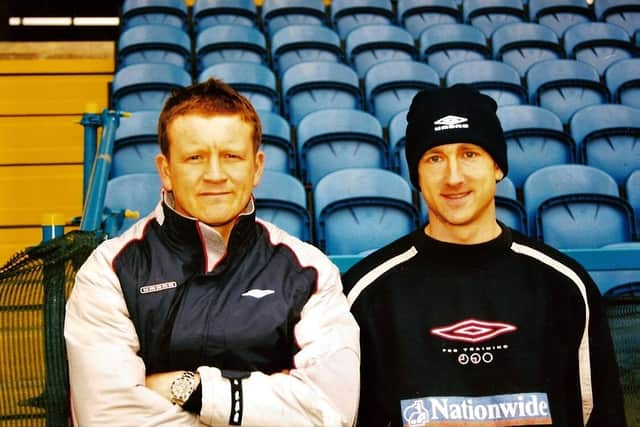
He'd been brought to Scandinavia on the recommendation of scouts sent out to watch one of the country's finest youth sides. Over the course of a few months, Wednesday scouts had taken a close look at SF Grei, a provincial side born out of a sports club on the outer reaches of Oslo. At under-17 level, they had grown to become one of the best sides in Norway. Their star player was Rocky Lekaj and though Owls scouts had liked what they'd seen, it was MacAuley who would have the final word on a deal to bring him to South Yorkshire at the age of 16. It was a big undertaking.
"We moved over with the whole family, we left Norway," Lekaj said. "Me, my brother, my two sisters, my parents. It was quite intense the first couple of months. I wanted to go back home again immediately, but my parents told me to stay here and it would be good for me."
Lekaj remembers the family were moved en masse to a house in Chapeltown, the arrangements made and paid for by Wednesday. His younger brother Leon, also a talented player, was also signed to the Owls youth ranks. The club had made moves to bring other youngsters from abroad previously - youngsters moved over the Irish sea often and were placed in digs - but this was a rare move and a show of huge faith in a talent wanted by a number of clubs in England and in Europe.
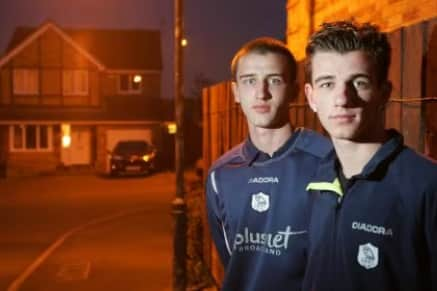
It proved a culture shock to the family and Lekaj himself, who looking back laughs at the teething problems experienced in his first weeks in England. Wednesday placed his siblings in schools, helped his parents find work. But it wasn't easy.
"We didn't speak English," he said. "When we came to England my two sisters were young, starting school. They'd never had school uniforms before, it was all different. I would take the bus with some of the Irish players, we would have coaching school, training, lunch, more training and more school. These were long and intense days. I would come home, eat dinner and go straight to bed!"
Despite the circumstances, it was not the most stressful move they had made even to that point.
A refugee toddler
Slobodan Milošević was appointed President of the Presidency of Serbia in May 1989, six months before Rocky Lekaj was born in Peć, Kosovo.
The region is one laden with long-standing tragedy and conflict brought about by tensions between Yugoslavian authorities and Kosovan Albanians. It's widely recognised that Milošević was brought to power on the strength of nationalist speeches and ideologies that would seek to reduce the rights and living conditions of the Albanian community, which scaled over 90% of the population, in doing so exploiting the grievances of Kosovo Serbs in the region.
He wasted no time. The early months and years of his power saw political institutions restructured to repress the democracy in Kosovo, it saw schools closed down, Albanian-language media halted and constant curfews placed on inhabitants. As the region fought against its repression, hundreds of thousands of ethnic Albanians were fired from government and state-run institutions.
Within a few years, it was estimated that the unemployment rate in the Kosovar Albanian population was higher than 70%. An Amnesty International report stated that the economic apartheid imposed by Belgrade was aimed at further impoverishing an already poor population.
Uprising led to a late 1990s war in which regime forces killed between 7,000 and 9,000 Kosovar Albanians, engaged in countless acts of rape, destroyed entire villages, and displaced nearly one million people. It was mass-scale ethnic cleansing. A bitter war ended in June 1999 after over a year amid NATO intervention led by Tony Blair's young Labour government. No side was absolved of war crimes.
It was in Lekaj's early years - and those early years of Milošević rule - that his family fled his homeland to seek refuge in Norway. It's not something he is keen to discuss in too much detail, but there's no doubt it has given him a perspective on life few could imagine.
"It was the war, we moved over as refugees and it took us one year to get a passport and become a citizen of Norway," he said. "We were so grateful to that country for welcoming us in as refugees and I have so much respect for Norway and England. My blood is Kosovan. Unless something crazy happens, I would never change to live anywhere else but Norway now. I maybe think of myself as half and half but my blood is Kosovan."
His family were forced to adapt to new surroundings, a new climate, a new language and new work. Since granted independence as recognised by 111 diplomatic states, Kosovans are known to voice their support of the UK for their role in its liberation - a 2014 Guardian article uncovered scores of Kosovo Albian boys named 'Tonilber' in homage to the former Prime Minister.
"When I was homesick in those early months in England, I remember my parents sitting me down to explain to me that the culture was the same as ours from Kosovo, I loved it. It's all about respect, respecting your older friends, be humble.
"I was maybe not that in the beginning - I played in red boots! I did that not because I didn't know about the culture in football in England. I was only a kid! It made it hard, playing in red shoes. Now things are different of course.
"I am so grateful to have come over. Sean was so hard for us, but he helped me so much in my life after Sheffield Wednesday by how he was. In my career and outside life, I became tougher and more disciplined maybe. The culture is to be hard, to want to be the best. I took so much with me and I am still using it now."
With Rocky Lekaj, the conversation always comes back to football.
An Owlet clipped
Lekaj remembers himself as a relatively reserved young Sheffield Wednesday footballer. While teammates in youth sides set about turning 18, discovering the Sheffield nightlife and all that came with it, the Norwegian boy stayed grounded.
He was no recluse - he'd go out, but he'd drink cola. He was there to play football. The first thing he remembers doing in South Yorkshire is buying a pair of plastic goals from Meadowhall and together with his brother Leon he'd play for hours in their Chapeltown garden.
Things were going well at Wednesday. After a self-admitted slow start he had grown into reserve team football and made his first team debut on March 17 2007, replacing Steve MacLean as a late substitute in a 2-0 Hillsborough win over Colchester United. Rocky Lekaj was the youngest Norwegian player to ever play in the English leagues.
From there things got difficult. Injuries combined with the signings of attacking wide players to ensure Lekaj didn't play senior football in the 2007/08 campaign - he never made a senior squad - but form in the reserves led to a handful of substitute appearances the season after.
It was that goalscoring form in the second string that eyed-up Football Manager fame, he assumes, and while there is a sense of frustration that things never took off for him at S6, there's a philosophical outlook. And a great deal of self-reflection.
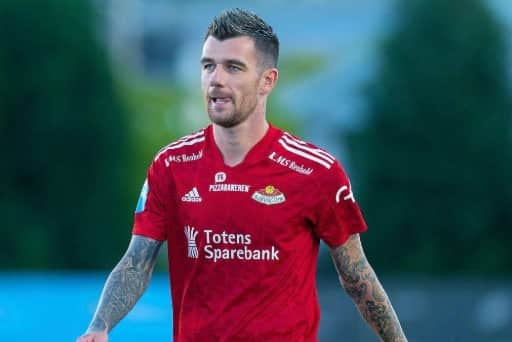
"I had one season when I think I was top scorer for the reserves, scored most games. I felt that was the year to kick on, but I never properly got the chance. At the time, I felt that was the sign to move back home. We had so many coaches at that time and it was hard to start again each time. I was told I would play but it didn't happen. It was bad."
He remembers the good times; time with the family in S35, Meadowhall, trips to Nandos with Deon Burton and Leon Clarke. Fans who recognised him were always kind and respectful. The buzz of playing in front of thousands of them is one he admits he still hankers for all these years on.
He still keeps in touch with Sean McAllister and counts Etienne Esajas and Liam Palmer as friends. He'd mainly knock about with his brother - given their background, there's no surprise that so much of Lekaj life started and ended with family. But there's plenty he took from S6.
"I learned so much from Chris Brunt," he said. "I was a child when I arrived but I would watch him in training and understand things, his crossing. I was so grateful training with them and the coaches welcomed me.
"Brian Laws I will be grateful to forever. I had injuries, my head wasn't right, I was missing home all the time. I didn't perform how I should have and the coaches maybe thought I was not serious enough. I was very serious, I never drunk or got into trouble, I was focused on my football.
"I found it hard to express myself because I was so young. The culture in English football is that if you don't do well they change you straight away. If you don't take that chance you are out."
In some ways, that chance never really came. At the start of 2009 Lekaj plundered 14 goals in 10 reserve games and was assured of senior football should he go away on loan, bulk up and ready himself for the rough and tumble of the EFL. He spent time back home at Sandjeford, with injuries again hampering his progress.
By the time he'd returned Laws' time at Wednesday was all but up. A few months later, so was their time in the Championship.
Regrets
Speaking 14 years on from his departure from Sheffield Wednesday, Lekaj uses the word 'regret' an awful lot in a relatively short conversation.
It was suggested at the time that he was released by the Owls, Alan Irvine's summation of the player colliding with their 2009/10 relegation to end a venture that simply hadn't worked out as Sean MacAuley would have dreamed it on that Scandinavian pitchside three years before.
In actual fact, partly frustrated by a lack of gametime and partly longing for the home comforts of Norway along with his family, it was the youngster that asked to leave. His contract was cancelled with a year left to run.
"Maybe I shouldn't have left when they were relegated," he said. "I wanted to come back home, perhaps everybody thinks I was released. But I had a problem with my family and everybody wanted to go home. We had been there for so many years and I didn't play so much in England.
"I had offers from clubs in Norway, I had one year on my contract, but Wednesday were relegated. People think I was released, but I got this offer and I asked to leave. Maybe had I stayed I would have made a success of it and found a career in England, it is hard to say.
"I regret leaving. I should maybe have stayed my contract out and fought more because you never know what could have happened. In League One maybe I could have got a chance and played more, so I do regret I wasn't able to stay and show how I could play."
He signed for Lyn in the Tippeligaen, the top tier of Norwegian football. But in a cruel twist of fate for a young man who had tasted ups and downs unimaginable to most people three times his age, within months they had gone bankrupt.
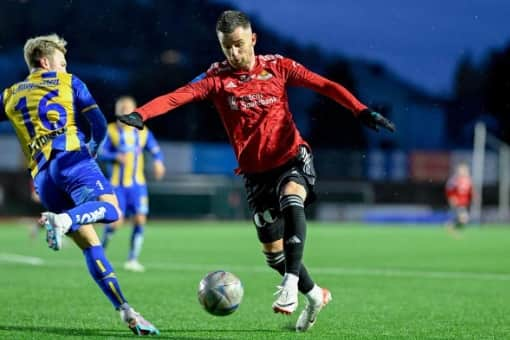
His contract cancelled and his love for the sport he once loved waning, Lekaj signed for a fourth tier side to play with friends before carving himself out a fine career anywhere between the third and first tier with the likes of Grorud, Raufoss, Kristiansund, Fredrikstad and Gjøvik-Lyn. Winding down, he rejected the chance to stay with the latter in order to take on further coaching opportunities while playing for fourth tier Skreia IL. He's undertaking his UEFA B-License and is passionate about coaching.
"These days it is different for young players," he says. "Then, when I played, it was always experienced players, but now if a young player is good they will let him play and then maybe sell him to get money. The situation is different now for youngsters, they will get better chances.
"The Sheffield Wednesday fans? Wow. I miss them and I only played so much but I felt a good connection with them. Every time I went into the city and they saw me, on the pitch, they were always so supportive of me.
"I haven't had the chance to come back. I wanted to let my son and daughter grow a little bit so they would enjoy it. I also didn't have a wife then so she will enjoy it with us. I will come and watch a game this season."
His son - the one who will rush to his father's side to show him YouTube videos of Sheffield Wednesday - is a talented player and Lekaj hopes he can steer him onto a path of life as a professional. But only if he wants to.
He said: "My son is very good. I am teaching him what to not do because of my experience. I think he can be better than me. I always wanted to be a young dad so that my son could follow my football routine. He always came to my games, I didn't push him, he wanted to do it himself. You never know in football, if he ever got the opportunity to go to Sheffield Wednesday he would take it, I promise you. He is invested already."
As we go to end the call, Lekaj interrupts with something he wants to say. It strikes as the very reason he made the premature phonecall in the first place, a message that has perhaps been permeating for some time.
"I want to say, to Sheffield, thank you for everything," he says, just a whistle of emotion breaking through a proud accent. "It was a great time in my life and a wonderful opportunity. I watch today and hope you get back into the Premier League because the fans deserve it. When I come back, hopefully some of them will remember me - I am not too young anymore. I will never forget always going to the shop and hearing 'Hello Rocky, are you OK?' It is something that sticks with you all your life.
"I want to thank the fans and Sheffield Wednesday. It was not their fault, it was my fault. I wanted to go back home. I am so grateful for the opportunity and I am sorry I was not able to show what I could do. I think they could have enjoyed me. That is what I regret most from it. I knew I could do something."
Such is life, we'll never know. Much like the blonde in his hair back in his Wednesday days, there's no doubt Rocky Lekaj has a streak of regret in him. But with memories, a young family and football still very much in his life, he has so much more than a streak of happiness, too.
This article was first published as part of the ‘Alex Miller on Wednesday’ newsletter series in 2024.