
The creation of Old Sheffield Plate and the most fortuitous moment of luck
This is the story of Thomas Boulsover and how a fluke led to the creation of Old Sheffield Plate by fusing two metals
The history of Sheffield is both heavily steeped in and massively influenced by its impact on the world of metallurgy, with the fame of many forged through years of experimentation and refinement.
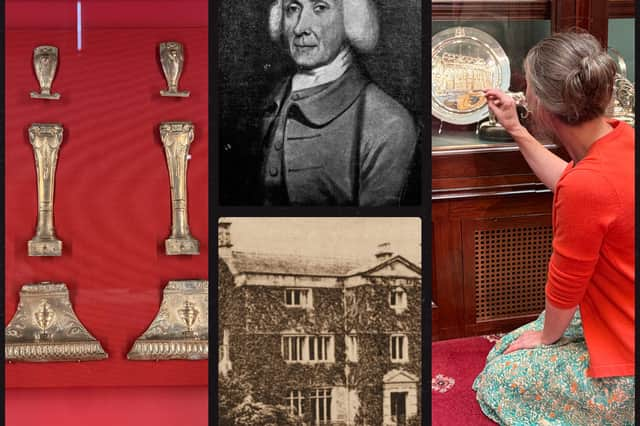

This is the story of Thomas Boulsover and how a fluke led to the creation of Old Sheffield Plate by fusing two metals.
Born in 1705 to Samuel Boulsover and Margaret Brownell in Bolsover Cottages situated in the remote hamlet of Longley, which is now where Northern General hospital stands, Thomas Boulsover was baptised in Ecclesfield church on October 18, 1705.
When he was 13, Boulsover began his apprenticeship to learn the trade of cutler, under the tutelage of Joseph Fletcher, of Wirksworth, Derbyshire, an established cutler in the (at the time) town of Sheffield.
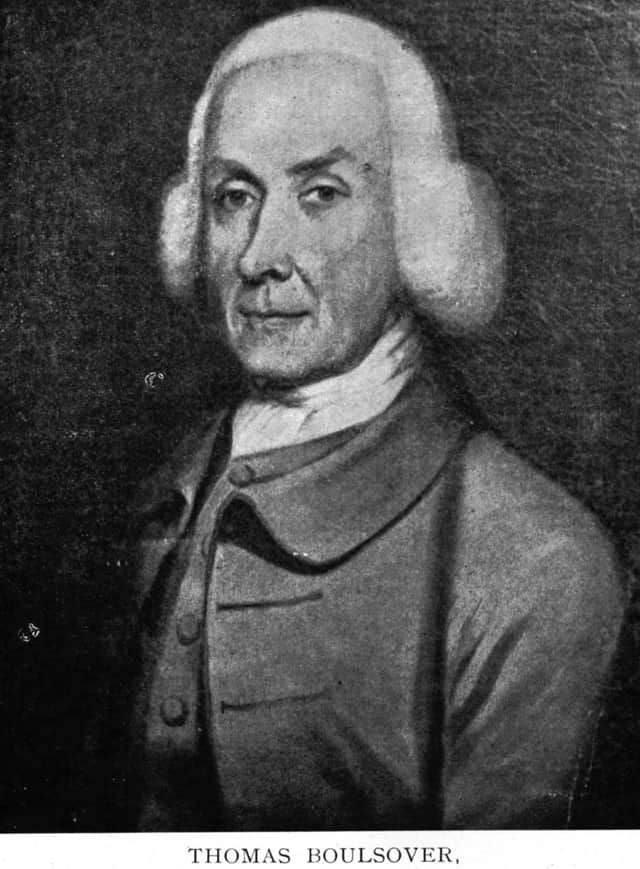
After he completed his apprenticeship in 1726, Boulsover was granted the freedom of the Company of Cutlers in Hallamshire on November 26, 1726 and he received his mark – an act that is noted in the Freedoms Book at Cutlers’ Hall.
Boulsover chose to forge his own path practising as a free cutler, he married Hannah Dodworth in 1728, before setting up home in Norfolk Street – a location at the time synonymous with groupings of other fellow cutlers settling in the area.
In the early 1740s, Boulsover moved his business to Sycamore Hill (now Tudor Street) with his workshop located on the corner of both Tudor and Surrey Street.
A memorial exists to show his connection to this area, where just a few years after setting up shop, Boulsover would make the discovery that would forever link him to Sheffield’s metalworking history.
The provenance of Old Sheffield Plate can be traced to 1743 when the (at-the-time) 38-year-old Thomas Boulsover, a cutler, was repairing a knife for a customer.
It was during the course of repairing this item that Boulsover was to discover an entirely new method of fusing two metals together – in this case, copper and silver.
It has been suggested that the knife in question was of a good quality with a highly-decorated handle, which was inlaid with copper and silver. In order to repair the knife, Boulsover needed to heat both the blade and the handle.
However a mistake was made whereby he had overheated the handle and the silver part hit its melting point. As he attempted to find a means of restoring the handle to its previous state, Boulsover noticed that the copper and silver had fused together, bonding in unison.
His curiosity at this find led to experimentation that showed that while both the copper and silver behaved as one metal, the two layers appeared visually distinct from one another.
Boulsover continued investigating this finding, further experimenting with the two metals, reworking and remoulding – which never separated and showed the copper through the silver. This led Boulsover to realise that he could produce silver-plated items like buttons for far less cost.
The buttons created by Boulsover were die-stamped from a fused sheet of metal, cut out, and then polished and polished to the point it was nearly indistinguishable from real silver. This new method of fusing two metals to make silver plating was called Sheffield Plate. It was not only cheaper but highly desired and became very fashionable.
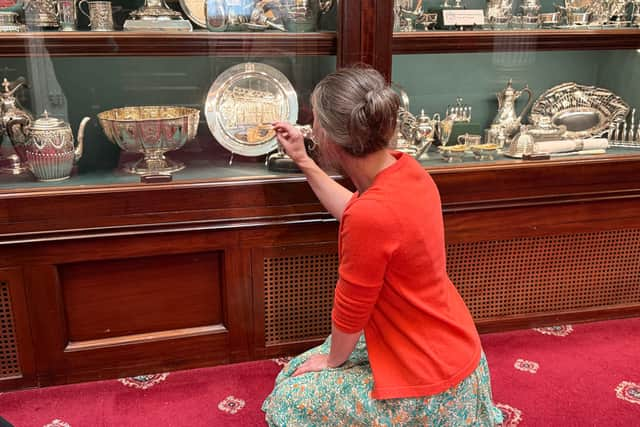
This process, like Benjamin Huntsman’s, was never patented and ultimately became a model emulated by many other firms throughout Yorkshire and further afield.
Sheffield cutlers Thomas Law and Joseph Hancock set up very successful rival firms - Hancock who focussed on larger hollow plate manufacturing was at one point incorrectly credited as the inventor of Old Sheffield Plate.
In 1751, Boulsover was elected as one of the 24-assistants to the Master Cutler, although he was re-elected he never attained a higher position in the Company of Cutlers.
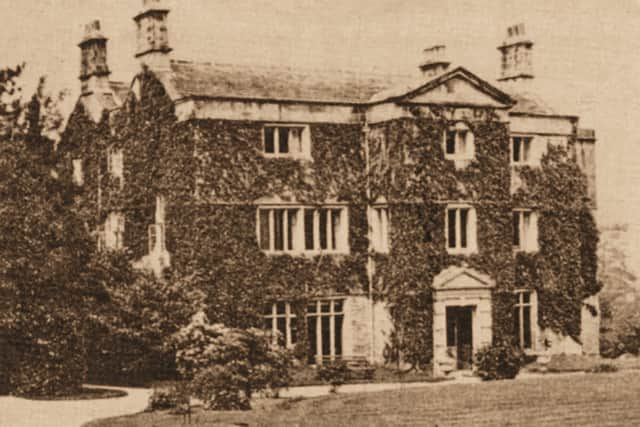
Boulsover’s button business continued to thrive, in 1757 the business moved to Norfolk Street (where the Crucible Theatre’s Stage Door is located). That same year, he also bought Whiteley Wood Hall – which was demolished in 1957.
His story did not end there however, despite public memorials recognition of his inventions ending there.
In 1760, he turned his attention to the manufacture of better-quality steel, Huntsman’s Crucible Steel process aided greatly, with rolled cast steel providing a much better edge to saws rather than hammering the metal.
Then in 1762 he built possibly the world’s first saw factory on the River Porter, below Whiteley Wood Hall.
The company, Boulsover & Co. – based at Whiteley Woods and Norfolk Street – was in 1774 described as “makers of saws, fenders, edge tools, cast steel and emery”.
Thomas Boulsover died on Tuesday, 9 September 1788. He is buried next to his wife Hannah in St Paul’s Church. They had 10 children, two daughters survived to adulthood.
There is a monument to Thomas Boulsover on the north side of Wire Mill Dam at Whiteley Wood Road.
St Paul’s Church would later become Peace Gardens and the remains of those from the graveyard were interred into just 14-grave plots in Sheffield's Abbey Lane Cemetery.
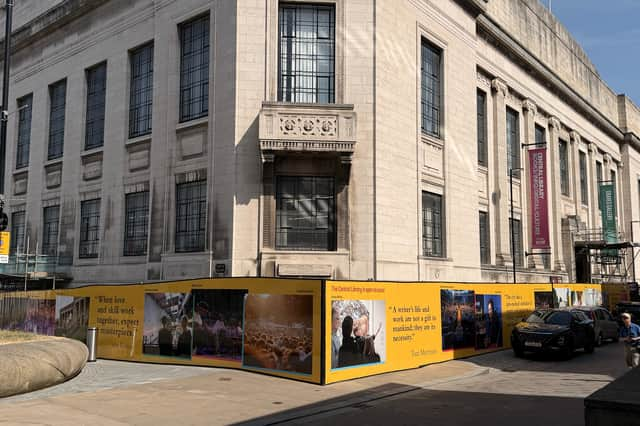
A memorial to Boulsover is situated on Tudor Square, next to the Sheffield Central Library, although this has remained obscured for many months.
Like much of the history, re-burial, and legacy of this metallurgist and inventor, Boulsover’s memorial is hidden, unknown.