
How the secret Crucible steel method was stolen by a beggar and kick-started Sheffield's Industrial Revolution
Benjamin Huntsman and his most-famous invention, the crucible steel-making process, is forever intertwined with the city’s history
Benjamin Huntsman invented crucible steel with a more even composition and greater purity than previous methods.
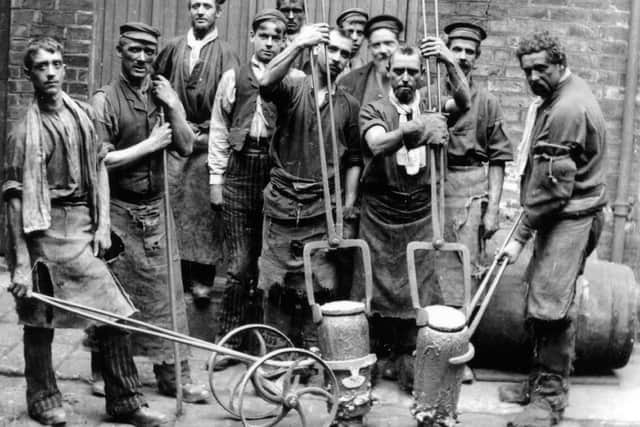

Benjamin’s secretive crucible steel-making process was highly-feted and despite being stolen, kick-started the Industrial Revolution in Sheffield
Although he was not a Yorkshireman by birth, Benjamin Huntsman and his most-famous invention, the crucible steel-making process, is forever intertwined with the city’s history, and became the foundation for Sheffield’s emergence as a worldwide steel-making powerhouse from the 18th century onwards.
Born in 1704, Benjamin was the fourth child of William and Mary, a Quaker farming couple. While the lineage of his parents is disputed, with many reports stating that his parents were German who moved to England before the birth of Benjamin, it appears they were actually from Lincolnshire.
What is certain is that Huntsman displayed an intelligence and aptitude across many fields, he initially started in business as a clock, lock and tool maker in Doncaster. Yet he also managed to forge a local reputation for his scientific knowledge, practicing surgery in an experimental form – a skill that resulted in him being consulted as an eye doctor (now known as an ophthalmologist).
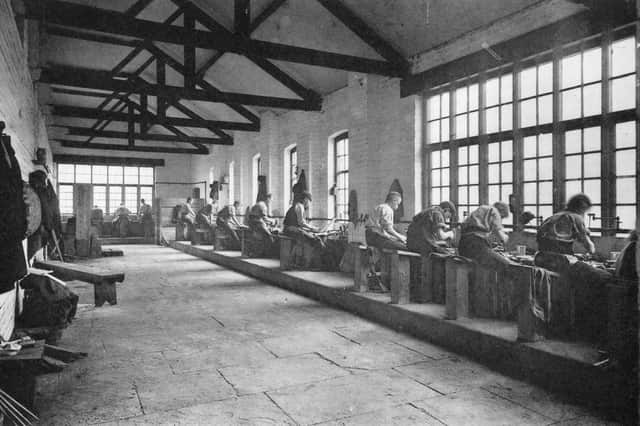
Based in Doncaster for a time, Benjamin grew steadily frustrated with the quality of German steel that he was using for his clock making and thus began a years-long process of experimentation to find a better means of improving the purity of steel.
His experiments saw him move to Handsworth in 1740 (at the time just outside the town of Sheffield), where he could obtain cheaper fuel for his furnaces.
His painstaking process took several years before yielding a satisfactory cast steel, which was both purer and harder than any steel in use at the time – and this led to the invention of the ‘Crucible steel’ process.
In this process, pieces of common cementation steel are placed in a clay crucible or "pot", green glass is added before being melted down in a sufficiently hot air furnace (up to 1,600ºc), and the molten metal finally poured into molds.
Instead of being praised for his creation, Benjamin was shunned by Sheffield cutlery makers who wouldn't buy it because it was too hard and not malleable enough.
So, he exported all of his steel to the French, creating overseas cutlery competition, causing friction with Sheffield cutlers – who subsequently attempted to get the export of Huntsman’s crucible steel prohibited by the British government.
However, once it became apparent that Sheffield cutlers’ merely wanted to stop competition and had no intention of utilising Benjamin’s crucible steel they were over-ruled.
Eventually, Sheffield cutlers’ acquiesced and began to use the much better quality steel, only after realising that the French-made cutlery made from his steel was superior.
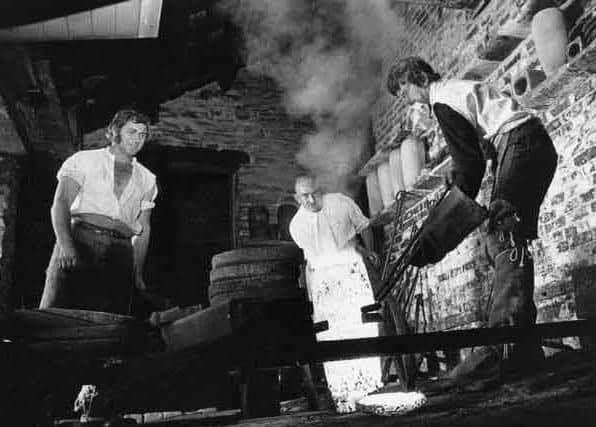
In 1751, Benjamin constructed his first purpose-built steelworks at Attercliffe, at the time a village on Sheffield’s outskirts. The crucible steel-making process had become one of the most desired manufacturing secrets of the 18th century.
As a devout member of the Society of Friends (Quaker), Benjamin did not patent his idea because he didn't want to attract attention – instead he swore his workers to total secrecy.
Many attempts were made to find out the secret process, not just in England but overseas too.
But legend says that it was the nefarious act of a man named Samuel Walker, a rival steelmaker, who disguised himself as a beggar seeking shelter on a freezing winter night, which led to the secret being leaked.
While Walker “slept” in the warmth of the works, he was actually observing and memorising each step of this newly discovered yet secretive process. It is said that three months later, Walker’s steelworks in Grenoside were also producing crucible steel – followed by others who obtained the knowledge.
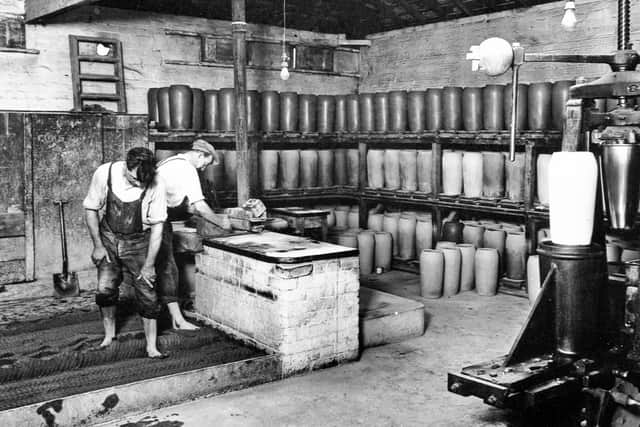
Despite the theft of his previously secret process, Benjamin remained successful up until his death on June 20, 1776. His son William Huntsman (1733–1809), developed the business into further success – even recovering from bankruptcy at one point.
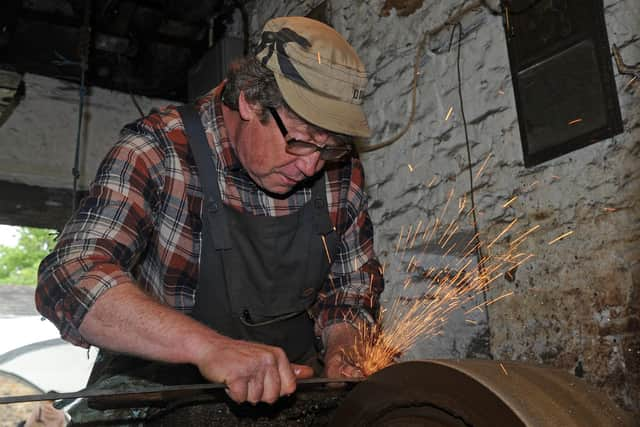
Less than 100-years later, crucible steel was succeeded by the ‘Bessemer Process’, which catapulted the city’s steel production from around 200 tonnes of steel per year to over 80,000 tonnes – further speeding up the process and making steel even cheaper.
The legacy of Benjamin Huntsman is today signified by a statue outside Meadowhall, a blue plaque at the Grade-listed Hill Top Chapel in Attercliffe where he is interred, and also in the naming of a JD Wetherspoon pub, ‘The Benjamin Huntsman’.
The city’s Crucible Theatre was named as a reference to the pioneering process, and at Sheffield’s Northern General Hospital, a building is named after the man who helped drive the region’s rapid industrialisation.
Like many Sheffield steelworks, the Huntsman steel-making dynasty was eventually absorbed by another company. The crucible steel-making process became obsolete, although the casting process was still being used for labouring tools such as the Stanley plane until the 20th century.