
Varied history of Sheffield’s Barker’s Pool - from historic water source to lost department store
We take a look back at Barker’s Pool’s evolution over six centuries
The site of Sheffield's Grade II-listed former Cole Brothers store in Barker's Pool has nearly 600 years of history.
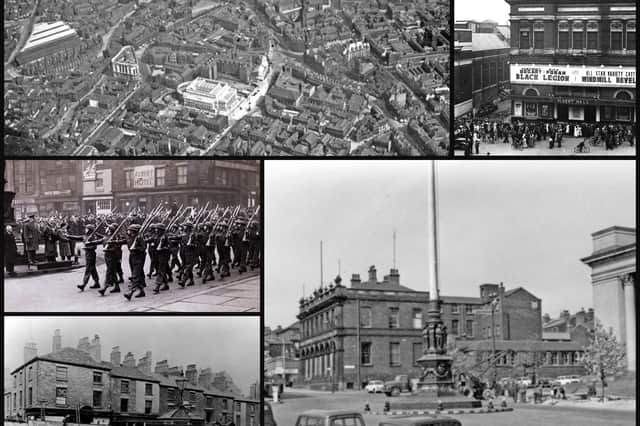

Known as Balm Green until 1434, it was originally a collecting point for natural springs. According to legend, a Mr Barker built a reservoir here to store water, giving the area its name.
The earliest official record documenting the pool as a masonry enclosure dates back to 1567. A shuttle mechanism was added in 1572, allowing water to stream through Fargate and High Street toward valley reservoirs. This provided a monthly wash to clear rubbish from the streets and assisted local firefighting efforts.
Hidden Sheffield Walks guide Calvin Payne noted that for around 300 years, the pool was vital for Sheffield’s drinking water and street cleaning, with sluice gates opened to let water flow down to the River Don.
By 1753, the pool had deteriorated into a foul, stagnant basin. As water provision shifted to the Crookesmoor Valley reservoirs, the pool was dismantled. A hand pump remained at Barker’s Pool until 1876 as the final remnant of this early water infrastructure.
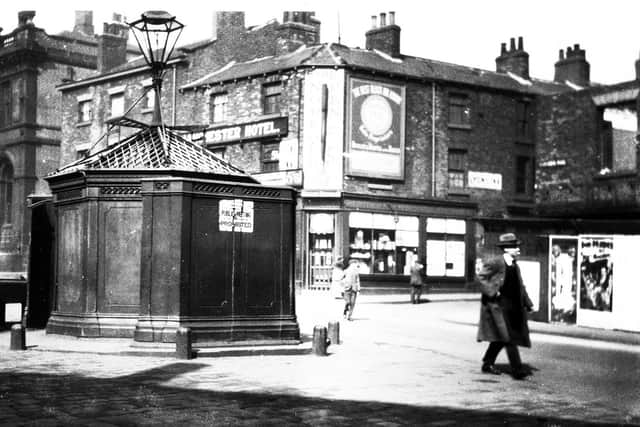
Prior to the rapid growth of the town, Barker’s Pool was once the highest point in Sheffield.
By the early 19th century, Sheffield became a key hub of the Industrial Revolution. As processes advanced, orchards and greenery gave way to air thick with acrid smog. By 1850, the town had more than doubled in size, and industry moved away from Barker’s Pool.
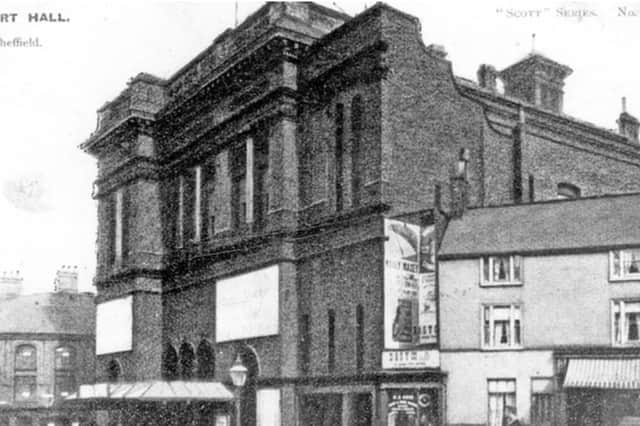
Barker’s Pool would evolve into a centre for Victorian entertainment. The site of the Cole Brothers store was originally home to Quaglen’s Circus before it was cleared in the early 1870s for a grand permanent venue: the Albert Hall.
Designed by local architects Flockton & Abbott at a cost of over £20,000, the Albert Hall opened on December 15, 1873, as a lavish concert venue. It would later be converted to a cinema, fatefully.
A Memorial Hall was initially proposed in 1916 as a tribute to soldiers who died in the Great War (WW I), the project eventually expanded into what is now the multipurpose City Hall. The neoclassical venue for arts and entertainment would eventually be designated as a Grade II-listed building.
Architect E. Vincent Harris secured the commission in 1920, though economic difficulties following the war put construction on hold for eight years. Work officially commenced with the laying of the foundation stone on June 27, 1929. Local contractor George Longden & Son constructed the building using materials such as Hopton Wood and Darley Dale stone, completing the project in 1932. Damage sustained during the Sheffield Blitz in WWII remains visible on its exterior pillars today.
On July 14, 1937, a disastrous fire gutted the Albert Hall following a film screening. The charred ruins stood for years, and its historic organ (at one point mooted for relocation to the nearby City Hall) was lost.
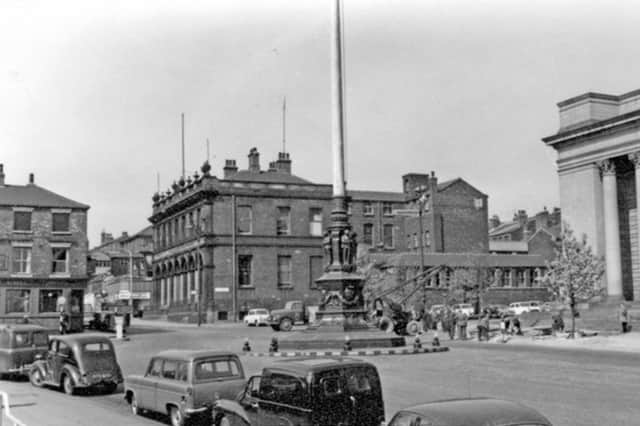
Did you know that the Sheffield War Memorial was designed to be the same height (27 metres) as Sheffield City Hall?
Crafted from a single length of mild steel in Hull, the Grade II-listed war memorial was transported by rail to Sheffield's Wicker station. Navigating the structure through narrow city streets to Barker's Pool required steam tractors operating in the early hours of the morning.
In 1937, Balm Green Gardens (also known as ‘Barker’s Green Gardens’ or ‘Fountains Pool’) was gifted to the city by J.G. Graves. It remains one of the last references to the area's original name.
The surrounding area developed into a popular leisure district, framed by businesses like Wilson Peck and the White Lion Hotel. It also featured the Regent Cinema, which later became the Gaumont and then the Odeon in 1987. The multi-storey stairwell famously featured an expansive mural by local artist Joe Scarborough depicting Sheffield’s heritage.
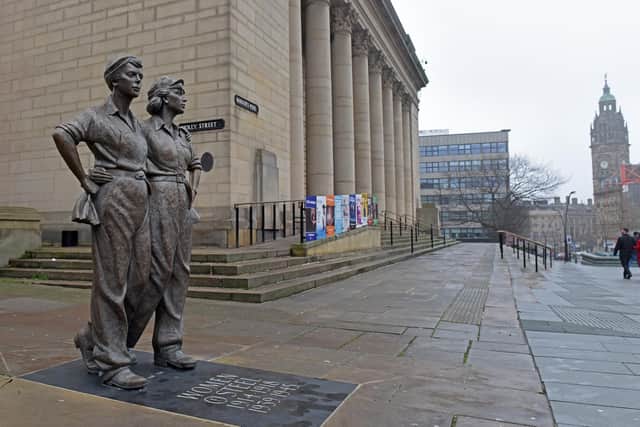
In 2016, the Women of Steel statue by Martin Jennings was unveiled to honour the local women who contributed to the war effort during World War II.
Following WWII, the vacant Albert Hall plot was acquired by the Sheffield Corporation. In 1963, the landmark Cole Brothers department store opened on the site, a modernist building designed by Yorke Rosenberg Mardall for the John Lewis Partnership. The historic Cole Brothers name was used until 2002, until it was dropped when the store officially rebranded as John Lewis.
🎞️ Did you enjoy this look back to the Sheffield in the years’ past? If you did, then you should sign up to our free retro newsletter.
In 2021, John Lewis executives announced the store's permanent closure despite a public petition signed by over 20,000 people. The building was granted Grade II-listed status in 2022. Urban Splash took control in 2023 with plans to redevelop the site into a multi-purpose complex called the "Cole Store".
Today, Barker’s Pool also houses the city’s Covid Memorial willow sculpture, honoring essential workers and those who died during the pandemic. It remains a vibrant civic space and central gathering spot in the heart of Sheffield.