
Eboracum House: Barnsley care home rated 'inadequate' as latest CQC inspection discovers legal safety breaches

The Care Quality Commission's (CQC) latest inspection of a Barnsley care home has uncovered multiple safety breaches, with the report explaining that users ‘did not receive their medicines as prescribed’.
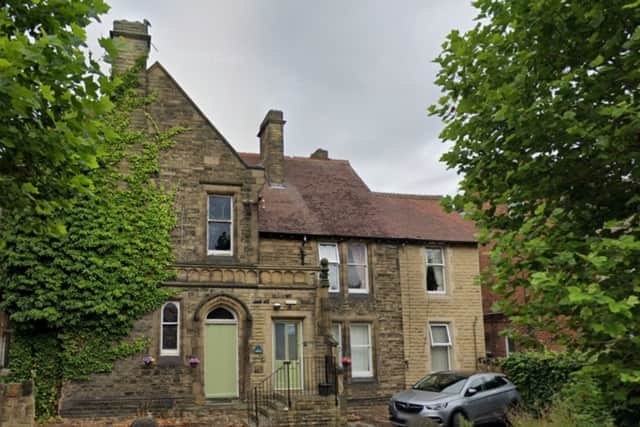
Eboracum House, on Park Grove, near to Barnsley’s popular Locke Park, was visited by inspectors in May.
The establishment is a residential care home in a detached building with large garden that provides personal care for up to 18 people, with 16 living there at the time of the watchdog’s visit.
Previous inspections in 2023 and 2021 had rated the service as ‘requires improvement’, however another inspection this year was spurred along by notifications that one person using the service had sustained a ‘serious injury’.

A report published by the CQC explained: “This incident is subject to further investigation by CQC as to whether any regulatory action should be taken.
“As a result, this inspection did not examine the circumstances of the incident. However, the information shared with CQC about the incident indicated potential concerns about the management of risk, environmental safety, the accuracy of written documents and the standard of care.”
The assessment found three breaches of legal regulations in relation to safe care and treatment , person centred care and good governance. .
The report says that since the last inspection, the service has ‘deteriorated’, discovering failures in medication management and infection prevention and control, and that the service did not ensure that records were accurate.
It continued: “Governance processes at the service had not been effective at monitoring and responding to risk. Our finding’s showed people were not given choices or consulted, and support was task orientated.
“People were not always encouraged to be as independent as possible. The culture at the service required improvement to ensure people received person-centred care.”
Ratings are broken into five key areas, with three being rated as requires improvement (effective, caring and responsive) while the other two were inadequate (safe and well-led).
Inspectors received mixed responses from service users and visiting relatives, with compliments around the quality food and how nice the staff were.
However, the assessment does point out ‘serious concerns’ around care plans, which lacked detail, and cases where people ‘did not receive their medicines as prescribed’.
“The service was in breach of legal regulation in relation to people’s safe care and treatment, the management of risk and the ways people’s medicines were managed at the service.
“Managers told us they were aware of their medication management responsibilities and had a medication policy in place. However, systems were not in place to ensure the proper and safe management of medicines, which placed people at risk of harm.
“Medicines trolleys and fridges were not always stored securely in an appropriate room. Temperature monitoring of these rooms and fridges was not documented daily as per the provider’s policy. Creams were not stored securely. This issue had not been identified by the management team and staff when completing monthly audits.
Stay up to date on all of the latest news stories in Sheffield and South Yorkshire with The Star’s daily newsletter, sign up today.
“We found fire exits and outside walkways blocked and not well maintained. This showed a failure of the provider to monitor and improve risks to people’s health and safety. These concerns were raised with the manager who assured us that immediate action would be taken to resolve these concerns.”
These failings have led to the service’s overall inadequate rating, with the home being placed in special measures.
The report explains: “The purpose of special measures is to ensure that services providing inadequate care make significant improvements. S
“Special measures provide a framework within which we use our enforcement powers in response to inadequate care and provide a timeframe within which providers must improve the quality of the care they provide.”
The full reports can be read here.