
Everything we know about Sheffield's first 'red route' coming to Attercliffe - including exemptions

Sheffield’s first red route is coming to Attercliffe - but how will it work?
Sheffield’s first ‘red route’ aims to prevent cars blocking a new cycle lane and to improve bus journey times.
More than a mile of red lines, from Attercliffe to the Arena ,will ban parking, loading and waiting 24-hours a day.
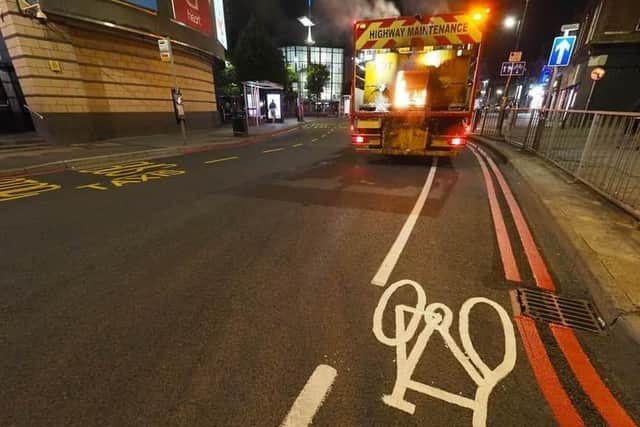

Double reds are a familiar sight at airports where they are used to prevent vehicles stopping at any time. They are also used in London, where the standard fine is £160, reduced to £80 if paid within 14 days.
A Sheffield City Council spokesperson said they had yet to decide the size of the fine in Attercliffe when the scheme starts later this year.
But here is what we do know:
The red route will extend for one-and-a-half miles on Attercliffe Road, between Effingham Road and Janson Street. It will also extend a short distance down Worksop Road to the junction with Leeds Road.
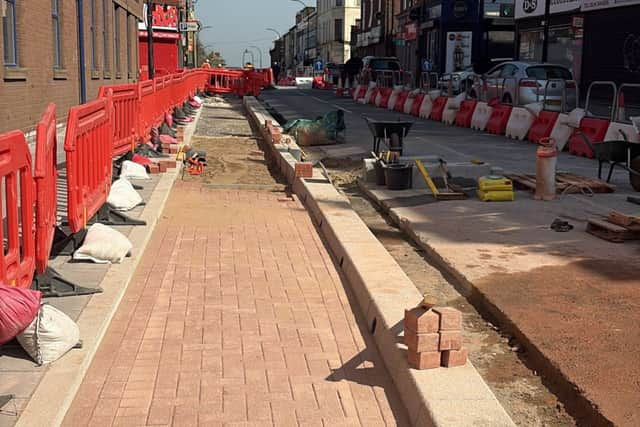
It applies to the pavement, cycle track and any verges, as well as the road itself, city council documents state.
Single red lines ban parking, loading and waiting during the hours of operation, unless in a marked bay.
Double red lines are the same, but operate 24-hours a day. Maps of the Attercliffe project only refer to double red lines.
Emergency services, Royal Mail vehicles and Sheffield City Council bin lorries are exempt, but not at bus stops.
Other exceptions including stopping when told to by a police officer, to allow an emergency vehicle to pass, or if your vehicle has broken down, although evidence will be required.
Drivers can stop to pick up or drop off a Blue Badge holder but must move off as soon as possible.
Similarly taxis and private hire vehicles can stop to allow a passenger to get in or out, but must move off as soon as possible.
Loading will be allowed at certain locations and times on Attercliffe Road which will be ‘clearly signed’.
Loading bays will be provided on side roads, the city council says.
It adds: “Without enforcement, once the scheme is delivered, vehicles could park in the cycle track, impacting its use and safety for cyclists, or park on the road, disrupting traffic flows through Attercliffe. Having a red route will help address these potential issues.”
A red route is needed “to create the space needed to deliver improvements to the cycling, walking and wheeling infrastructure, helping improve the quality of the environment in Attercliffe and support the growth and regeneration of the area, there is a need to narrow the width of the road.”