


Take a stroll around Sheffield and you'll no doubt notice there are many interesting and unusual street names.
But have you ever wondered how they got those names?
In some cases the answer is fairly obvious - there are after all plenty of Church Streets, Station Roads and Market Streets around Sheffield and elsewhere in the UK which leave little to the imagination.
But there are many streets with fascinating stories behind how they were named, which tell us a lot about how the city has grown and evolved over hundreds of years.
Some hark back to famous visitors, long-lost buildings or forgotten customs, and, while the origins of certain Sheffield street names are well established, debate still rages about others.
Street Names of Central Sheffield, written by Mary Walton and first published by Sheffield City Libraries in 1977, is an excellent resource for anyone keen to learn more.
We've used it to unearth the often surprising history behind some of Sheffield's best-known streets, including Fargate, the Wicker, Spital Hill and Barker's Pool.
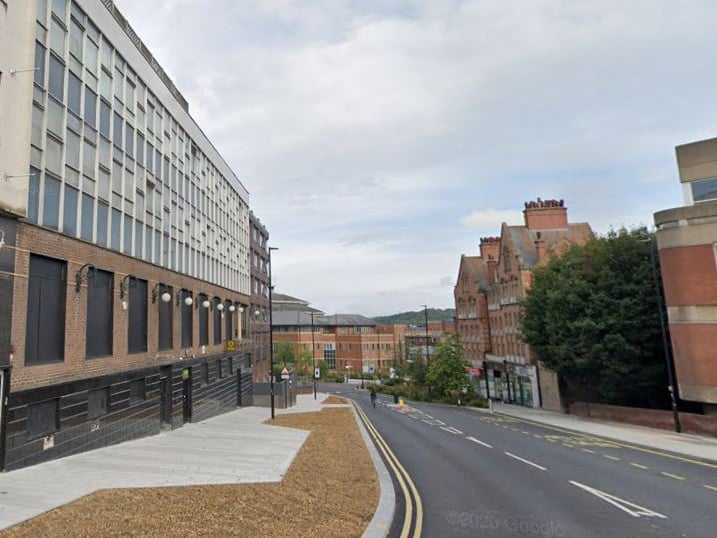
9. Snig Hill
Snig Hill is a relatively short street but is home to a police station and a legendary former music venue, the Black Swan, or Boardwalk, where the Clash played their first ever gig. There are a number of suggestions as to how Snig Hill got its name. Snig was often used to refer to a small piece, so a little hill is the most likely explanation. But it may also refer to a 'snig horse' who was once stationed at the bottom where people could hite it to pully heavy carts up Sheffield's steep slopes. A snig pole, meanwhile, was used as a brake on carts going downhill, making this another possible derivation. | Google
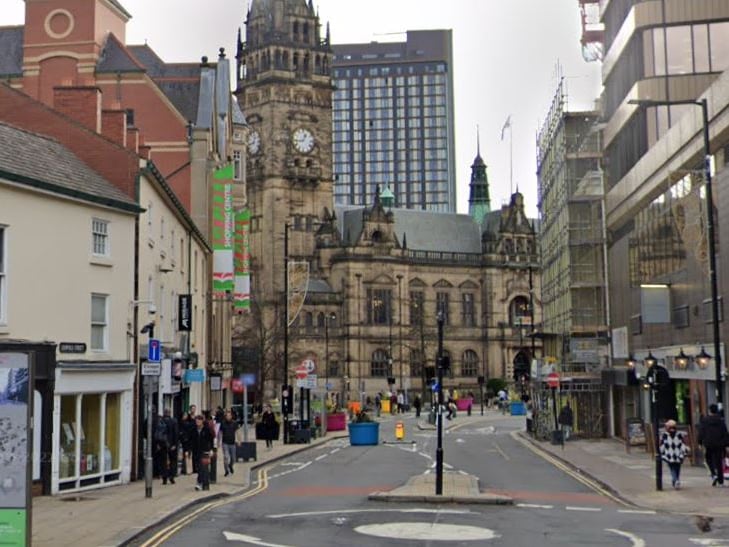
10. Leopold Street
Leopold Street, in Sheffield city centre, was formerly part of Orchard Street but was renamed when Prince Leopold, Queen Victoria’s son, opened Firth College there in 1879. | Google
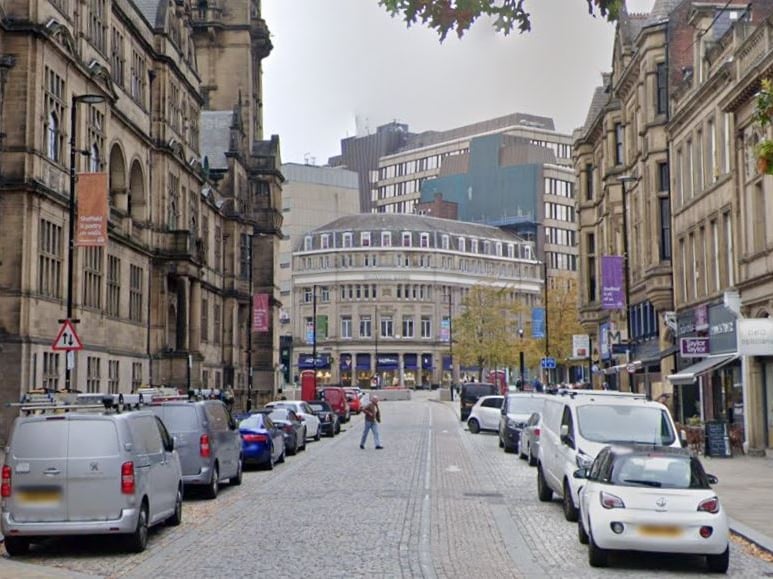
11. Surrey Street
Surrey Street, one of Sheffield city centre's most presitigious addresses, is one of many streets to take its name from an illustrious former landowner. The Earl of Surrey, later the 10th Duke of Norfolk, laid out Sheffield's first planned streets, through his agent Vincent Eyre, in the 18th century, in what was described as a 'neat piece of planning' for the time. Surrey Street was named after his title, Arundel Street for his main residentce, Charles Street for his Christian name, Howard Street after his surname, Earl Street for his rank as Earl Marshall, and Furnival Street after his 13th century ancestors. There is an Eyre Street, in hounour of the agent, but no street named after the surveyor behind the new layout, William Fairbank. | Google