
Ye Old Harrow Broad Street: Pictures show what could now replace famous 'most haunted' Sheffield pub

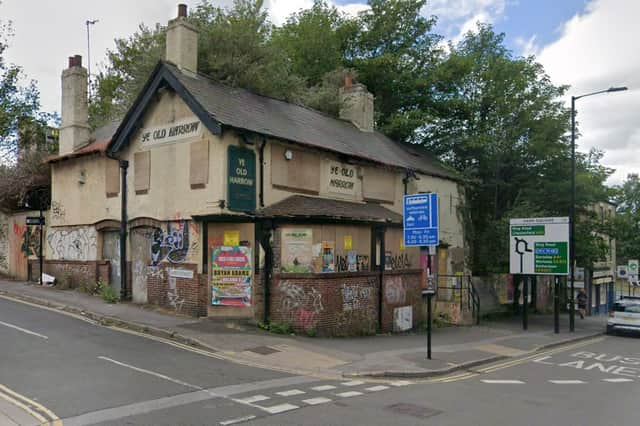
Pictures show how the site of a former landmark pub, dubbed Sheffield’s ‘most haunted’, could look under plans to redevelop the site.
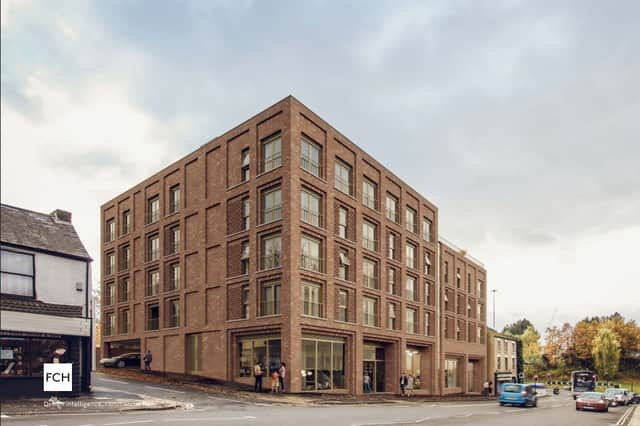
The artists’ impressions shows how the site on Broad Street, near Park Square, would look under the plans which would see flats, a gym and offices built on what for generations was Ye Old Harrow pub.


Once a popular watering hole for people living in Park Hill, the pub closed in 2008, and was also the victim of a fire 11 years later.
It was once known as one of Sheffield’s ‘most haunted’ pubs before it fell into dereliction.
The pub opened in 1822.
Now, pictures submitted to Sheffield Council’s planning department show how a planned block of flats, with a gym and office space, could look under plans submitted by developers.
They show a new five floor block which could be constructed on the site.
Developer D&S Properties SPV Ltd wants to create 39 homes in the building, along with the gym and office space.
The firm said in a document sent as part of a planning application: “The site is situated within a highly sustainable location, being located less than a 10 minute walk from Sheffield Train Station and Sheffield Interchange Bus Station.
“There are also a number of other amenities such as schools, commercial shops and health and community facilities all located within a 10-minute drive.”
It is a scaled down version of a previous planning application which would have seen 57 homes build in a building which would be seven storeys in places.
The firm added: “In summary, the proposed development will provide a high-quality residential development and ancillary offices in a highly sustainable location. “
The company says the building would bring into use a key site which currently detracts from the Broad Street area.
They also believe it will help diversify the local community by diversifying the local housing market through attracting and retaining graduates and young professionals to whom the proposed development is likely to appeal