
One in four Sheffielders facing poverty as years of financial pressures take their toll
City children are the worst off, councillors told
Around one in four Sheffielders is facing poverty, with children being the hardest hit.
The state of poverty in the city was outlined on October 19 to Sheffield City Council’s finance and performance policy committee by council public health consultant Helen Watson.
Ms Watson said that although the cost-of-living crisis has eased off to some extent, household finances have not returned to pre-crisis levels.
A report she wrote said: “Prices for many essentials remain substantially higher than several years ago and some important costs continue to increase including housing, energy and transport.
“Several years of financial pressure have also left some households with depleted savings, debt and arrears, reducing their ability to absorb further shocks.”
The report said that improvements in household incomes for some families include the government’s removal of the two-child benefit cap in April.
Poverty remains high in Sheffield and is getting deeper, councillors were told. Approximately one in three Sheffield children live in poverty, which is above the national level.
As well as citywide geographical differences in poverty, the poorest groups include people from Pakistani and Bangladeshi backgrounds, people with disabilities and unpaid carers.
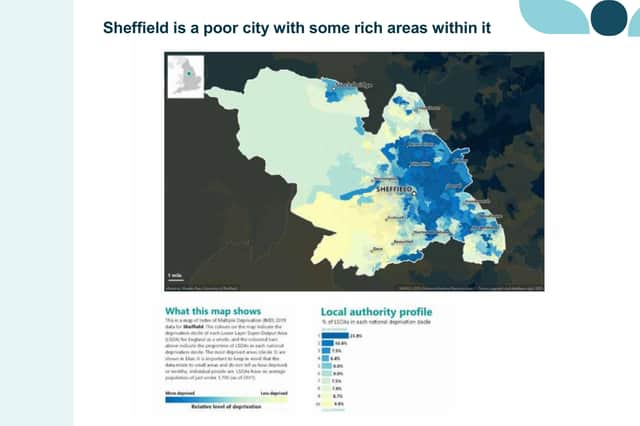

Increasingly, working people face poverty, as well as those claiming state benefits.
Committee chair Councillor Elle Dodd said: “For too many people in Sheffield life is difficult and expensive. Behind every statistic in this excellent report is someone making impossible decisions, feeling stressed and looking for a little breathing room.
“We are determined to tackle the root causes of poverty and to provide immediate support to those who need it.”
She told councillors that winter support grants from the government’s Crisis and Resilience Fund will increase by £30 per person to £95 for a single person, £110 for a two-person household, £120 for a household of three to four and £130 for five or more.
Council tax support helps around 50,000 city households and a council tax hardship scheme provides a further £2.8 million of targeted support.
Council director of customer experience and communities, Tom Smith, said that the council is implementing the findings of a city Poverty Truth Commission in February.
The aim is for people to access help more easily, to recognise that people facing financial difficulties will have other intertwined challenges to deal with and the need for council staff to understand those issues.
A ‘brown envelope code’ adopted by the council aims to deliver information in a kinder, clearer and more practical way, including details of help and support.
“We need to see the whole person, not just the financial hardship,” he said.
Danielle Lee, of Manor and Castle Development Trust, pointed out that working people cannot get council tax support, even low-paid single parents.
“The Citizens Advice Bureau are inundated by people needing advice,” she added, calling for more frontline workers able to offer information and support.
Sarah Clayton, of the Terminus Initiative in Lowedges, said that debt, including council tax debt, is a big problem. Sources of financial help are “a drop in the ocean”.
She added: “I understand that the council has to collect money owing but it is through gritted teeth. It can plunge people into significant debt and it’s not on.”
Ms Clayton said that the council needs a joined-up approach to avoid one department claiming payments for council tax or rent while another is trying to offer help and support.