
Sheffield Council leader says city will be listened to “by a government at our back, rather than at our throat”
The leader of Sheffield City Council is unsurprisingly upbeat about Labour’s first week in government, welcoming moves on greater local powers and multi-year council funding, as well as pushing for better public transport and job creation.
Tom Hunt, Labour leader of the council, which is under no overall control, is pleased that Keir Starmer’s government has been quick to announce changes that will benefit local councils and regions. “What’s changed is that we now have a government which understands the needs of working people in this city and in our region and we’ve got three cabinet ministers from South Yorkshire.
“With Louise Haigh, we have a Sheffield MP sitting round the cabinet table as transport secretary. What we’ve seen in week one of the new Labour government is a government recognising the importance of local government in the very first few days.
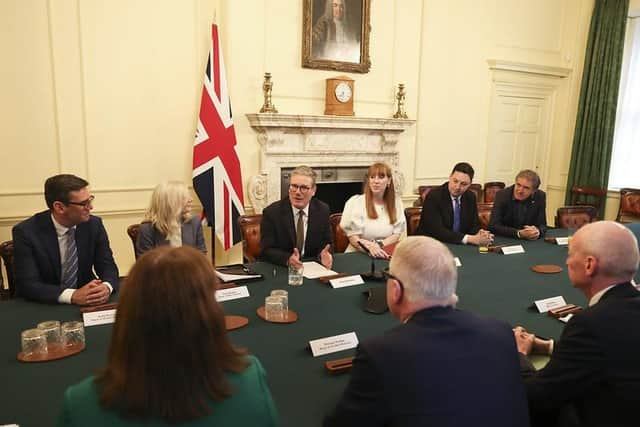
“The mayors were invited to Downing Street to have a conversation already about devolution down to mayors and down to local authority level.
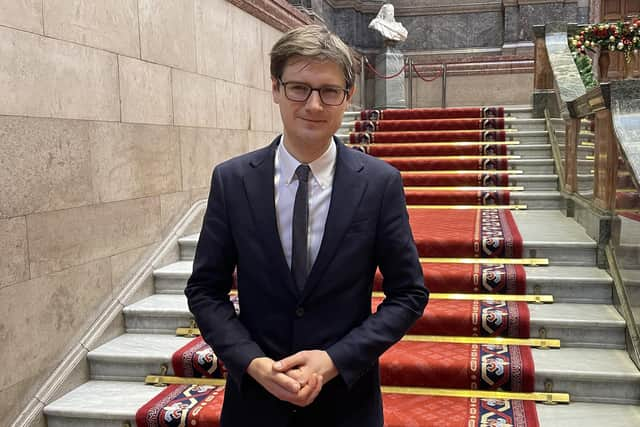

“Me sitting here as the Labour leader of the council, able to work with a Labour mayor and a Labour government, will ensure that the needs of Sheffield are heard by a government that will be at our back, rather than at our throat, which is what we have had for the last 14 years.”
He added: “We’re seeking every opportunity we can to have conversations with the government and through our MPs, through the mayor through all our connections to government, making sure that Sheffield’s voice is heard and that the priorities for people in this city are understood and need action.”
Potential
He said that high on the list are tackling homelessness and housing, improving public transport and working for economic growth “to ensure that everyone in this city can fulfil their potential”. Coun Hunt added: “These are things that we’ve waited a long time to talk to a government about – achieving success on transport, homes and economic growth.
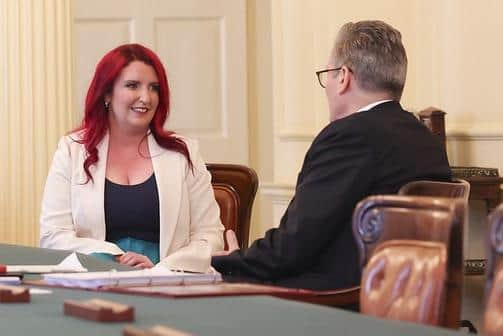
“These are not things that can only be delivered from Whitehall. The power to do so needs to be spread across the country, working in partnership with a Labour government and regional political structures, those closest to the ground who understand the needs.”
He welcomed the idea of local involvement in decision making, rather than policy directives coming from Whitehall and not being able to have any say in them.
Coun Hunt said that the Labour manifesto had promised that councils will now have a multi-year funding formula. This means that they will now know what budget they have to spend and will be able to plan ahead over the next two or three years, rather than having to wait until December every year before a final financial settlement is announced.
He also welcomed the commitment by Deputy Prime Minister Angela Rayner to end what he called the ‘beauty contest’ for councils to secure funding for major projects, which has seen councils having to bid against each other in a competitive process that takes up a lot of time and energy.
Although this is all good news, Labour have been careful to dampen down expectations on spending. Coun Hunt said that the new Chancellor Rachel Reeves has been “very, very clear” that the government has inherited the worst economic situation for any incoming government since World War Two.
Partnership
Therefore initially she is working to understand the state of public finances before making firm commitments.
He stressed: “Housing growth in this city is a priority for us. We have a strong partnership with [government housing agency] Homes England. We are developing three new city centre masterplans for Neepsend and Furnace Hill, Moorfoot and the station.
“The target is to be able to provide around 5,000 new homes. Earlier this year we got £67 million from Homes England for the first phase of Neepsend and Furnace Hill.”
Coun Hunt said that the new government wants to see 1.5 million new homes built within the time of this Parliament. In Sheffield, the target is to build 36,000 new homes over the next 15 years, 20,000 in the central area of the city.
“What we are creating here are neighbourhoods – not just shops but meeting places, workspaces, health facilities and education provision as well.”
On public transport, he said that work is under way by transport minister Ms Haigh to make it easier for authorities to take buses back under public control through franchising. This is a process that the South Yorkshire Mayor Oliver Coppard and the four South Yorkshire councils are already going through.
Vision
Coun Hunt also spoke about a vision for expanding the tram network by using tram trains on rail lines that are lightly used. This would include a service between the city centre and Stocksbridge, via north-west Sheffield.
“That would crucially provide opportunities for people in that part of the city to access education and employment and make it easier for getting around the city,” said Coun Hunt. He said it would also ease pressures on the local road network, including the M1.
The Barrow Hill line could also be used to provide services running from the old Victoria station on Wicker Arches to south-east Sheffield and Waverley, home of the University of Sheffield Advanced Manufacturing Research Centre (AMRC), as far as Chesterfield.
Coun Hunt said that the government’s pledge to end zero-hours contracts and give workers rights from day one will have a huge impact on people’s lives.
“So much has happened in the last week, one week on from polling day,” he said. “It’s very, very early days at this stage.
“We’re having those early conversations and we fully expect to be having close dialogue with people in government to make sure that Sheffield’s voice is heard very loud as plans are laid out.”