
Action agreed to tackle “steep rise” in Sheffield children excluded from schools
Urgent action to tackle a “steep rise” in school exclusions in Sheffield will include bringing in a new strategy, looking at root causes and changing negative language.
Members of Sheffield City Council’s education, children and families policy committee agreed the changes on Tuesday (June 10) during a discussion on exclusions and alternative education provision for excluded pupils. The local authority has a legal obligation to provide an alternative from the sixth day after a student has been excluded from their school.
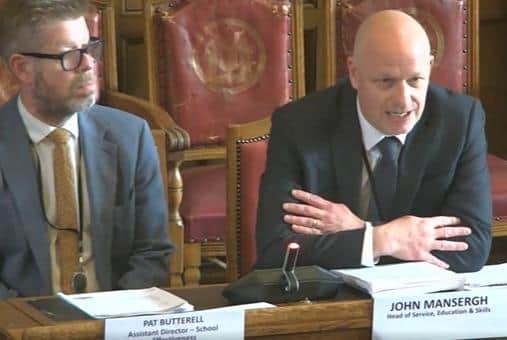

John Mansergh, council head of service education and skills, said the number of permanent exclusions over the past five years has topped 600. That includes 190 in the current academic year.
He said: “We’re deeply concerned by the steep rise of permanent exclusions in the city.

“Sheffield since 2022 has sat above national statistical neighbours and core cities for permanent exclusions and we’re now at a stage where we have a delay in arranging six-day provision for children, which is a statutory responsibility.
“We are taking action to that but the need is outstripping the provision that we have, so it feels like an urgent time for us to coordinate support and to seek your own support.”
Accountability
He said the council lacked a strategy to prevent exclusions, inconsistent challenge to schools who are excluding children and a lack of accountability. “We’ve seen a number of vulnerable children excluded,” he added.
Mr Mansergh said the number of excluded children being reintegrated into the school system is particularly low and there are some weaknesses in some council teams.
He said that an AP (alternative provision) taskforce of education leaders will report in the autumn. A challenge board will increase scrutiny of permanent exclusions.
The council is also looking at the backgrounds of excluded children over five years, including their location and ethnicity, to understand what is driving exclusions and ensure enough alternative provision.
Mr Mansergh said that alternative provision must be high quality, focused on positive outcomes and reintegration and locally available, so children don’t have to travel a long way to reach it.
He said that a Compass network of schools in south-west Sheffield, which have worked successfully together around inclusive practice and exclusion prevention, will be extended.
Language
Committee chair Coun Dawn Dale said the phrase permanent exclusion should be dropped. She said: “The language of permanent exclusion is really quite ‘that’s the end of the road’.
“Permanent exclusion sends a message that you are permanently excluded from education and actually our young people should not be permanently excluded from education. They’re just excluded from that school.”
Coun Dale said that alternative provision shouldn’t be seen as just sending children off to do boxing or arts and crafts, but using those activities to ‘hook’ children into learning in an alternative curriculum. She said young people and their parents need to know there are alternative routes.
Mr Mansergh said he would happily move away from the phrase.
Coun Maleiki Haybe said that children from ethnic minorities have been over-represented in exclusion figures for decades, adding: “It’s still not being challenged as sufficiently as it should be.”
He said it was a health and housing issue and the council needs to look more closely at issues such as insecure housing.
Coun Dale responded the danger is that the data can be “othering”, pointing to certain groups, rather than looking at root causes. “Until we can identify the causes, really we’re in a position where we continue to do what we’ve always done.”
Strategic director of children’s services, Meredith Dixon-Teasdale, said she would look urgently into the issues raised.