
VE Day: 'My dad, a Sheffield chemist, was a secret RAF war hero and never told anyone'

When Peter Ward was growing up in Sheffield, his dad was a mild mannered, shy health inspector.
But, as the city marks the 80th anniversary of VE Day this week, Peter has told how shortly before his father died died in 2013, he finally found out that his dad had secretly been one of the RAF’s wartime bomber heroes, who had been awarded a medal for his bravery.
Jack Ward, from Gleadless, was born in 1922, and had been an industrial chemist at one of Sheffield’s steelworks before war broke out.
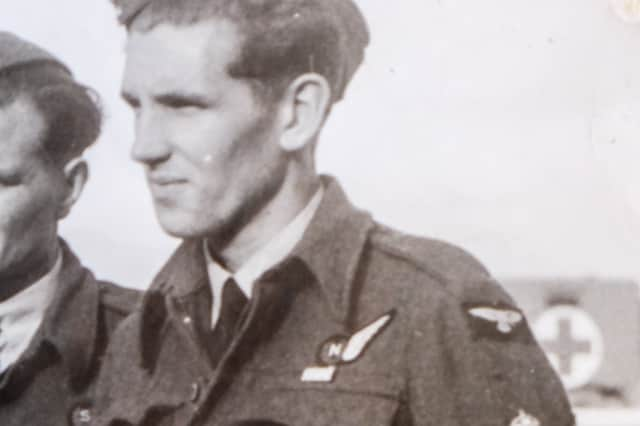

But he never told son Peter about his story until just before he died, 12 years ago. Peter has since pieced together some of the details of his dad’s service, after discovering his dad was an RAF navigator in bomber command - one of the most dangerous jobs in the war.
Of the 125,000 aircrew who served in bomber command, around 57,205 were killed in action - a staggering 46 per cent.
After signing up in 1941, Jack, a flight sergeant in 195 squadron, served in RAF bombers including Wellingtons, Stirlings and Lancasters.
And after competing the 30 missions that were expected of him under his service, he then volunteered to be put on a reserve list to put his life in danger again, if any aircraft were short of crew. It meant he made another four perilous flights in addition to the standard tour of duty, said son Peter, who is proud of his dad’s wartime courage.
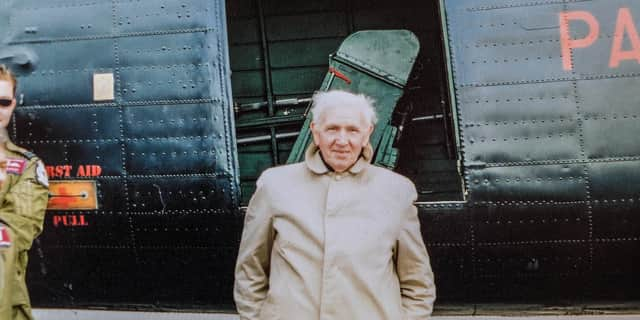
His bravery resulted in him being awarded the Distinguished Flying Medal by King George VI, who also sent him a letter congratulating him on the honour.
He survived the war, and the family moved to New Zealand for several years, before returned to Sheffield again in the 1950s.
“All I knew was that he was a navigator, and it never occurred to me to ask details. A lot of veterans never breathed a word of it . I think they didn’t want to boast,” said Peter.
He contacted The Star to share his dad’s story after hearing about VE Day celebrations to mark the German surrender, on May 8 1945.
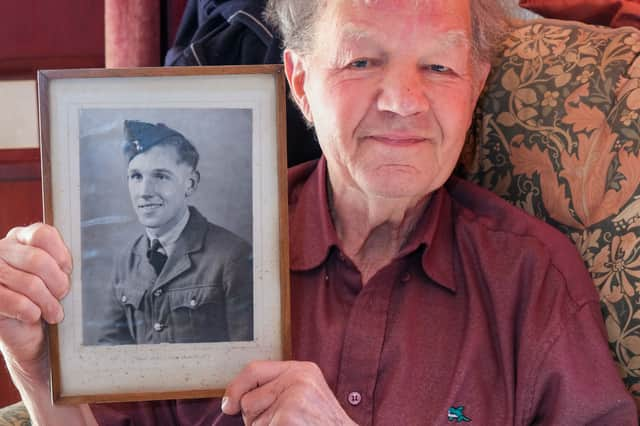
He also said there were times after the war when his dad had felt like a terrorist for having been involved in dropping bombs.
“I didn’t know about his war service until I was in my 60s,” said Peter. “I just knew he was a navigator. He was quiet and never spoke about it. He must have been traumatised from going close to being blown to smithereens that often. It couldn’t fail to affect him.”
His citation for his medal, in March 1945, said: “Flight Sergeant Ward has successfully completed a large number of operations bombing sorties as navigator. This NCO (non commissioner officer) has consistently set a very high standard of navigation on operational flying and his example has been a great asset to the squadron with which he serves.
“His ability has enabled his Captain to be chosen on many occasions to strengthen the leading formation on daylight bombing operations. By night, he has been equally successful and has taken part in two attacks of very deep penetration to Dresden and Chemnitz during which his navigation was exceptionally good. His consistently good work has been an excellent example to other Navigators in his squadron and his determination and his courage at all times have been of a very high order.”
A memorial to bomber command was finally unveiled in 2013, nearly 70 years after the war ended. It was built many years after the war ended because of controversy over bombing missions, as civilians died.
Sheffield Cathedral will be involved in a co-ordinated ringing of bells at 6.30pm Thursday, May 8 , along with cathedrals around England, to mark the anniverary of VE Day.
🗞️Keep up to date on all of the latest news with our free breaking newsletter.
Click here to sign up today
- RELATED: Sheffield's best bits: City resident Darcie Peskir has her say
- RELATED: New heritage champion says Sheffield’s past needs stronger backing
- RELATED: 'The perfect week to welcome back Whitworth to The Star'
- RELATED: A new place for your Sheffield weekend reading is here so you make most of the city