
Mystery of lost Sheffield World War Two bomber hero finally solved after 82 years

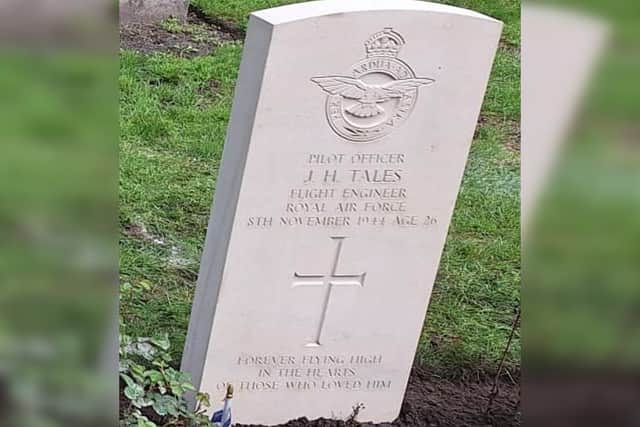
Hero finally lies in a marked grave carrying his name after 82 years
He died after his Lancaster bomber crashed after being shot down by anti-aircraft guns over the Netherlands. That was in December 1944, as World War Two raged across Europe.
But for generations, no one knew where he was buried.
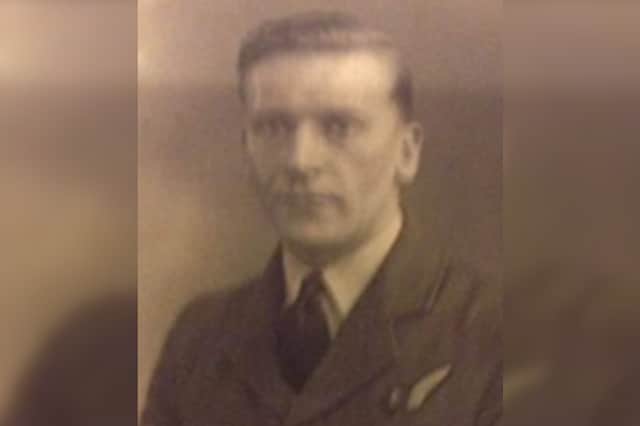

But now, 82 years later, he finally has a known grave after a long search uncovered the truth behind one of Bomber Command's wartime mysteries.
On the morning of December 8, 1944, Lancaster bomber PD374 of 218 Squadron RAF took off from RAF Methwold in Norfolk - one of 130 sent to attack the Neerbeck oil plant at Homberg in Germany's Ruhr region.
Pilot Officer Tales was aboard as the flight engineer.
With the plane on fire, four men managed to bale out, including Pilot Officer Tales. However, records show that he was shot dead on the ground by the SS - a unit of extreme Nazis. He was aged just 26.
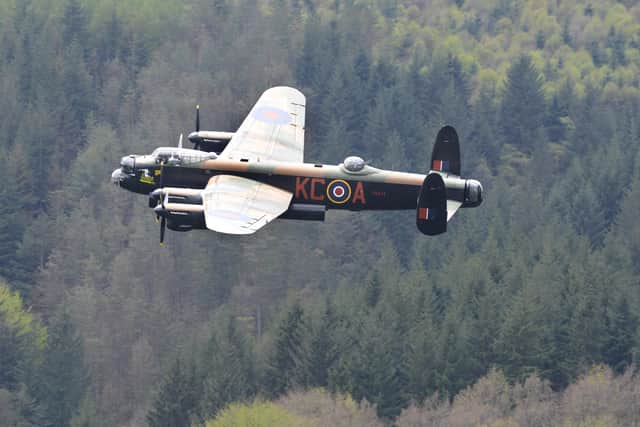
From the seven man Lancaster crew; three were taken as Prisoners of War and other four lost their lives, including John, from Attercliffe.
Eyewitness accounts suggested the pilot remained at the controls of the burning aircraft to give others the opportunity to escape.
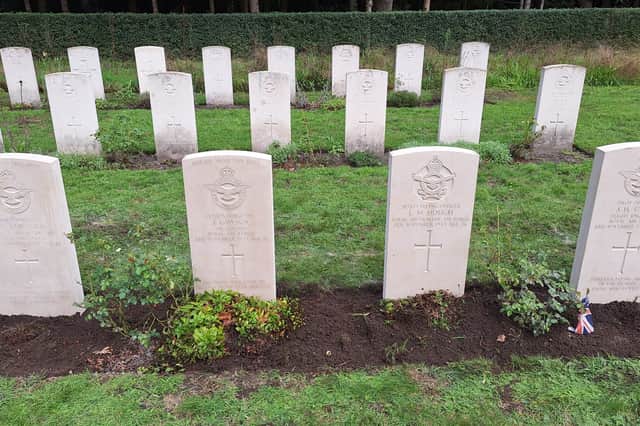
The remains of all four who had died were left in graves marked ‘unknown’ for decades following a series of post-war administrative errors.
But now, the graves of all four have been finally given names at a ceremony in Netherlands.
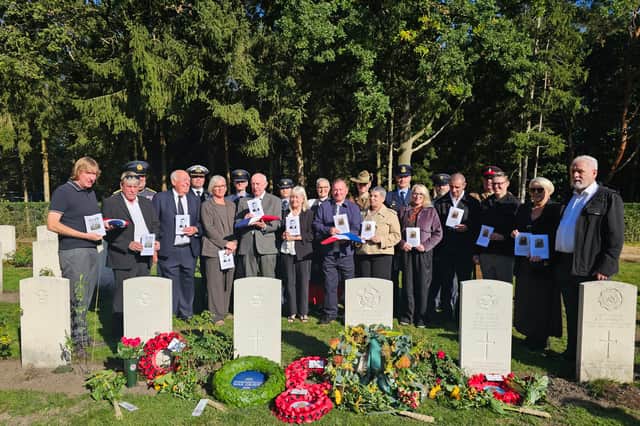
The service was organised by the UK MOD’s ‘War Detectives’ and held at theCommonwealth War Graves Commission (CWGC) Venray War Cemetery, Netherlands.
The service was held for the pilot, Flying Officer Leslie Markland Hough, Royal Australian Air Force (RAAF); and the other crew members who died - Pilot Officer John Henry Tales, Royal Air Force Volunteer Reserve (RAFVR); Sergeant Henry Charles Burnside RAFVR and Sergeant John Lawson RAFVR.
Among those present at the service was John’s nephew, also called John, and other family members.
Nephew John said: “It has been an extremely poignant occasion and we are honoured and quite overwhelmed to have been here. It has been wonderful to learn more about our Uncle John and we would like to thank all those who have made this possible.”
Pilot Officer John Tales
Pilot Officer Tales, born in Attercliffe, Sheffield, on December 31, 1917, was one of 11 children.
He worked as a poster writer before enlisting in the RAF in September 1939 where he built an exemplary service record. Despite having already completed a full operational tour, he volunteered to return to frontline operations and joined 218 Squadron in August 1944.
His service records show he was 5ft 6ins with fair hair and grey eyes. His religion is recorded as Church of England.
His conduct throughout his five-year service was “very good” and he was promoted to Sergeant in December 1942 and Flight Sergeant a year later, when he was also authorised to wear flight engineer insignia - known as brevets or wings on their uniforms.
This embroidered half-wing badge was sewn on the left breast above medal ribbons and can be clearly seen in his photograph.
Pilot Officer Tales married his wife Megan Stringer on July 27, 1940, at St Serf’s Church, Glasgow.
On their marriage certificate Megan’s occupation is described as a Comptometer Operator. They were 22 years old.
He had been stationed at 209 Sqn in Scotland; it is possible this is where they met.
Sadly, Megan died exactly one year later on July 27, 1941, of Pulmonary Tuberculosis at home in Glasgow.
At the age of only 23, Pilot Officer Tales was a widower.
He moved to 149 Sqn in Suffolk as an instructor and here he volunteered to join the crew as a Flight Engineer.
He was experienced and competent but was discouraged as he had already completed a full tour of operation, but he explained his whole life had been tied up with the RAF and they were now his family.
He was posted to 218 Sqn on August 22, 1944.
RAF tribute
Joint Casualty and Compassionate Centre caseworker, Tracey Bowers, said: “Today we honour the British and Australian airmen who served and died together during World War 2.
“To have so many families present here today has made this occasion especially poignant, and seeing them interacting with members of the local community who have adopted these graves incredibly moving.”
The rededication service was conducted by Reverend (Group Captain) Ruth Hake, who said: “It is my immense privilege to conduct the ceremony for Flying Off icerHough, Pilot Off Tales, Sergeant Burnside and Sergeant Lawson today.
“They gave their lives in defence of our nation, and in dedicating their graves today with their names rightfully in place, we are able finally, to honour that debt that we all owe to them and their loved ones”
Dr Daniel Seaton, Commemorations Case Officer at the Commonwealth War Graves Commission, said: “I am delighted that, after so many years, the final resting place of these brave airmen has finally been identified.
“Their family members, of whom so many were here today, can now visit their known graves in perpetuity. The Commission is pleased to have assisted with this process and will continue to maintain their graves with the utmost care and respect.”