
' I have OCD so severe I have 90 daily rituals including standing still for eight hours'

A woman has opened up about a distressing condition that rules her life
A woman with severe OCD has described the debilitating rituals that leave her standing still for up to eight hours, weeing in a bucket and needing to drive round a roundabout five times.
Emily Newcombe, aged 32, first noticed symptoms of OCD age six, when she spent Christmas day trapped in her room folding her sheets until they were ‘just right’.


As she got older, her condition got worse, and she became unable to have a shower or go to the toilet and had to wee in a bucket outside as going to the bathroom became “too intense.”
She had to stop driving, as she would go round roundabouts again and again, and had to leave her job in events, as her symptoms were too severe.
In September 2024, Emily, from Barnsley, was admitted to hospital for 12 weeks of intense therapy, and although she said it helped, she now does a daily “phone ritual,” that takes her 16 hours to complete and involves measuring certain items, and pressing buttons on her phone over and over again.
“I never expected my OCD to get as bad as it did, it was so upsetting and distressing.

“When I went into the hospital, I had 90 rituals that were taking over my life, doctors said it was the worst case they’d seen in 10 years.”
OCD (obsessive compulsive disorder) is a mental health condition where a person has obsessive thoughts and compulsive behaviours.
Emily has perfectionism OCD, where individuals feel intense internal discomfort unless things are “just right,” leading to repetitive behaviours, such as rearranging things, tapping or retyping.
As she got older, her symptoms started to affect friendships, with Emily’s pals performing a “disappearing act”, as they thought her behaviour was “strange”.
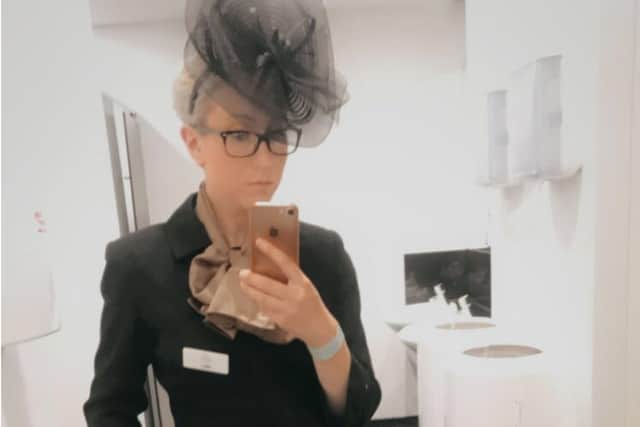
“I’d need to tap the table a certain number of times before it felt right, or if I went out for a drink I’d have to line my coke bottles up," she said.
“I have one friend that stuck by me and really understands, but I lost all of my other friends.”
Then in 2024, her symptoms got dramatically worse. She had to stop driving, as she would have to put her seatbelt on and off 20 to 30 times. She can no longer go to the supermarket, as she would have to move backwards and forwards with her trolley in a certain pattern.

Emily was admitted to Kendray Hospital in Barnsley where she was finally diagnosed with OCD, aged 30, and underwent 12 weeks of intensive CBT (cognitive behavioural therapy), a form of therapy which helps individuals to understand the relationships between their thoughts, feelings and behaviours.
She said it helped slightly, but after returning home from hospital in January 2025, her symptoms continued.

Emily said that the “phone ritual” leaves her standing still for up to eight hours at a time, which has caused her foot to swell up and become extremely sore.
In March 2026, Emily had a consultation with renowned OCD expert prof David Veale, who recommended she has ERP (exposure response prevention) treatment, a therapy that helps individuals confront anxiety-provoking thoughts.
“They would probably take my phone off me, to stop the phone ritual, and make me do things that feel wrong to me, to train my brain to think I’m doing them right," she said.
However, as the therapy costs up to £4,000 a week, it is not something that Emily can currently afford.