
Ending the Palantir NHS deal is a victory - but the cure must match the disease
While ministers have confirmed the Palantir Federated Data Platform contract will end in 2029, Sheffield campaigners are urging the government to provide robust guarantees over the future handling of NHS data and the transition to alternative suppliers.
It has been a hard slog for anti-Palantir campaigners, and a tense time as we’ve all waited for the government’s vital announcement. There has been a palpable national sigh of relief on hearing Labour ministers responding to public concerns and confirming the contract will come to an end.

The reasons why so many want Palantir’s hands off our health data are so widely publicised by now that I’m assuming a degree of consensus here and won’t use column inches rehearsing familiar arguments. We’re in new territory: the devil is in the detail, and a new collective drive is required to determine what that looks like in the end.
The government’s announcement that the current Federated Data Platform contract will end in 2029 is genuinely good. It represents a hard-won victory for the thousands of campaigners, doctors, and patients -with special mention to the influential Sheffield Medact group - who have worked tirelessly to challenge the encroachment of US spy-tech into our health service.

But I and many others are disappointed that the contract is not being ended at its natural break point in March 2027, and our guts tell us there is much still to be fought for.
Ministers say a two-year extension is needed to line up alternative UK tech suppliers and avoid disrupting hospital services, and are encouraging NHS trusts and ICBs to use the Palantir FDP to the full during this time. My understanding is that if the contract were simply allowed to lapse in March 2027, it would automatically trigger a compulsory 24-month "Termination Assistance Period", allowing for a safe, managed changeover without handing the firm an extension. I do think ministers need to explain more clearly the benefit to patients of a further two years, and I will be pressing this point with them.
A healthy scepticism is only natural, and there absolutely should be deep scrutiny during this next phase, by MPs and peers, by local councillors, by health professionals, and by the public.
While ending this contract is the right destination, the route being taken blows several ‘what ifs’ wide open.
I believe that Andy Burnham has taken on the role of Prime Minister with a strong motivation to treat the sickness of neoliberalism and profit extraction. The opportunity now is for his government to turn that ambition into a lasting cure for the disease, ensuring that replacing Palantir also means moving away from the dependency on powerful private contractors who have become embedded in public services.
I hold hope that Burnham will direct his ministers towards “Manchesterism” here, to look closely at the example set by Greater Manchester Integrated Care Board, which exercised regional autonomy by building its own Analytics and Data Science Platform (ADSP). The ICB is proving that locally governed data and targeted software development can outperform a one-size-fits-all national system, integrate rich, locally collected primary care records with a flexible, multi-vendor stack of standard tools, and avoid vendor lock-in.

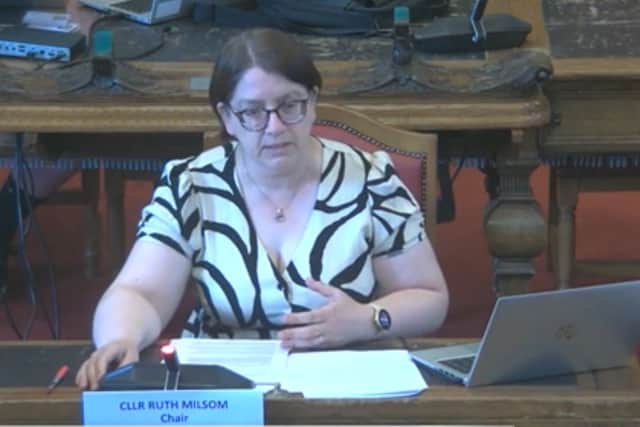
Here in Sheffield, my fellow Labour councillors and I have consistently backed local and national campaigns to remove Palantir’s access to our health data and prevent it from pervading the NHS even further. Locally, the Health Scrutiny committee I chair maintains a watching brief on the three NHS Trusts in Sheffield and the South Yorkshire Integrated Care Board (SY ICB). We have received assurances from all three NHS Trusts that they are not currently operating any local instances of the Federated Data Platform, maintaining a holding pattern while there is no Department of Health and Social Care mandate to adopt it. Meanwhile, while SY ICB has confirmed participation in a pilot for a Strategic Commissioning Tool within the platform, there has been no formal adoption of the full system, and locally collected datasets—including GP data—are withheld from the platform.
Protecting that local firewall is critical. As Chair of Sheffield Health Scrutiny, my priority is ensuring our local NHS trusts and patients remain protected not just in 2029, but during the two-year bridge period between now and then. If this announcement is to mark a genuine turning point for our health service, campaigners and local representatives must press ministers for four ironclad assurances:
First, no backdoor return for Palantir. Ministers say the 2029 procurement will welcome "international and UK capability alike". Saying goodbye to this Palantir contract in 2029 means nothing if the company is allowed to re-enter through a restructured consortium.
Second, halt "scope creep" over the next two years. A departing contractor cannot be allowed to put down deeper roots in the meantime. Ministers must rule out expanding the platform into primary care and GP records, and robustly defend the right of individual hospital trusts—including here in Sheffield—to opt out if local solutions work better.
Third, a clear definition of British digital sovereignty. As the government drafts new rules to favour UK suppliers, it must look beyond a company simply having a London office. True sovereignty means ultimate ownership, intellectual property, and sensitive patient health data remain firmly under UK jurisdiction, completely insulated from foreign surveillance laws.
Fourth, end single-vendor lock-in for good. The NHS should never be held hostage by proprietary software owned by a single corporation. Public money should fund open-source infrastructure and mandatory open data standards that the NHS owns outright. NHS procurement must include strict ethical vetting—a company’s track record in defence and surveillance matters if they are handling the most intimate details of people's lives.
Public trust is the bedrock of the NHS. Campaigners have forced the door open; government ministers have listened. Now we must press them hard to ensure that 2029 heralds a digital NHS that is genuinely public, ethical, and sovereign.