
Baby’s “devastating” brain injury in hospital could have been avoided, inquest finds

An eight-month-old baby boy suffered a brain injury at Sheffield Children’s Hospital which could have been avoided, but it did not contribute to his death, an inquest has heard.
Joshua James Hughes was born prematurely at 25 weeks on January 17, 2023, weighing less than two pounds, alongside his twin.
He was born with severe chronic lung disease, and his lungs were not fully developed, meaning he could not breathe for himself and required intensive care.
During an operation to replace his feeding line on June 25, just after he had recovered from sepsis, Joshua suffered a two-minute cardiac arrest and was resuscitated.
In the early hours of June 26, a prolonged period of low blood pressure meant insufficient oxygen was reaching his brain, ultimately causing a “severe hypoxic brain injury”.


The “brief” handover from the anaesthetic team to the ICU the day before did not mention Joshua had been given phenylephrine, which can lower blood pressure.
His mum said he was “like a completely different baby” from that point on.
Kimberley Bradder said: “Before his surgery, Joshua was very alert. As soon as he heard my voice, he would be looking all around for me. When I held him, he would squeeze my finger, his eyes would be fixed on me and he would smile.
“When he was first taken off the ventilator, he was really sleepy. While he did have his eyes open at times, they were not able to focus on anything – they were rolling and looking upwards. He was like a completely different baby.”
The dip in blood pressure may have been due to a change in sedative, confusion from staff over which type of blood pressure reading should be used, and medication combinations.
The went below the aim at 2am, a “crucial” reading at 3am was not recorded, and Joshua was ultimately not reviewed by a doctor until 4.30am.
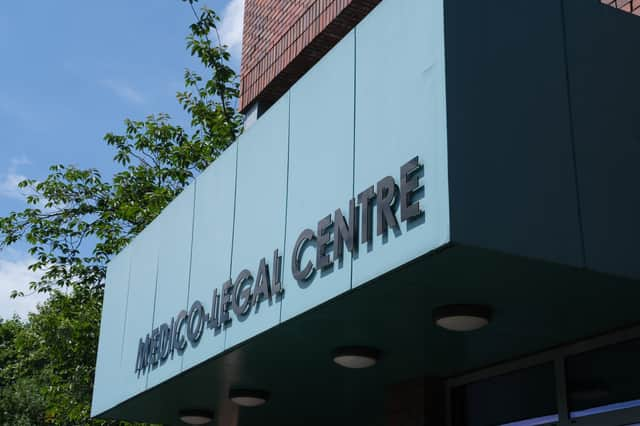
Hannah Berry, assistant coroner at Sheffield Medico-Legal Centre, said: “The registrar has accepted he was preoccupied with another seriously ill patient.
“The statement makes no mention of nursing staff communicating concerns. Confusion over systolic and mean blood pressure readings contributed to the breakdown in communication.
“Had [Joshua] survived, he would have had neurodisability as a result.”
The court heard on Thursday (September 5) how the registrar has been off sick and has not returned to work since the incident.
Ms Bradder added: “It breaks my heart to think that if more care and attention had been taken, Joshua would not have had to endure so much needless pain and suffering as a result of the brain injury.”
Joshua suffered seizures in the following days and the brain injury was discovered, though the cause was not determined.
Ms Berry added: “I find that the care he received after brain injury was not impacted by the, at the time, unknown cause [of it].”

Joshua was moved to breathing support using a facemask in July, but after struggling with the facemask and developing a pressure ulcer, his only option besides palliative care was to have a tracheostomy.
After the tracheostomy on September 1, 2023, Joshua developed an infection.
He was taken off ventilation on October 9, 2023, and sadly passed away on the same day.
Witnesses were questioned in court over whether Joshua’s brain injury impacted on his ability to tolerate the mask.
Ms Berry said: “On the balance of probability, I find his brain injury did not impact on his subsequent treatment. Even without the brain injury, I expect that Joshua would not have been able to tolerate the mask.
“The brain injury did, however, impact on his quality of life and his ability to respond to and interact with his family. This was extremely difficult for his family.”
It was ruled that Joshua died from respiratory problems, namely pneumothorax, due to sepsis and pneumonia, which was contributed to by chronic severe lung disease.
Ms Bradder said: “Joshua didn’t have the best start to life but despite everything thrown his way, he fought to stay with us and he loved having cuddles with all the family.
“Losing him has left a void in our lives that can never be filled, and I will forever mourn the moments we should have had together as a family. I will continue to fight in his memory, so no other family has to experience the pain we have endured.
“The inquest has shed light on the serious failings in Joshua’s care, and what could have been done to prevent his brain injury. I hope that lessons will be learnt and much-needed changes will be implemented so no other parent has to go through this tragedy.”
Sheffield Children’s Hospital NHS Foundation Trust has apologised for its shortcomings in Joshua’s care.
Dr Jeff Perring, medical director at the Trust, said: “I wish to express my deepest condolences to Joshua’s family for their loss.
“We are sorry that the care Joshua received fell below the high standards we set ourselves and that Joshua’s family could expect of us.
“We acknowledge that our actions caused Joshua to have brain damage and whilst this was not found to contribute to his death, we have taken this very seriously.
“Our internal investigation showed that there were lessons to learn from Joshua’s care and we have taken immediate action to address these, and we will update the Coroner as requested once the remaining action has been completed.”
Ms Berry did not incorporate negligence into her conclusion, due to the brain injury not contributing to Joshua’s passing.
She added: “The issues leading to this situation were simple and I was dismayed at the lack of process in place at the time to ensure information was passed between teams.
“I am content that this issue has been addressed. I am content with the evidence that there are sufficient measures in place to ensure this doesn’t happen in the future.”
An internal investigation at the hospital led to eight recommendations, including that clear targets for vitals should be recorded on the bedside chart, and that a comprehensive written handover must go with every patient from theatres to PICU.