
Joshua Hughes: Brain injury suffered by 8-month-old twin baby in hospital may have been preventable - inquest

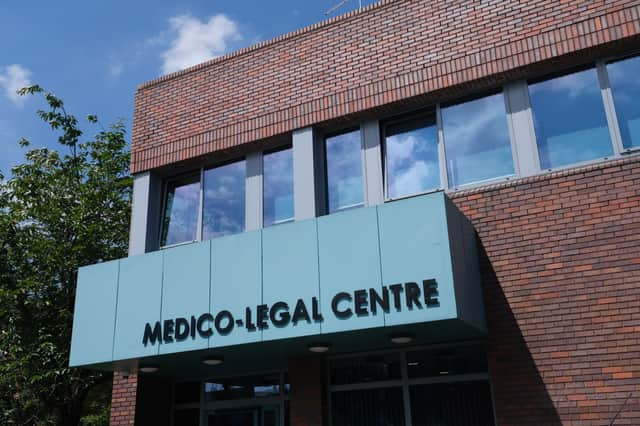
A twin baby suffered a brain injury in hospital which could have been prevented, although it is not believed to have caused his death, Sheffield Medico-Legal Centre has heard.
Joshua James Hughes was born at 25 weeks on January 17, 2023, weighing less than two pounds, and tragically passed away at just eight months old.
He was born with severe chronic lung disease and, having been born so early, his lungs were not fully developed, meaning he required intensive care.
Kimberley Bradder, Joshua’s mum, said: “He fought to stay with us. He was a feisty baby.
“He loved having cuddles with his family, especially with his twin. I would bring [them] from specialist care, and all three of us sat there cuddling for hours.


“We all love you forever Joshua, and we miss you every day.”
During an operation on June 25 at Sheffield Children’s Hospital, Joshua suffered a two-minute cardiac arrest and was resuscitated.
When he had seizures in the following days, it was found he had a severe brain injury, and doctors focused on cardiac arrest as the cause.
The court heard how clinicians “lost sight” of its true cause, which was found to be a period of low blood pressure on June 26.
Over a course of a few hours in the early morning, insufficient oxygen was reaching Joshua’s brain.

His mother, Kimberley Bradder, said: “Prior to his brain injury, we had been led to believe his prognosis was good.
“We were certainly never under the impression that his lung issues were likely to cause his death.”
Dr Alison Scott, consultant in paediatric respiratory medicine at Sheffield Children’s, said: “There were a number of conversations when he was unwell that he may not make it through. Those conversations happen at acute times.
“When those babies are stable, we have hope. They babies are precious, they are people’s family. I don’t think it is routine to say ‘they still may die’ - we are optimistic.”
She said Joshua had an “incredibly rocky start” to life, suffering from a bleed from his lungs, having to take medication to support his heart, and needing constant ventilation.
Joshua, who spent his whole life in hospital, had just recovered from sepsis at six months old when he had a cardiac arrest during the replacement of a feeding line.
The dip in blood pressure later in the night may have been due to a change in sedative, confusion from staff over which type of blood pressure should be measured, and medication combinations.
Dr Budhiraja, the consultant on the unit at the time, said: “My view is that we had inadequate sharing of information, which caused a shift of focus for the night team and somehow we lost sight of his blood pressure.
“It was a busy day, and it was a busy night before. Those kinds of human factors made a big impact on what happened with Joshua.”
Carly Langston, the nurse allocated to Joshua, said she had raised the question of his blood pressure to the registrar when it dipped below the target range, at 2am.
She said: “I remember there not being great concern or any actions put in place for that blood pressure at that point.
“Knowing what I know now, I could have escalated it to the consultant, but I was content with [the registrar] not being concerned.”
There was discussion in court of what blood pressure reading should have been recorded: systolic, which is the higher read of pressure, or mean, which is an average.
Ms Langston says mean is always used on the ICU, but the notes and charts recording Joshua’s values read ‘SDP’.
Dr Judith Short, consultant anaesthetist, said she believed people were tolerating levels they should not have due to a mistaken ‘S’ written before ‘BP’.
She said: “The most important thing is those blood pressures were low for any baby in intensive care, and action was low in trying to mediate that.
“What I can say is that the doctor has been so devastated by [what happened] that he has not returned to work. He has been off sick ever since.
“I don’t believe that he would ignore a situation where vital signs are changing that way."
Changes were made to Joshua’s treatment in response to his lowered blood pressure at 5am and 7:30am.
Dr Budharaja said: “The steps were correct. The timeline should have been different.
“The fluids he got at 7.30 - he should have got 3.30 or 4 in the morning. Then maybe he would not have had the brain injury.”
Joshua already had a “very sick bowel” and his lungs were on a “downhill trajectory” when he arrived at Sheffield Children’s Hospital from Barnsley Hospital on May 9, 2023.
He also suffered necrotising enterocolitis, where tissues in the gut become inflamed and die, and only had one working kidney.
He could not be taken to the operating theatre and was operated on in the ICU as he was so sick, which Dr Thomas has seen three times in her 15 years on the ward.
She said: “He was a charming little baby. After [the brain injury], he didn’t interact the same way. He was fundamentally changed, but his lung function continued in the up-and-down way that it had before that.”
Had the brain injury not happened, she said the outcome “would have been the same.”
It was unanimous among witnesses that the brain injury did not directly cause his death.
Dr Mark Atherton, consultant paediatric neurologist, said: “If it was a fatal injury, his death would have occurred within a week or two weeks.”
He said that the severe damage to his brain may have had impacts in the long term including to his speech, muscle stiffness, and ability to swallow.
Severe chronic lung disease, various infections, repeated ventilation, and being a premature baby were all factors which made Joshua vulnerable, the court heard.
The proposed cause of Joshua’s death is a pneumothorax, or collapsed lung, where part of his lung “popped”.
He sadly passed away on October 9, 2023.
An internal investigation has led to eight recommendations, including that clear targets for vitals should be recorded on the bedside chart, and a comprehensive written handover must go with every patient going from theatres to PICU.
The inquest will conclude on Monday, September 9, 2024.