
Wildlife trade covers at least 107,356 species, Sheffield researchers find
At least 107,356 species of animals are used and traded around the world, according to research by University of Sheffield experts.
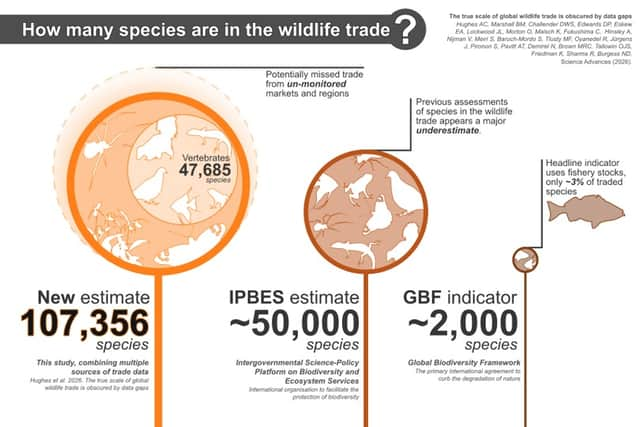

The figure is more than double the previous estimate of around 50,000 species previously known. Researchers said the true total could be considerably higher because existing trade records are fragmented and incomplete.
More than 20 researchers, including experts from the University of Sheffield and the University of Melbourne, carried out a large-scale analysis of wildlife trade monitoring programmes. They identified 47,685 animal species in global trade, comprising 42% of all described vertebrate species.
The trade extends well beyond illegal trafficking involving animals such as tigers and elephants. It includes seafood, medicinal plants, timber and pets, with most wildlife trade being legal and worth approximately 10 times more than illegal trade.
Co-author Dr Oscar Morton, Leverhulme Early Career Research Fellow in the University of Sheffield’s School of Biosciences, said: “Overexploitation of wildlife is one of the greatest threats to species survival. Yet, despite this well-established risk, data on extraction and trade are both incomplete and highly fragmented.
“Even for the legal trade in wildlife, beyond a narrow subset of species groups, we have a woefully narrow understanding of what animals are sought after, in what volumes, and where they are coming from.”
The researchers are calling for wildlife trade data to be collected through standardised systems adopted more widely. They warned that the current lack of systematic recording makes it difficult to determine whether trade is sustainable or to manage its effects.
Dr Morton added: “Governments have a real opportunity to take the lead nationally to drastically improve how trade is monitored and measured. Standardising how we collect data would give us the evidence we need to manage trade sustainably. Without collective action, unsustainable exploitation will remain one of the greatest and most neglected threats to species survival.”
The research drew on the expertise of individuals and collaboration between teams and partner organisations.