
Sepsis survivor who spent weeks in critical care says rapid actions of Sheffield NHS staff made normal life possible
"I do get angry and sad sometimes and feel it’s not fair, but it could have been a lot worse”
A mum-of-two who almost lost her life to sepsis said the quick actions of emergency services staff was the difference between “being here or not”.
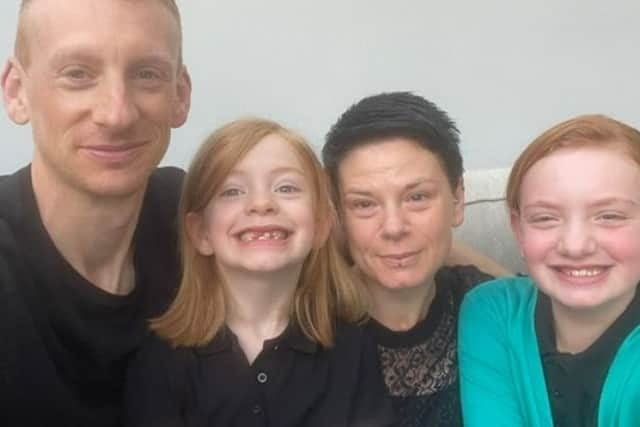

Alexandra Plank, aged 41, from Greenhill, was at home looking after her youngest daughter in May 2023 when she started to feel unwell, assuming it was a “nasty cold”.
But when her husband returned, he spotted her lips had turned blue, the tips of her fingers were grey, and she was experiencing pain when breathing.
He dialed 111, an ambulance crew was called, and suspecting sepsis from pneumonia, Alex was rushed to the Northern General Hospital's A&E department.
By now Alex's sepsis was progressing rapidly and with doctors fearing the worst, her husband was taken to one side and told she would likely not recover.
Shortly afterwards, she went into cardiac arrest, with doctors having to perform CPR to restart her heart before she was taken to critical care at the Northern General Hospital.
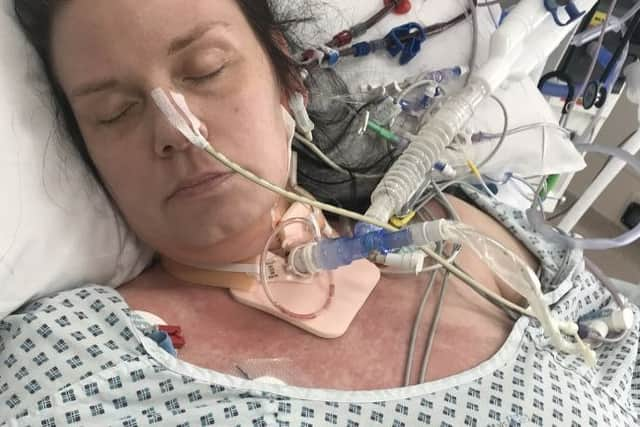
"I remember getting a chest x-ray in A&E and being told it was pneumonia but then I don’t really remember anything until I woke up two weeks later in critical care,” Alex said.
“I was on a ventilator, meaning it was a struggle to communicate and there was a lot of medical equipment around me, monitors and wires and machines. It was very difficult to process what was going on and what had happened,” she said.
Recalling the experience she said: "I just assumed I would always be in critical care. I felt big, I was bloated from all the medication, I had blisters down my arms and legs, and because the blood flow had been restricted to my extremities, my right foot and ankle, the toes on my left foot and the fingers on both hands had started to die. It just didn't seem conceivable that I could ever live a normal life again, I was completely bedbound.”
She was finally discharged at the end of July, three months after first being admitted to hospital.
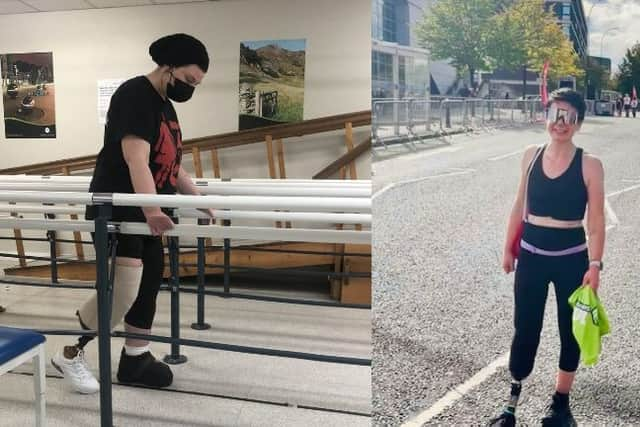
However, her ordeal didn't stop there – and in order to give her the best chance of a successful quality of life, her right leg was amputated below-the-knee, along with the toes on her left foot and the majority of her fingers.
Speaking of her recovery she said: "I feel I’ve done more and achieved more since my illness than I did previously. I can still be a mum and even though my goals and ambitions might not seem big to everyone, every day it's just such a huge thing for me that I can get up and carry on living my life, go to work, and be with my family.
"I do get angry and sad sometimes and feel it’s not fair, but it could have been a lot worse. The overall outcome might not be what everybody would see as positive, given I’m still living with the effects of sepsis every day. But because it was suspected, it was acted upon - and that's the difference between being here or not. I've still got a life and it’s just having the opportunity to get up and have the physical and mental strength to live my life. It genuinely means everything to me."
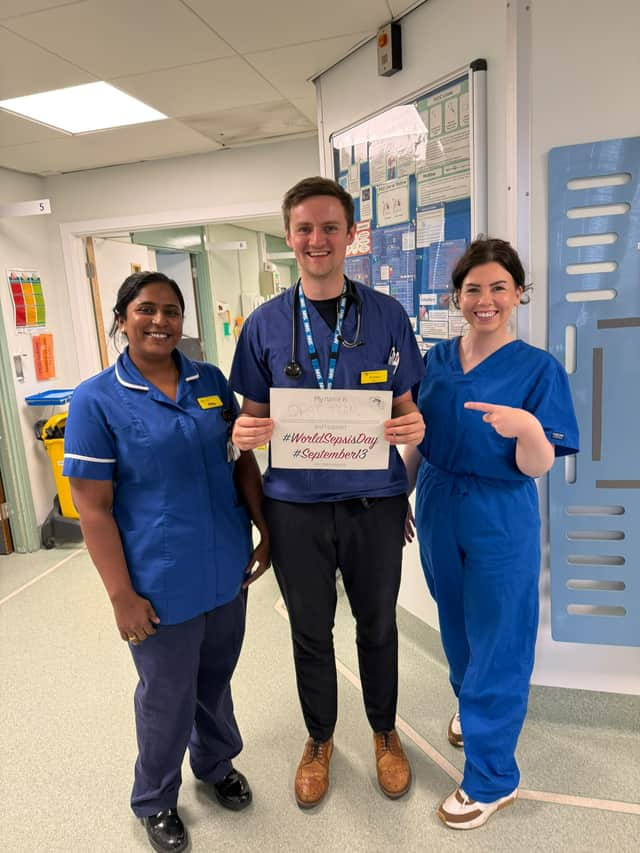
September is Sepsis Awareness Month.
Dr Rachel Foster, Clinical Lead, Infectious Diseases, and Consultant in Acute Medicine at Sheffield Teaching Hospitals NHS Foundation Trust, said: "Sepsis continues to claim many lives, and around one in five deaths worldwide are associated with sepsis. Yet it is often treatable if caught quickly. “