
Pulp's origin story - how Intake and City School produced one of Sheffield’s best bands and musical exports
Looking back on the gritty northern backdrop that helped form one of Sheffield’s biggest musical exports
Jarvis Cocker was just 15-years-old when he and Peter Dalton, 14, formed Pulp.
They would later be a band whose witty anthems celebrating the mundanity of everyday life against a crumbling industrial backdrop would earn them critical acclaim and commercial success.
The origin story begins back in Mansfield Road, Intake; a precocious, flamboyant and inherently headstrong Jarvis Cocker - along with Peter Dalton - decided to form a band, initially a reference to the Michael Caine film, Pulp. It was deemed too short, so an amalgamation of Arabica coffee led to Arabicus Pulp being formed.
Despite forming while attending City School in 1978, it wasn’t until 1980 that Pulp had finally managed to get going.
The first public performance by the band took place at Rotherham Arts Centre on July 5, 1980. It was a day for big news in the UK, as the Swedish tennis player Björn Borg defeated American John McEnroe in a grueling five-set thriller to win his fifth consecutive Wimbledon title. The match featured a legendary 34-point fourth-set tiebreak.
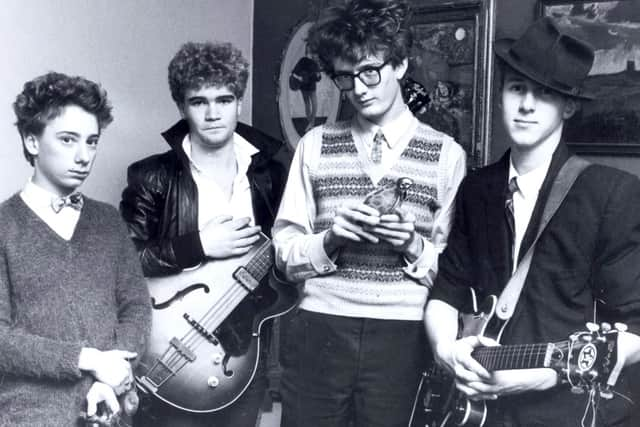

As for Pulp however, the first gig wasn’t a newsworthy event at the time. It was too early for this slowly forming group, who were an aural mishmash of Peel Session influences and Human League-esque electronic new wave and post-punk.
The ‘80s were to be a fraught time for the band. From label disputes to multiple changes in the band's make-up, an iconic John Peel Session, and then an almost fatal and painful incident.
The band got their first break in 1981, after Jarvis Cocker had summoned the courage to give John Peel a demo tape when the DJ was in Sheffield on a roadshow.
Recalling that moment, Cocker said: “I screwed up the courage to give him the demo. A couple of weeks later, I got a call from his producer saying they wanted us to do a session. That was very exciting.”
In the mid ‘80s, Pulp had just signed to an indie label called Fire Records, and keyboardist Candida Doyle joined the band (replacing Tim Allcard). Things were looking up.
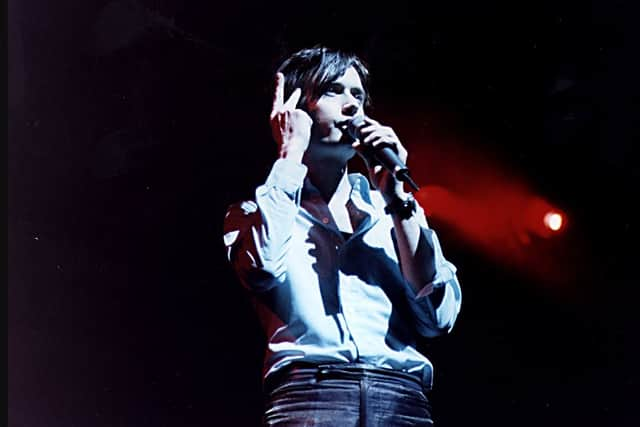
However, in 1985 things took a turn, Pulp was almost no more after an ill-fated (and often mis-quoted) series of injuries suffered by Cocker, who fell out of the window of a Division Street flat – while trying to impress a girl.
In the January 1996 issue of Record Collector (issue 197), Pete Mansell spoke about the incident, saying: "There's so many versions of what happened. Some people say he jumped out of the eighth floor, some the fourth floor. Some say he was lovesick. I know for a fact it was the first floor, because it was Russell's flat. He was trying to impress a girl. He performed in a wheelchair after that."
Jarvis Cocker has spoken about the exact incident at length multiple times since then. He noted how it not only affected him physically, but also his whole perception of his fascination with pretentiousness as well as his adversity to normality or the mundane. This epiphany you could argue is what shaped the best work to come from Pulp and Cocker in particular.
Later in the ‘80s, Pulp would play a couple of notable gigs. One of these was a highly conceptual ‘Day That Never Happened’ performance at what was then The Leadmill (now Electric Studios) in August 1988.
It was at this event that Cocker told Pulp’s guitarist Russell Senior that he would be leaving the band. He ‘had a thirst for knowledge’ and wanted to study Film at Central Saint Martin’s in London.
10-years after forming and eight-years after making headway, Cocker was burnt out from the numerous attempts of trying to make the band work. But Senior was not about to give up and convinced Cocker not to throw in the towel completely.
Enter the 90s - Something Changed
In 1991 the band’s single ‘My Legendary Girlfriend’ became the NME’s single of the week. It was swiftly followed by ‘Countdown’, another song that struck a literal chord. Mainstream press were beginning to notice, but more label drama was to follow.
Still connected with Fire Records, who had previously invested £10,000 into the band’s music, Pulp, unhappy in this arrangement, sought out newer opportunities with bigger budgets.
This didn’t go down well, causing further frustrations to many parties. Finally, Cocker secured a loan to ensure the single ‘Babies’ could be released. This was followed by an alliance with Rough Trade, who secured the band’s release from Fire Records for good.
A move to Island Records is what pushed the Sheffield-forged band into the mainstream, and 1993 saw the release of the single ‘Lipgloss’.
Speaking of that moment in time, Cocker said: “After this attractive courtship, we finally bit the bullet, signed away most of our future earnings to Island Records, to which I will be eternally grateful. We signed to Island in September 1993 - there was champagne!”
Chart success began to come Pulp’s way, starting with the band's first Top 40 hit, ‘Do You Remember The First Time?’. The singles were followed by the Mercury Prize nominated album ‘His 'n' Hers’ (1994), which also reached number nine in the UK Album Chart.
The real tide-turner for the band came in 1995 with the release of ‘Different Class’, which debuted at number one in the UK Album Chart.
At the time, The Star jokingly stated ‘Chart sensations Pulp are the overnight success that took 15 years to happen’.
At the time, The Star jokingly stated that, ‘Chart sensations Pulp are the overnight success that took 15 years to happen’.
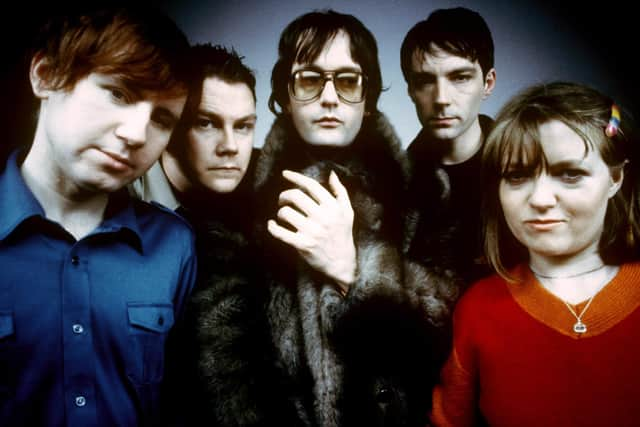
Maintaining the momentum, the single ‘Common People’ went to number two in the UK Singles Chart before being followed by other iconic singles like ‘Disco 2000’ and ‘Something Changed’.
This could be argued as Pulp at its zenith, if you were there it was a glorious time to be a fan of Britpop.
There goes The Fear
In the following years, controversy seemed to follow the band, longtime member Russell Senior left, saying: “It wasn't creatively rewarding to be in Pulp anymore”. There was also the infamous incident at the Brit Awards, drug addictions and member conflicts… but like the embers of a fire burning, Pulp still glimmered.
After the releases of ‘This is Hardcore and We Love Life’ the band eventually left Island in 2002, followed by the release of a compilation album, titled: ‘Hits’.
“This'll be the last time you see us for a while,” Jarvis Cocker announced during a performance at the Auto Festival at Rotherham’s Magna Centre in 2002. “But we may meet again, who knows?”
A farewell as errant as many of Cocker’s flippant comments over the years, take it how you like it. You may not, but you may. For many years the band lay dormant, in hiatus, the door almost closed yet still ever so slightly ajar, that was until 2022.

Following a cryptic Instagram post, Cocker announced that the band was to reform for a series of shows in 2023.
Pulp fans, clutching their pearls (and their Pulp records as per Nick Banks request), awaited news of performance venues. It was revealed that the band were to perform two homecoming shows at the Utilita Arena in Sheffield.
Anticipation leading up to the homecoming shows was high, at least for a cavalcade of Pulp fans. Tragically the buzz leading up to the bands return was impacted by the sad and sudden passing of Pulp bassist Steve Mackey, he was aged just 56.
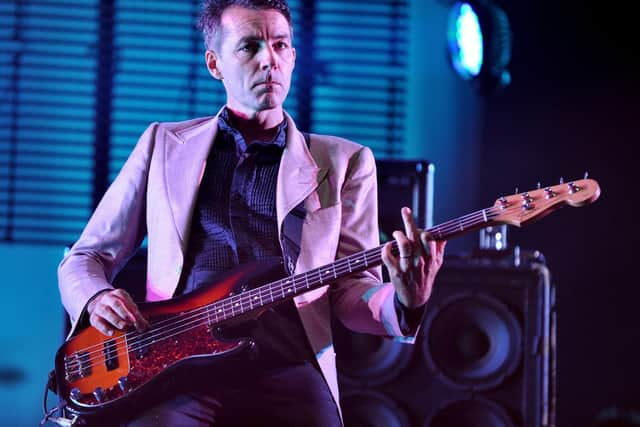
The band said: “Our beloved friend & bass player Steve Mackey passed away this morning. Our thoughts are with his family & loved ones. This photo (which was shared with the post) of Steve dates from when Pulp were on tour in South America in 2012. We had a day off & Steve suggested we go climbing in the Andes. So we did.
“It was a completely magical experience. Far more magical than staring at the hotel room wall all day (which is probably what we’d have done otherwise). Steve made things happen. In his life & in the band. We’d very much like to think that he’s back in those mountains now, on the next stage of his adventure. Safe travels, Steve. We hope to catch up with you one day. All our love.”
The one thing that the remaining members of Pulp brought back with aplomb was the love and for those two nights in Sheffield it was present and ever-flowing in two magical performances. 48-years since forming, 33-years since top-40 charting, Pulp still had it… without a doubt.
What exactly do you do for an encore?
Pulp remains together to this day, performing shows around the world, and following the successful reunion tour even released a new album in 2025, the well-received ‘More’.
The impact that Pulp had on the music world, the city of Sheffield, artists like the Arctic Monkeys and Self-Esteem is immeasurable. Pulp undoubtedly put Sheffield on the global pop map.
During the 1990s peak Pulp not only neatly encapsulated the city’s core, it articulately transformed the crumbling industrial heritage (at the time) and working class elements into timeless anthems like ‘Common People’ and ‘Disco 2000’.
But most importantly they have retained a lasting local pride in the city and places from where it all originated.