
Tomorrow Done Better: Yorkshire’s AMRC celebrates 25 years of manufacturing the future

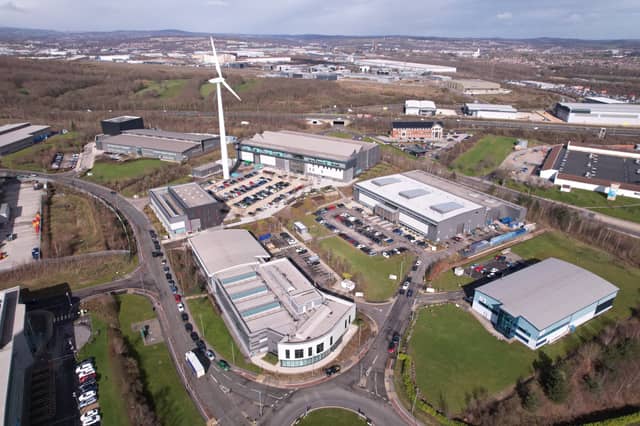

Made here. Made better. Made for the future – the University of Sheffield Advanced Manufacturing Research Centre (AMRC) is celebrating 25 years of Yorkshire innovation, helping to shape how we travel, work, eat, generate power and even defend ourselves, as Graham Walker has been finding out.
From coal and steel to aircraft and space. From spanners and stopwatches to AI, robots and drones.
Few places tell the story of South Yorkshire’s industrial transformation quite like the University of Sheffield Advanced Manufacturing Research Centre.
Better known as the AMRC, it is a world-leading research and innovation centre where engineers and researchers work with industry to solve real-world manufacturing problems – finding faster, smarter, safer, cleaner and more sustainable ways of making things.
And its location could hardly be more symbolic.
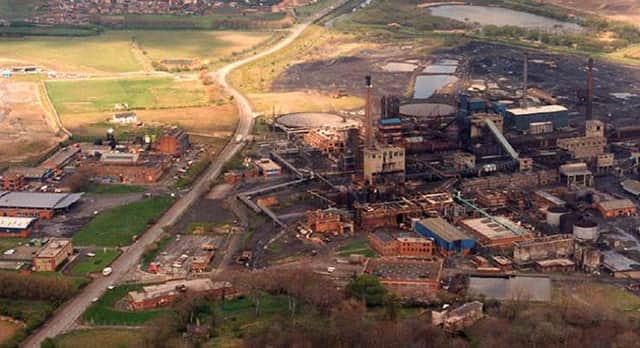
Once dominated by Orgreave colliery and coking works – and forever associated with the bitter confrontation of the 1984 miners’ strike – this former industrial landscape is today home to technology that would once have belonged to science fiction.
Aircraft structures built by giant robots. Artificial intelligence helping factories think smarter. Driverless tractors working the land. Robots designed to treat casualties where it is too dangerous to send medics. New ways of manufacturing nuclear power stations. Technology reaching from the factory floor to the front line – and even into space.
Now, as the AMRC celebrates its 25th birthday in October, we're taking a look at how a South Yorkshire success story has spent a quarter of a century helping change all our lives – and what it could change next.
From the aircraft taking us on holiday to the food on supermarket shelves. From the cars on our roads to the energy powering our homes. From artificial intelligence and robots to national security, clean energy and space.
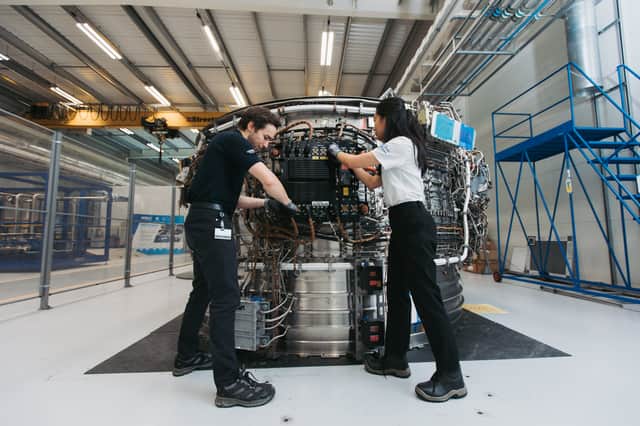
Transforming lives through innovation is a message proudly carried across AMRC publicity, capturing the ambition that has driven its work.
But now, as it celebrates 25 years and looks firmly towards the next quarter-century, a new campaign slogan builds on that ambition, Made here. Made better. Made for the future.
This isn't simply a birthday message or a nostalgic look back. The achievements of the past 25 years provide the proof – and the platform – for what can be achieved in the next 25.
Founded in 2001 by Keith Ridgway, a professor at the University of Sheffield and businessman Adrian Allen. The AMRC was a partnership between the University of Sheffield and aerospace giant Boeing, created to bridge a crucial gap between cutting-edge university research and the very real problems faced on factory floors.
Today, with a workforce of more than 500, researchers and engineers help businesses find better ways of making things.
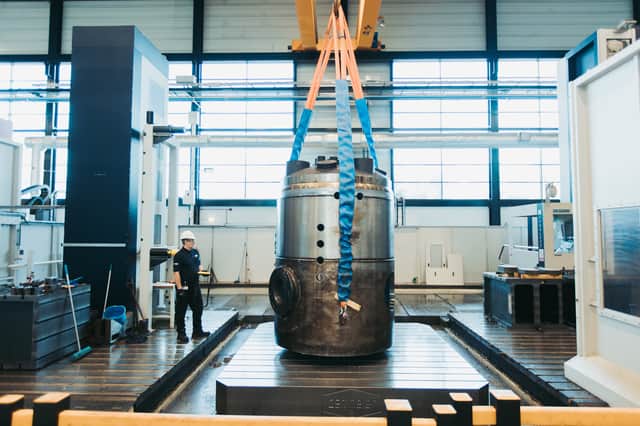
Strip away the factory floors, robots, acronyms and sometimes bewildering engineering terminology and what they do can be explained much more simply.
Find a problem. Research it. Test it. Find a better way. Then make that better way work in the real world.
And sometimes the improvements are staggering.
The AMRC says its research has cut an assembly process from 60 minutes to 60 seconds, compressed the equivalent of ten years of production into ten weeks and is currently helping reduce the time needed to make one component from 40 hours to four.
Its partners have included some of the biggest names in global manufacturing – Boeing, Rolls-Royce, Airbus, BAE Systems and McLaren Automotive – alongside hundreds of smaller companies.
But why should that matter to somebody who never sets foot inside a factory?
Because what is researched, tested and made better here can ultimately touch all our lives.
Perhaps the most spectacular example of what comes next is the AMRC's new £54m Composites at Speed and Scale (COMPASS) – open-access facility.
With Boeing as its first major user, giant automated systems are developing faster ways of producing the huge, lightweight composite structures needed for future aircraft.
Making aircraft lighter can mean using less fuel and reducing carbon emissions – while the technology being developed has potential applications stretching beyond aviation into renewable energy and defence.
Boeing's relationship with the AMRC has already helped bring its first European manufacturing facility to Sheffield, while Rolls-Royce and McLaren are among the global names attracted to the wider advanced manufacturing cluster.
There is another remarkable historical circle.
Sheffield's steel and engineering industries once supplied equipment and supplies that Britain depended upon through two world wars.
Today, South Yorkshire is again playing an increasingly important role in national security – but the technology of defence has changed beyond recognition.
AMRC expertise now stretches across advanced materials, automation, digital manufacturing, rapid prototyping and secure manufacturing, helping companies to solve industrial problems that matter to support readiness, resilience, rate and scale.
Among its most striking projects is MediTel – a robotic uncrewed ground vehicle developed with University of Sheffield researchers which allows a medic to assess casualties remotely in hazardous environments.
Using robotic arms, cameras and virtual-reality technology, the prototype can perform tasks including taking temperature and blood pressure and administering pain relief – potentially keeping medical personnel out of danger.
Artificial intelligence provides another glimpse of the next 25 years.
The AMRC is exploring how AI and digitally connected manufacturing can boost productivity and quality – while also tackling a crucial question: how do we know we can trust the decisions machines make?
That means developing the assurance, traceability and safeguards needed as increasingly complex manufacturing decisions become automated.
And the technology reaches far beyond aircraft and factories.
At AMRC Cymru, the University of Sheffield centre’s £20m North Wales arm, researchers have been a key partner for Airbus on its Wing of Tomorrow programme, which is looking at advanced materials manufacturing and assembly techniques, as well as novel wing architecture and aerodynamics for next generation wings. The programme is exploring wings that are longer, leaner and lighter to improve efficiency, reduce fuel burn and lower CO₂ emissions.
In Lancashire, at AMRC North West’s £20m state-of-the-art facility on the Samlesbury Enterprise Zone in Preston, engineers have used 3D metal printing and a smart redesign to develop a drone arm mount four times stronger, significantly lighter, easy to fold away without tools, and cut down production time from three weeks to six hours.
Then there is the enormous challenge of how Britain generates its energy.
The AMRC is working across nuclear, hydrogen and offshore wind, helping industry find quicker and more efficient ways of turning clean-energy technologies into products that can be manufactured at scale.
That includes supporting Rolls-Royce SMR in developing manufacturing methods for proposed factory-built small modular nuclear power stations.
Instead of constructing almost everything at a traditional nuclear site, major sections could be repeatedly manufactured under controlled factory conditions before being transported for assembly.
Rolls-Royce SMR says each proposed SMR could generate enough low-carbon electricity to power around one million homes for more than 60 years.
Yet perhaps the AMRC's most important product isn't an aircraft component, robot or nuclear reactor. It's people.
The neighbouring University of Sheffield AMRC Training Centre has recruited more than 2,200 apprentices, with 80 per cent of apprentices coming from South Yorkshire and many from some of the region's most deprived communities.
The AMRC says its presence has also helped attract more than £350m in inward investment and 2,500 jobs to the South Yorkshire manufacturing cluster. That makes its location particularly poignant.
A landscape once synonymous with coal, steel, industrial conflict and lost jobs is now training a new generation to work on aircraft, autonomous machines, artificial intelligence, robotics, defence and future energy.
The machines have changed. The materials have changed. The skills have changed.
But South Yorkshire is still doing something it has done for generations. Making things the world needs.Twenty-five years after the AMRC began, that is why its anniversary isn't simply about looking backwards.
Tomorrow Done Better has been the promise. Now Made here. Made better. Made for the future sets out the challenge for what comes next.
The region once helped power the Industrial Revolution and its steel helped defend a nation. Now, from the former industrial landscape of Orgreave, South Yorkshire is helping manufacture the future.
CONTACT:
The University of Sheffield AMRC Advanced Manufacturing Park, Wallis Way, Catcliffe, Rotherham, South Yorkshire S60 5TZ
How to find us: See contact page
LINKS:
LinkedIn: AMRC
Facebook: @TheAMRC
YouTube: AMRC
Instagram: the_AMRC