
The tale of the Queen of Heeley and a 145-year Victorian mystery of love, poison, and justice

This article contains affiliate links. We may earn a small commission on items purchased through this article, but that does not affect our editorial judgement.
An upcoming exhibition takes a look at the historic 'Queen of Heeley' poisoning case 145-years later. But who was the ‘Queen of Heeley’ and did she intend to commit murder?
The tale of the Queen of Heeley is well-known - but whether or not she intended to commit murder has always been a contentious point of debate.
Born in Sheffield in 1855 to a woodcarver father, Felicia Dorothea Kate Dover was a Victorian woman from Heeley who resided in what was Thirlwell Terrace (formerly on the east side of Plantation Road in Heeley). Dover was a student at Sheffield School of Art, she studied flower drawing.
Before she began working in housekeeping, Dover ran a sweet shop on London Road and was locally known as the ‘Queen of Heeley’, due to her looks and fashionable dress sense.
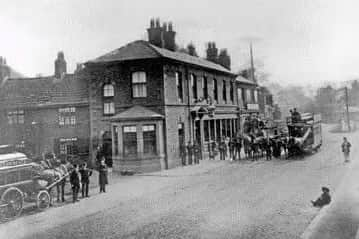
It was in autumn 1880 that she became a housekeeper for Thomas Skinner, a wealthy 61-year-old widower and inventor who had accrued his wealth from etching designs onto steel blades. Skinner resided at Glover Place and he was described as her ‘sweetheart’, they were even reportedly engaged to be married in March 1882.
On December 6, 1881, Skinner became terribly unwell after eating a roast dinner prepared by Dover; he would die just four-hours later. A panicked Dover sent the maid to get a doctor for the soon to be deceased Skinner.
A post-mortem would later reveal that Skinner’s stomach contained lethal amounts of arsenic in his stomach. It was found that the stuffing from the roast contained the poison, eight grains when only one would have sufficed.
Investigators discovered that Kate Dover had bought the arsenic from a local chemist and claimed that she needed it to clean feathers and kill mice. In the 19th century, it was much easier to attain arsenic over the counter than it is today. But the question remained, why did she poison the food? If they were ‘sweethearts’, what drove her to commit such an act?

It has been said that the relationship between the two had soured, deteriorating into frequent arguments and domestic violence. Skinner was said to have many grievances, accusing Dover of stealing his belongings and pawning them.
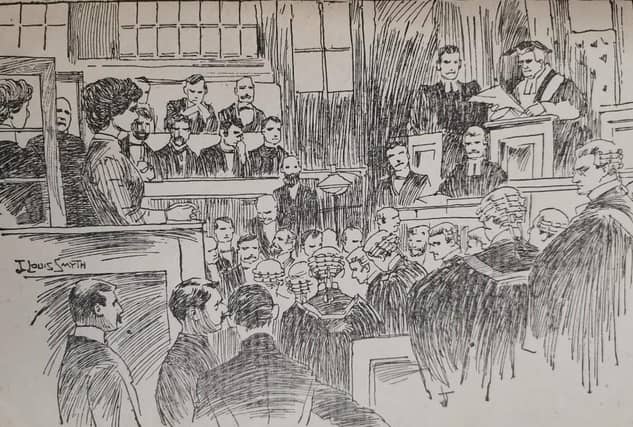
Dover would be charged with Skinner’s murder, a trial that took place at Leeds Town Hall in February 1882. When charged, she is said to have replied, in a faint voice, “I am not guilty.”
The subsequent media publicity and fervour drew crowds in droves to the trial. Her defence would argue that murder was never the intent, but that Dover had mixed up the poison with baking powder, or used it carelessly, without intending to kill. It was said that even Dover admitted to feeling unwell after eating on that fateful day.

According to one juror they did not want a woman to hang, accepting that there was no clear intent to murder, however it still convicted her of manslaughter. She would be sentenced to penal servitude for life, serving time at Wakefield and then Woking Female Prison. Following a refused attempt to commute her sentence in 1985, Dover would be released before 1901, she had served somewhere between 13 and 19 years.
Dover spent her last two-decades living with her sisters in Rotherham, later dying there in March 1925 aged 69.
The fascination with Kate Dover has transcended time, with opinion split as to whether the fatal poisoning was intended or not.
Opening at the Old Chapel Studios Gallery in Nether Edge on December 9, 2026, just days after the anniversary of Skinner's death, the upcoming The Heeley Queen: Did She Mean Murder? exhibition invites visitors to examine the evidence and weigh in on the mystery. Running through Saturday, December 19, 2026, the gallery will be open weekly from Wednesday to Sunday between 11:00 am and 4:00 pm.
Also on Saturday, December 12, 2026, The Heeley Queen - Live Readings and Performance will take place. You can book for free on Eventbrite