
The Georgian punk poet who encapsulated the plight of Sheffield’s common people
During the 1770s, Joseph Mather started earning extra income by crafting songs to the rhythm of his hammer while working. On Saturday nights, he would belt out these verses in the pubs and streets across Sheffield
Joseph Mather was an 18th-century file-cutter who became the voice of Sheffield’s working class.
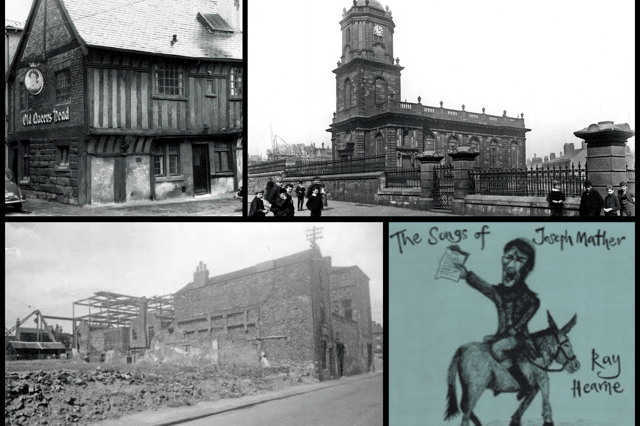

His songs gave voice to outrage against exploitative employers while fostering unity and working-class identity. Though lesser-known today, this early punk poet captured the struggles of the oppressed.
Not much is known about Mather’s early years, and certainly nothing of his parentage, but it is believed that he was born in Cack Alley (a place that ran from Lambert Street to West Bar Green) in Sheffield rather than Derbyshire as has often been considered.
What is known is that after serving an eight-year apprenticeship (1751-1759), Mather became a file cutter in the Sheffield workshop of Nicholas Jackson – a prominent 18th-century master craftsman and file manufacturer.
Mather did at one point seem to have become a ‘little mester’ himself, before resorting to a ‘journeyman status’.
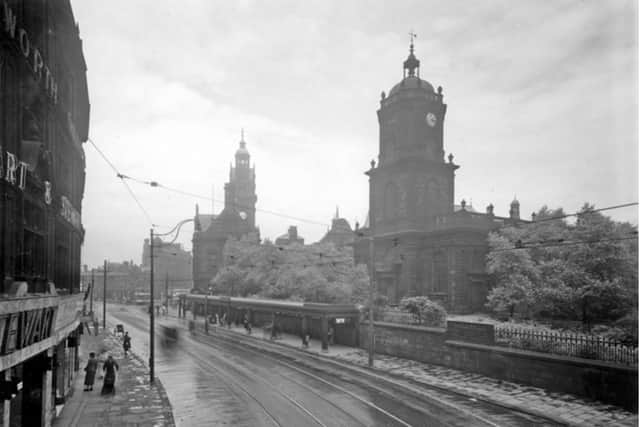
He married and became a father to a minimum of five children. His firstborn was likely a Joseph Mather who was baptised on June 5, 1765 at Sheffield's Cathedral Church of St Peter and St Paul – the very site where the poet himself would eventually be laid to rest.
Although the baptismal register omits his spouse's name, folklore suggests she was named Nell. This detail may stem from his famous ballad "Nell and Jos," which vividly depicts Nell turning her fingernails on Jos after he returns home without money.
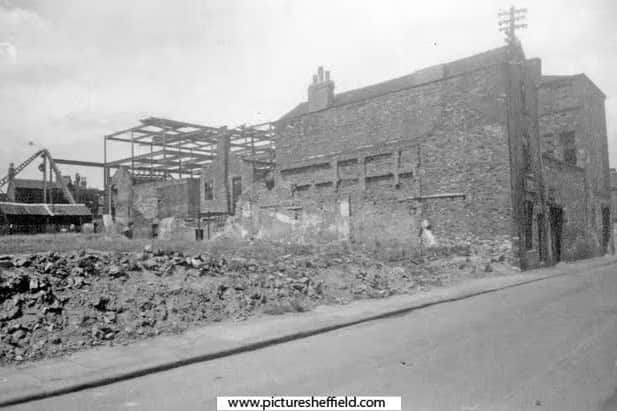
Throughout his life, Mather endured a relentless battle against poverty to feed his household. His financial hardships eventually led to imprisonment for unpaid debts inside the walls of the Pudding Lane gaol – an infamous site situated on what is present-day King Street.
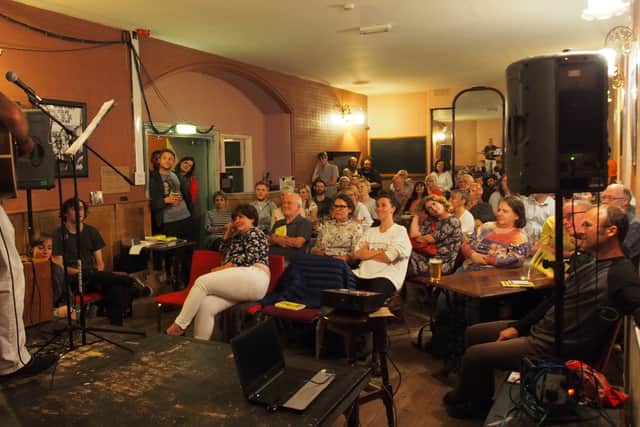
During the 1770s, Mather started earning extra income by crafting songs to the rhythm of his hammer while working. On Saturday nights, he would belt out these verses in the pubs and streets across Sheffield. Think of it as an 18th-century blend of stand-up comedy and karaoke all in one.
Mather was only partially literate, he could read but not write. His inability to write meant that the process was entirely oral, although later some items were taken down from his dictation, a collection of his works would not be gathered until sometime after his death.
In his younger years, Mather adhered to the Methodist faith before severing ties with the chapel – though he would eventually reconcile towards the end of his life. This religious upbringing instilled in him a profound mastery of scriptural texts, a familiarity that frequently echoed through the cadence of his poetic soliloquies.
Whenever critics denounced the rough or uncouth nature of his lyrics, Mather routinely drew upon his profound understanding of scripture to offer firm yet reasoned defences.
A clear illustration appears in his song ‘Frank Fearne’, which recounts the story of a man executed by hanging and gibbeted for robbing and murdering a watchmaker in 1872. When challenged over his language in the ballad, Mather reportedly cited a biblical passage to justify his word choice.
Operating out of Shemeld Croft, an old Sheffield family name, near modern-day Ponds Forge (below Commercial Street), Mather utilised his sharp wit to compose satirical ballads targeting local merchants and manufacturers – Much to their chagrin.
🎞️ Did you enjoy this look back to the Sheffield in the years’ past? If you did, then you should sign up to our free retro newsletter
Mather in his spoken word ripostes would be as brusque and cutting in his deconstruction of the rich/poor divide, as he was at encapsulating the life of the common person. A talent that further endeared him to his fellow cutlers and the general public.
His songs covered a wide array of topics, from personal struggles with poverty and the daily grind of his work to key local events like the Sheffield races, the Norfolk Street riots, and the 1785 dispute over the expansion of Church Street. He also wrote candidly about marital infidelity and heavy drinking binges.
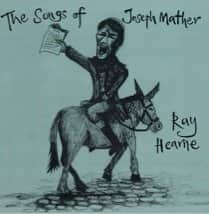
Set to familiar tunes, they are lively representations of working-class life. However, when the content of his poetic rebuttals became increasingly radical in the 1790s he was bound over to keep the peace (a legal requirement to stay out of trouble and obey specific rules) for a year.
Joseph Mather died at his home in Pond Hill, Sheffield, on June 12, 1804, he was 67-years-old. He would be buried in St. Paul's, in the centre of Sheffield, now Peace Gardens – Before later being reinterred at Abbey Lane Cemetery.
The enduring legacy of Joseph Mather stands as a cornerstone of Sheffield’s radical working-class heritage, its folk music traditions, and academic folklore studies. Though his 18th-century street performances belong to a bygone era, his powerful ballads of protest continue to define the city’s spirit of defiance through artistic expression.