
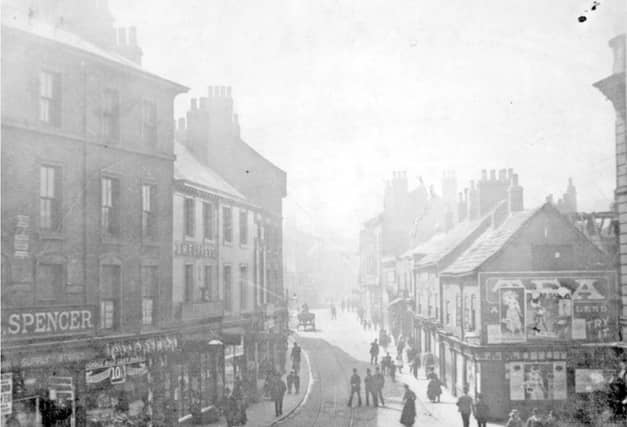

A part of Sheffield that seemed to have been largely forgotten and derelict for over a decade and a half, it is undeniable that West Bar has had quite the refresh in recent years.
Until the late 18th century, the area of West Bar was that of market gardens called Colston Crofts (remembered today by Plum Lane). Early water-powered industry included the Town Corn Mill and Silk Mill on the Kelham Goyt, alongside the town's first workhouse.
By the early 19th century, factories and cramped back-to-back housing rapidly filled the Crofts. Businesses included Vickers and Sons—which evolved from corn milling to shell founding, laying the groundwork for Forgemasters and Barrow's submarine builders.
Bridge Street's Soho Wheel was named after James Watt's Birmingham plant. Love Street was named for a sawmaker, and its Britannia Works turned from silver plating to producing Henry Dixon's famous Yorkshire Mixture sweets.
🎞️ Did you enjoy this fond look back to the Sheffield in the past? Well, why don't you sign up to our free retro newsletter.
From the 1840s, West Bar grew into Sheffield's lively entertainment hub, featuring beer houses, boxing taverns, music halls, theatres, and cinemas.
Key venues included Spinks Nest, the Royal Casino, Surrey Music Hall, and the Packhorse Inn, with impresario Tommy Youdan as a central figure.
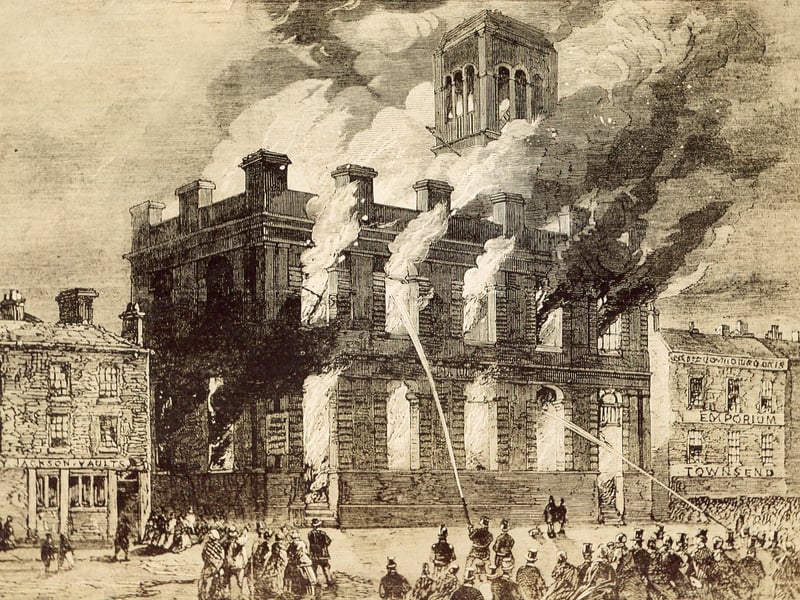
In 1865 the Surrey Music Hall, located roughly where the Crown Courts now stand, famously and predictably-burnt down after an all too realistic show called the Great Fire of London in which the stage set was set aflame on a twice-nightly basis.
Following the First World War, music halls faced declining popularity with the rise of cinema, radio, and television. The 1920s slum clearance schemes led to the displacement of most local residents, and the Packhorse was ultimately replaced by the now-forgotten Bridge Street Bus Station. By the 1980s, heavy industrial operations wound down, marked by the closures of Whitbread's Brewery and Millsands Rolling Mills.
Road-widening initiatives to construct an interim Inner Ring Road along West Bar and Bridge Street demolished the surviving music hall structures, shops, and public houses, effectively severing the neighbourhood from its surroundings.
Despite the mid-1990s construction of the New Crown and Family Courts, West Bar remained isolated from the city centre by a busy dual carriageway. The Don Picture House, its last entertainment venue, became the yellow-clad Armadillo Storage Warehouse, and the Moseley Arms, its final pub, was turned into solicitors' offices. However, the iconic Woollens Signs banner stayed intact. By the early 2000s, Sheffield Council targeted this former industrial area for mixed-use residential and commercial development and this previously forgotten part of the city began to see great changes that are ongoing today.
West Bar as we know it today is dramatically different to what it was like before the 1990s. What do you remember and miss about West Bar?
Despite the 1990s addition of the Law Courts, West Bar remained isolated until the early 2000s, when council master plans re-designated it for mixed development and this previously forgotten part of the city began to see great changes that are ongoing today.
West Bar as we know it today is dramatically different to what it was like before the 1990s. What do you remember and miss about West Bar?

1. This particular building is possibly part of the original Sheffield Workhouse
The Globe Steel Works can be found on Alma St but don’t confuse it with its bigger namesake on Penistone Rd although it looks like they were both owned by the Ibbotson brothers. They produced a variety of steel products including saws, files, springs etc., at the moment A.W. Tools now occupy the building. This particular building is possibly part of the original Sheffield Workhouse before it moved to Firvale. It suffered minor damage in the catastrophic bursting of the Dale Dyke Dam at 11:35 p.m. on the 12th of March 1864 when 650 million gallons of water cascaded down the Loxley Valley towards the unsuspecting population of Sheffield. After that terrible night the Globe Steel Works did serve as a temporary Morgue for several of the waters victims. One sad incident happened on Cotton Mill Row on the night of the flood, just a few yards from the works, a widow named Mrs Emma Wallace aged 47 lived in just one room on Cotton Mill Row that were unfortunately below street level with her two children Clara & Herbert, when the waters hit she was washed outside by the deluge of water and a her neighbour Mr Whitely heard her cries and quickly lowered a bed sheet which she managed to grasp but just inches from safety another wall of water washed her away. Emma was found the next day in an adjoining court. A Mrs Ellen Penrose sued on behalf of Emma’s orphaned children asking for damages of £500 but one year later on the sixteenth of June 1865 the Children were awarded just £32, not much for the loss of a Mother. Emma was interred in the General Cemetery a few days after the flood.
2. 2026_10_06_15_18_12_470_ASH_E9E1927DDC25437D9AEA8ACF71B4A441(2).JPG
The Surrey Theatre, West Bar, Sheffield, built in 1851, with its splendid collection of paintings, curiosities and works of art, its concert rooms, promenades, Thespian hall, was totally destroyed by fire in March 1865 | Other 3rd Party
3. 2026_10_06_15_07_12_825_ASH_730D2AFC4995426C83EE4795C2C5F30B.JPG
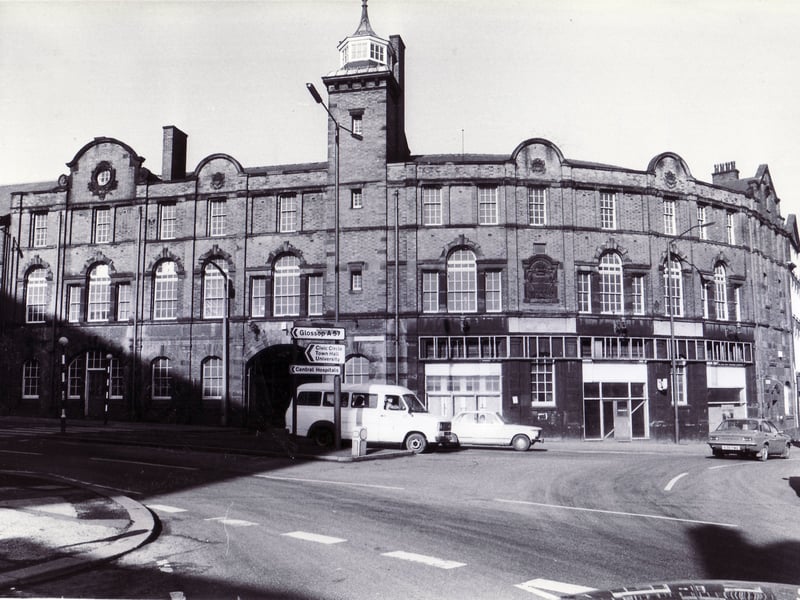
Firemen's museum restoration at West Bar, Sheffield - 8 March 1985 | Johnston Press
4. 2026_10_06_15_14_01_608_ASH_B46934E01E704EC6854F9249D475E3C7.JPG
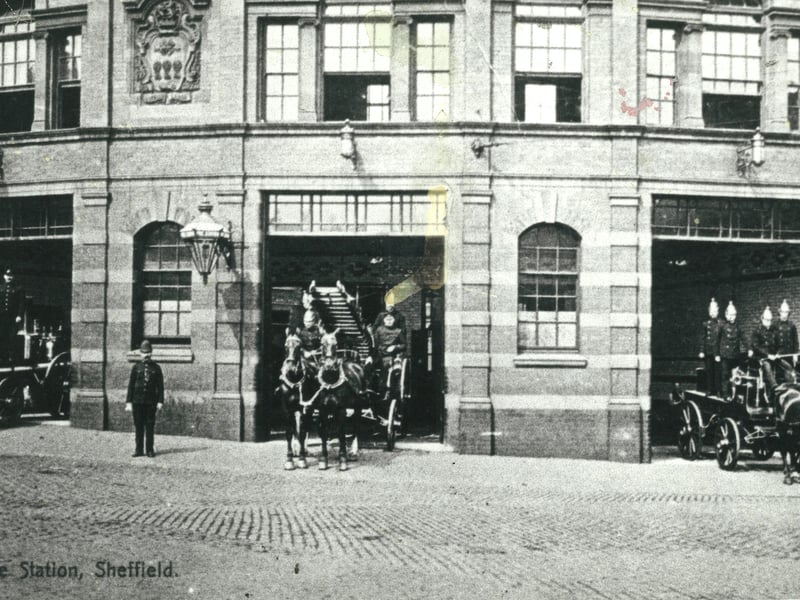
From left, a steam fire engine, escape carrier and equipment carrier leave the West Bar station in around 1900 | Other 3rd Party