
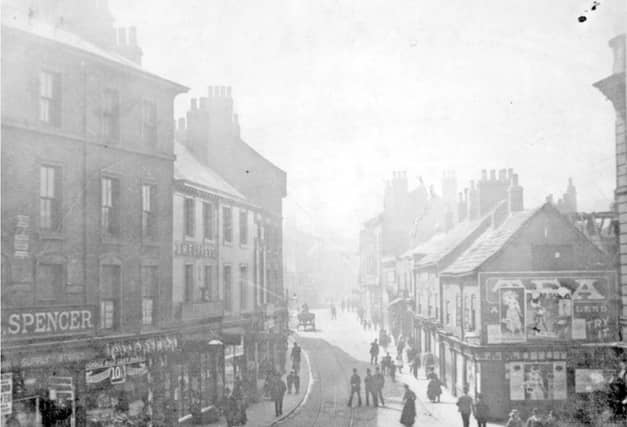

A part of Sheffield that seemed to have been largely forgotten and derelict for over a decade and a half, it is undeniable that West Bar has had quite the refresh in recent years.
Until the late 18th century, the area of West Bar was that of market gardens called Colston Crofts (remembered today by Plum Lane). Early water-powered industry included the Town Corn Mill and Silk Mill on the Kelham Goyt, alongside the town's first workhouse.
By the early 19th century, factories and cramped back-to-back housing rapidly filled the Crofts. Businesses included Vickers and Sons—which evolved from corn milling to shell founding, laying the groundwork for Forgemasters and Barrow's submarine builders.
Bridge Street's Soho Wheel was named after James Watt's Birmingham plant. Love Street was named for a sawmaker, and its Britannia Works turned from silver plating to producing Henry Dixon's famous Yorkshire Mixture sweets.
🎞️ Did you enjoy this fond look back to the Sheffield in the past? Well, why don't you sign up to our free retro newsletter.
From the 1840s, West Bar grew into Sheffield's lively entertainment hub, featuring beer houses, boxing taverns, music halls, theatres, and cinemas.
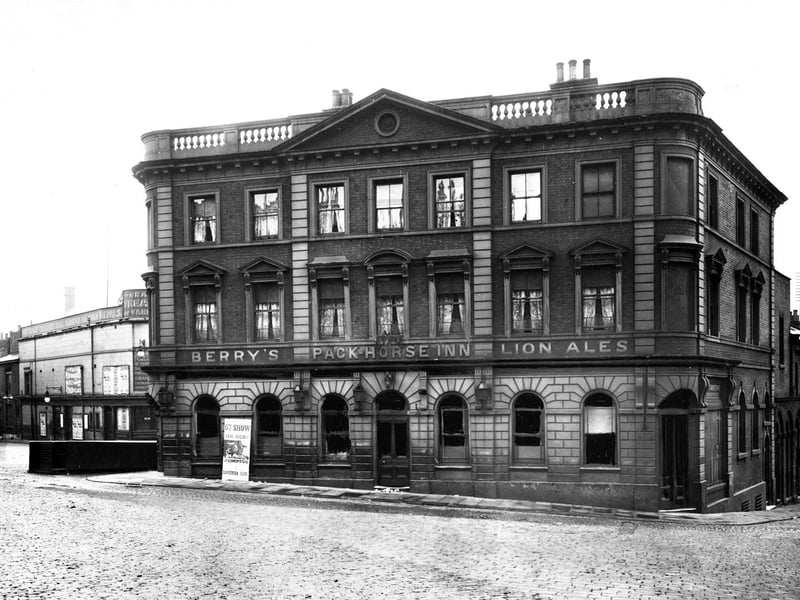
Key venues included Spinks Nest, the Royal Casino, Surrey Music Hall, and the Packhorse Inn, with impresario Tommy Youdan as a central figure.
In 1865 the Surrey Music Hall, located roughly where the Crown Courts now stand, famously and predictably-burnt down after an all too realistic show called the Great Fire of London in which the stage set was set aflame on a twice-nightly basis.
Following the First World War, music halls faced declining popularity with the rise of cinema, radio, and television. The 1920s slum clearance schemes led to the displacement of most local residents, and the Packhorse was ultimately replaced by the now-forgotten Bridge Street Bus Station. By the 1980s, heavy industrial operations wound down, marked by the closures of Whitbread's Brewery and Millsands Rolling Mills.
Road-widening initiatives to construct an interim Inner Ring Road along West Bar and Bridge Street demolished the surviving music hall structures, shops, and public houses, effectively severing the neighbourhood from its surroundings.
Despite the mid-1990s construction of the New Crown and Family Courts, West Bar remained isolated from the city centre by a busy dual carriageway. The Don Picture House, its last entertainment venue, became the yellow-clad Armadillo Storage Warehouse, and the Moseley Arms, its final pub, was turned into solicitors' offices. However, the iconic Woollens Signs banner stayed intact. By the early 2000s, Sheffield Council targeted this former industrial area for mixed-use residential and commercial development and this previously forgotten part of the city began to see great changes that are ongoing today.
West Bar as we know it today is dramatically different to what it was like before the 1990s. What do you remember and miss about West Bar?
Despite the 1990s addition of the Law Courts, West Bar remained isolated until the early 2000s, when council master plans re-designated it for mixed development and this previously forgotten part of the city began to see great changes that are ongoing today.
West Bar as we know it today is dramatically different to what it was like before the 1990s. What do you remember and miss about West Bar?
5. 2026_10_06_15_13_45_892_ASH_CF69E84CC8EC4CF1972211F0E63F9205.JPG
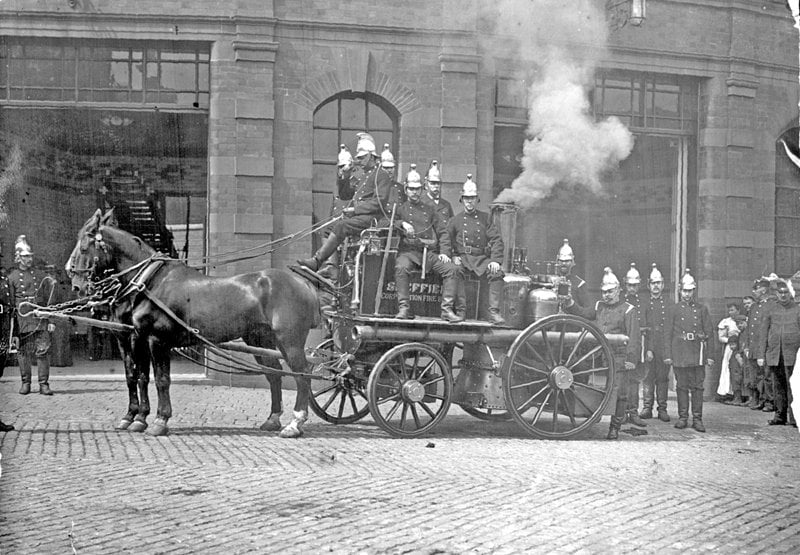
A steam-powered engine outside West Bar in the 1900s. These vehicles were kept constantly in steam, which made the station both hot and dirty | Other 3rd Party
7. 2026_10_06_15_13_56_342_ASH_19375FE2B5934342B551F41C0679552D.JPG
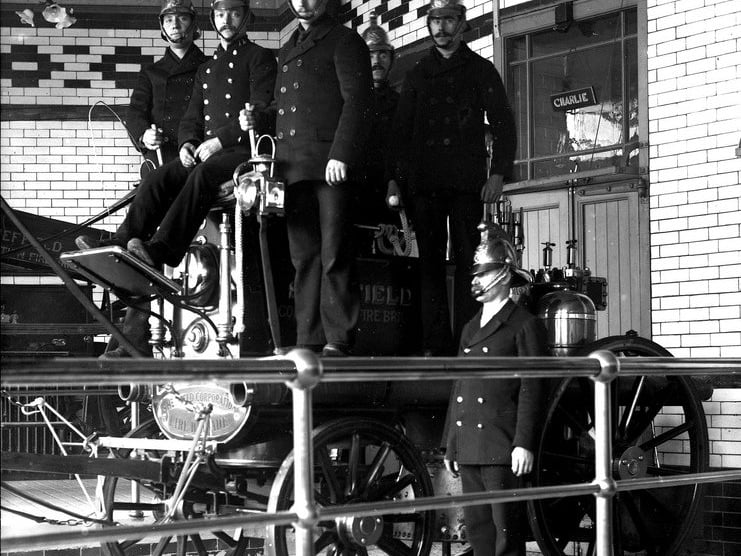
A fire crew pose with a horse-drawn engine in West Bar's engine house in the early 1900s. The Sheffield museum's historic fire vehicles are still housed in this area | Other 3rd Party
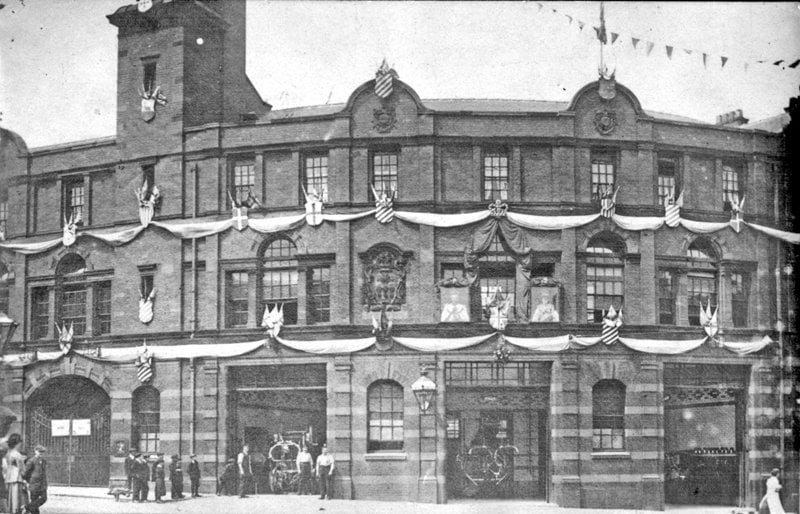
8. 2026_10_06_15_14_06_399_ASH_069D6772C9954618B932C50FD755AADE.JPG
West Bar police and fire station decked out for a visit by King Edward VII and Queen Alexandra in 1905 | Other 3rd Party