
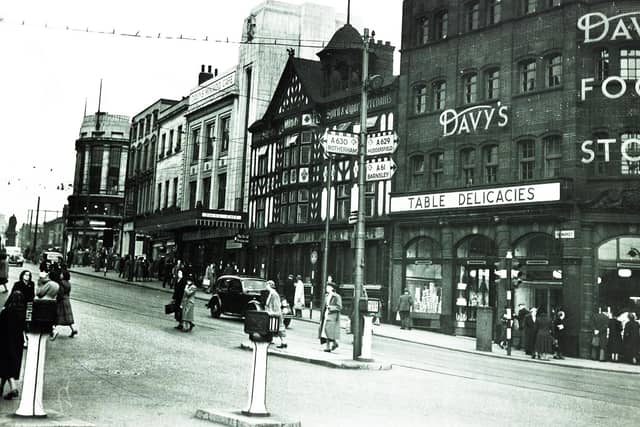


These nostalgic photos capture Sheffield as it looked during the 1940s and 50s, a period fast fading from living memory.
They show how Sheffield stood strong during the Sheffield Blitz, as the aerial bombardment brought buildings crashing down but failed to crush citizens’ spirits.
And they depict how Sheffield dusted itself off and rebuilt during the post-war years, shaping itself a bold new identity from amid the wreckage.
In the city centre, Walsh’s and Atkinsons department stores were rebuilt after being reduced to rubble. The Marples Hotel, where an estimated 70 people sheltering in the cellar had been tragically killed in a direct hit by a German bomb in 1940, also rose again.
Further out, construction started on Sheffield’s futuristic ‘streets in the sky’, as the Park Hill flats, replacing the old slum housing, were famously dubbed. It was also when work began on the ‘dreamland’ Gleadless Valley estate, while swathes of new homes were created in other suburbs.
This retro photo gallery shows youngsters queueing up for their school dinners and enjoying themselves in the playground, with those images likely to bring back memories for anyone who grew up in the 1940s or 50s.
The atmospheric black-and-white images take us along Fargate, The Moor, High Street and other major city centre thoroughfares, showing popular shops of the era, including Cole Brothers, Woolworths, Burton and Barratts.
They also take us out into the suburbs, including Handsworth, Hillsborough, Burngreave and Firth Park.
A steam train chugging out of Sheffield Midland station, the historic steelworks where Meadowhall now stands, a popular confectionery store and the old Mikado Cafe on Haymarket are just some of the other arresting images in this trip down memory lane.
Do these photos bring back any memories for you of Sheffield during the 1940s and 50s, and are there any old businesses you recognise?
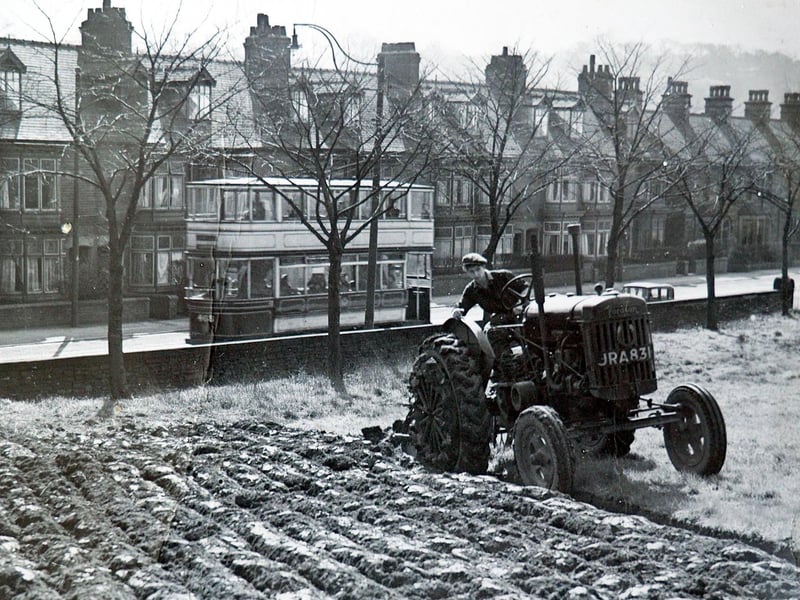
25. Millhouses
Michael Denniff ploughing at Millhouses, Sheffield, in the 1940s | Submitted
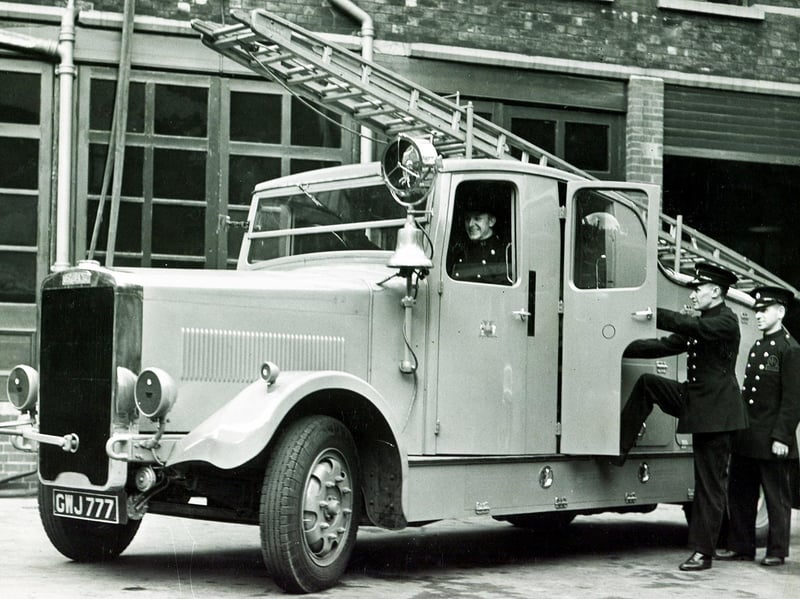
26. Fire engine
This pump, which had just been put into commission with Sheffield Fire Brigade, could operate 700 to 900 gallons of water a minute. Mounted on a 45 hp chassis, it carried 2,000 feet of hose, a 40-gallon tank of water and all the apparatus for modern firefighting. It is pictured on October 3, 1941. | Sheffield Newspapers
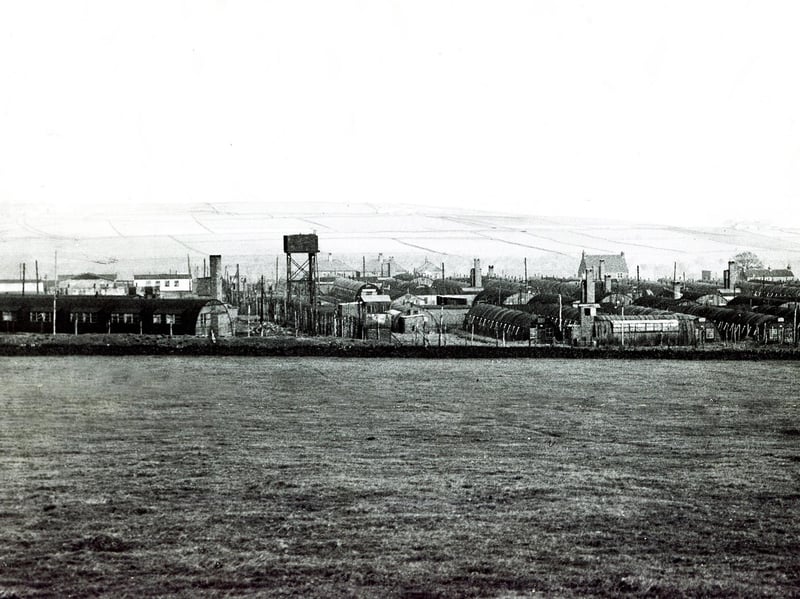
27. Lodge Moor
Lodge Moor prisoner of war camp site pictured in 1949. The site became a military camp in the First World War, and the Sheffield City Battalion was raised there. After 1919, the Sheffield Corporation bought the land and took down most of the huts, a few being kept for some years as an emergency hospital for smallpox. Then, in 1939, the camp was requisitioned again at the start of the Second World War. | Sheffield Newspapers
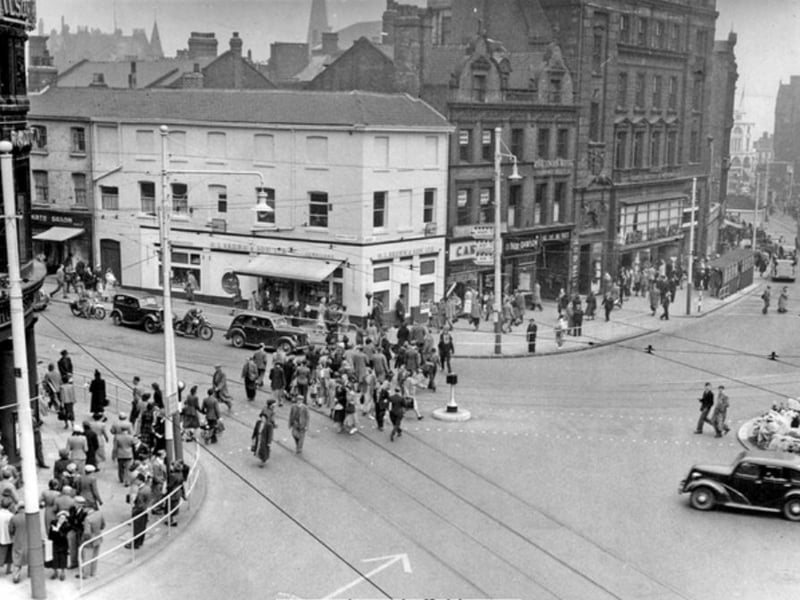
28. Town Hall Square
Town Hall Square, Sheffield, in 1948, with Leopold Street to the left and Fargate on the right | Picture Sheffield