
Exploring Sheffield Manor Lodge: A Tudor ruin that imprisoned a Queen
This article contains affiliate links. We may earn a small commission on items purchased through this article, but that does not affect our editorial judgement.
The Star’s Chris Hallam met up with Dr. Hannah Wallace from The Green Estate to take a look around this heritage site
Originally constructed around 1516, Sheffield Manor Lodge was built for the Earls of Shrewsbury and is historically significant for its part in the imprisonment of Mary Queen of Scots.
The site, upon which the remains of what was once a grand lodge reside, has a history that goes back to the 15th century.
The first written documentation of a medieval hunting lodge on the site dates back to 1479. This lodge was established to capitalise on Sheffield’s vast deer park, which spanned eight miles in circumference and ranked among the largest in England at the time.
Constructed in two distinct phases by George Talbot, the 4th Earl of Shrewsbury, alongside the 6th Earl, the palatial Manor Lodge represented a major redesign of a previous hunting structure erected in 1515.
It was at one time a luxurious building, perched on an elevated point, offering stunning panoramic views of the park and for miles around.
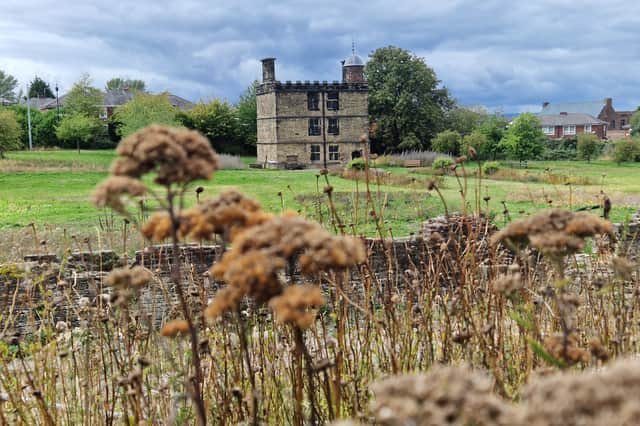

Positioned to maintain a direct line of sight with Sheffield Castle, the Lodge shared a strategic connection to the medieval stronghold whose remains were uncovered in Castlegate, where the River Sheaf meets the River Don.
While Sheffield Castle functioned as the Earl's main home and an operational stronghold for defense and administrative affairs, Manor Lodge served as a peaceful, lavish escape where high-profile visitors could be entertained away from castle life.
Sadly the years have not been kind, following the end of the Shrewsbury line, the Manor Lodge estate passed to the Duke of Norfolk.
🎞️ Did you enjoy this fond look back to the Sheffield in the past? Well, why don't you sign up to our free daily newsletter.
“It was lived in for no more than 200 years,” Dr. Hannah Wallace, the learning and interpretation coordinator at The Green Estate CIC – the current caretaker of the Manor Lodge estate, tells me as we walk through the ruins. “The Duke of Norfolk lived down south in Arundel Castle, he had no interest in living there.”
Manor Lodge would go on to be rented out, before eventually falling into disrepair.
“No one was here to look after it or pay for the repairs,” Dr Wallace explains. “Local people thought ‘that’s really good stone I’m going to take that and build my house from it’.”
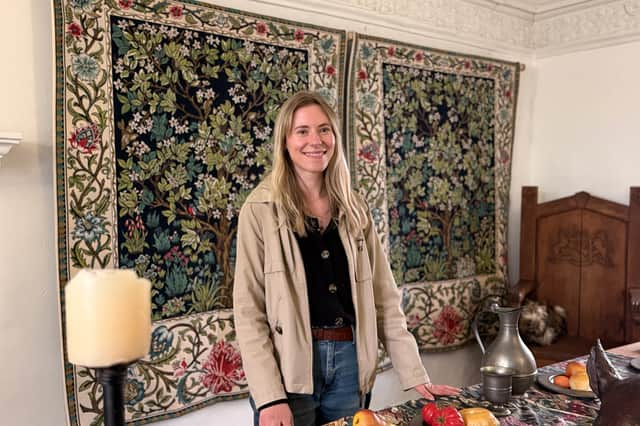
One of the still-standing elements of this once grand Tudor lodge is the presence of what was the first long gallery outside London.
After the lodge was vacated the prominent fixture would find another purpose.
“What’s really interesting about this part of the Lodge is that when the family left, people built houses here,” Dr Wallace explains. “It became a mining village. In the 19th century a mine was sunk on the other side of the wall. The ruins became home to around 60 people, with little cottages built along the wall of the long-gallery.
“It quite quickly started to fall into a quite ruinous state, like it is now. The Tudor red brick that was used in the Lodge’s towers would have been used by the cutlers, who found it really useful for sharpening knives.”
The other remains of Manor Lodge on the site include parts of the two seated toilet area, outlines of the kitchens, food stores and elements of the winding staircases.
The only structure that is fully intact is the Turret House.
Constructed around 1574, the Turret House has endured over the centuries and offers a glimpse into the lavishness of Sheffield Manor Lodge during its peak.
“We think that the Turret House was built as a gatehouse,” Dr Wallace says, as we enter the Grade II-listed build. “So this would have been one of the first things you saw as you came to Manor Lodge.”
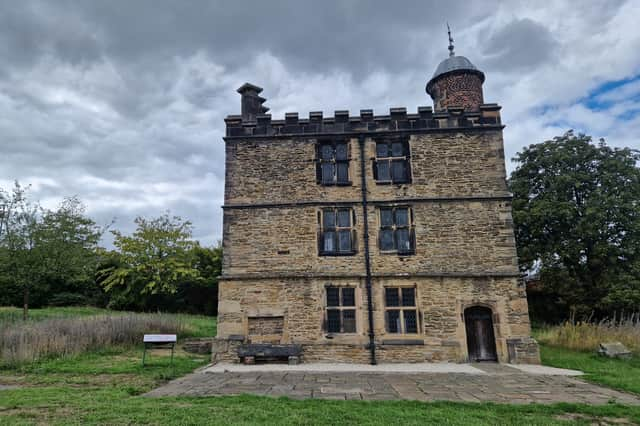
As you ascend the winding staircase, the craftsmanship grows increasingly ornate on the upper levels. The interior is famous for its preserved original plaster ceiling, decorated with heraldic symbols and stone carvings that honour the Talbot family alongside the estate’s most prominent guest.
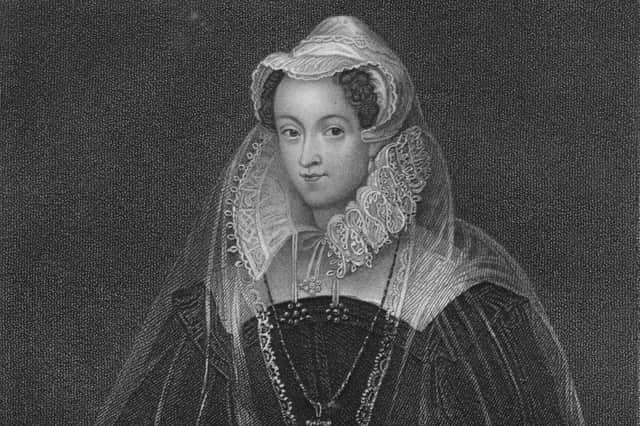
Undoubtedly the most famous story in the long history of Sheffield’s Manor Lodge is its role in the captivity of Mary Queen of Scots.
Despite being held in captivity in the city for 14 years, with 10 of those spent at Manor Lodge and the remainder at the long-gone Sheffield Castle, Mary Queen of Scots lived a life of the highest standards.
She was treated as a queen maintaining a suite of rooms with gold chandeliers, tapestries and paintings, along with a retinue of up to 40 servants, doctors and more.
As a potential successor to Queen Elizabeth I, Mary was kept in luxury to avoid offending a possible future monarch.
🎞️ Did you enjoy this fond look back to the Sheffield in the past? Well, why don't you sign up to our free daily newsletter.
There’s a certain Medieval whimsy about the stories connected to the site that Dr Wallace and the team at Green Estate CIC are not only exploring and curating but protecting.
As for the fate of Mary Queen of Scots? Well, as many of us know it didn’t work out so well. She would not succeed Elizabeth I.
Instead she would be found guilty of orchestrating an assassination plot to supplant the English monarch, she was beheaded in 1587 at Fotheringay Castle, after which her remains were secretly buried on the grounds. Mary’s remains would later be exhumed and re-buried at Westminister Abbey following a Royal Warrant by James I in 1612.
A bleak ending and just one of the many stories that illuminate the history of Sheffield’s Manor Lodge that stretches back more than half a millennia.
The Green Estate currently hosts a number of year-round events programme including school visits and battle reenactments, as it seeks to preserve and celebrate this iconic part of the city’s heritage.
Public openings will take place during October half term. Find out more about Manor Lodge: https://greenestate.org.uk/sheffield-manor-lodge/