
A magazine, soul show, football crisis and lifetime of Sheffield events: John Green’s story
A chance glimpse of Blues & Soul magazine at college set John Green on a path that took him from engineering to radio, record shops and football, with a career shaped by music, publicity and a string of unexpected turns.
In 1971, a chance encounter with a copy of Blues & Soul magazine in a Rotherham College classroom set John Green on an entirely new trajectory, diverting him from the conventional path of engineering that awaited a Sheffield lad of his generation.

The teenager from Tinsley, who had already joined Edgar Allen’s on Shepcote Lane, found himself captivated by the world of American soul records and imported singles. “I remember thinking: there’s a lot of hard work in this. It wasn’t really what I wanted,” John recalls of his brief foray into engineering.
The magazine, however, opened his eyes to a “parallel universe,” prompting a “wow, what’s all this?” moment that would ultimately redefine his career.
Within a few years, John was not only working at Sheffield’s first commercial radio station, Radio Hallam, but also creating his own pioneering Northern Soul programme. This marked the beginning of a diverse career that would see him delve into record shops, become involved with Sheffield Wednesday and Chesterfield FC, and organise numerous sporting dinners, including a memorable sandwich encounter with pop star Donny Osmond.
John, born in Sheffield’s Northern General Hospital in 1954, spent his early years in Tinsley before his family relocated to Brinsworth in 1959. School held less appeal than football and music, the latter becoming an early obsession through American Forces Network and pirate radio.
The arrival of commercial radio in Sheffield in 1974, with Radio Hallam beginning broadcasts on October 1, proved pivotal. John, then working at Cole Brothers after abandoning engineering, responded to an on-air invitation from presenter Ray Stuart for listeners to bring in soul records.
“I shot down in my lunch break with some records,” he remembers. This led to an invitation into the studio, where he overheard a recruitment drive for a 'traffic manager'. He applied and secured the role, which involved scheduling commercials.
Months later, when Radio Hallam sought programme ideas, John proposed a Saturday-evening soul show. His concept, Soul Shotgun which launched in 1975, was remarkably modern: minimal presenting, fast American-style jingles, and a continuous flow of music tailored for people preparing for a night out. “I loved the music, but I wasn’t a DJ,” he explains. “So I thought: how can I make this work?”
The show, featuring Motown, Northern Soul, and tracks associated with iconic venues like Wigan Casino and Blackpool Mecca, proved a significant success, attracting an exceptional share of Saturday-evening listeners and immersing John directly into the Northern Soul scene. He forged a friendship with Dave Godin, credited with coining the term Northern Soul, and even interviewed American soul singer Major Lance in Mexborough – an experience he still finds surreal. John’s growing confidence led him to Radio 210 in Reading in 1978, where he worked alongside stars like Steve Wright and Bob Harris. He recalls Wright’s good-natured impersonations of his northern accent and lending Harris two records, which Harris has still got!
Homesickness eventually drew him back to Sheffield after two years. Upon his return, John joined K&D Records, initially located in the city centre’s Hole in the Road. An advert then caught his eye for Virgin Records, which was establishing a sales force. He met with Simon Draper, a central figure in Richard Branson’s company, and became one of their northern sales representatives, covering Yorkshire, Lancashire, and later the Midlands during a period of rapid expansion for the label. This was a boom time for vinyl, and John experienced financial success for the first time.
The sudden death of his father from cancer, aged around 60, deeply affected him and solidified his philosophy: “You don’t know what’s around the corner. That’s why I’ve always thought: do it now.”
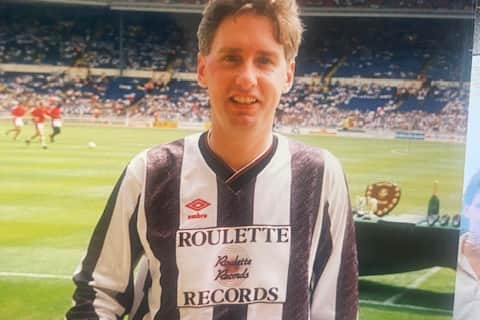
In 1983, John seized an opportunity to acquire a Sheffield record shop. Unable to afford a conventional purchase, he secured a deal with the owner for stock, working capital, and a repayment plan. He named it Roulette Records, inspired by the American record label. The shop opened in Aldine Court off Sheffield High Street, eventually expanding to outlets in Worksop and Rotherham, and John also became involved with K&D’s Castle Market shop.
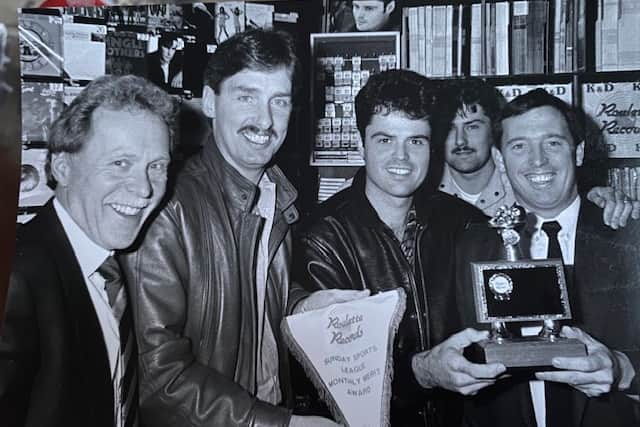
Roulette Records became a prominent feature of Sheffield’s independent retail landscape in the 1980s and early 1990s.John instinctively understood publicity and merged this with his passion for football. He sponsored a Sheffield Sunday league, creating Roulette FC, and initiated 'Manager of the Month' awards. Instead of presenting trophies himself, he leveraged his contacts to persuade famous figures – footballers, actors, and musicians – to do the honours.
Guests included George Best, Alex Ferguson, David Essex, The Monkees, and Kevin Keegan. A particularly memorable event involved Donny Osmond presenting an award in the tiny Aldine Court shop. When Osmond requested food afterwards, John took him to Cooplands on High Street, where the pop star ended up signing sandwich bags for a crowd of excited shoppers. The next day, The Star featured a photograph, to John's delight.
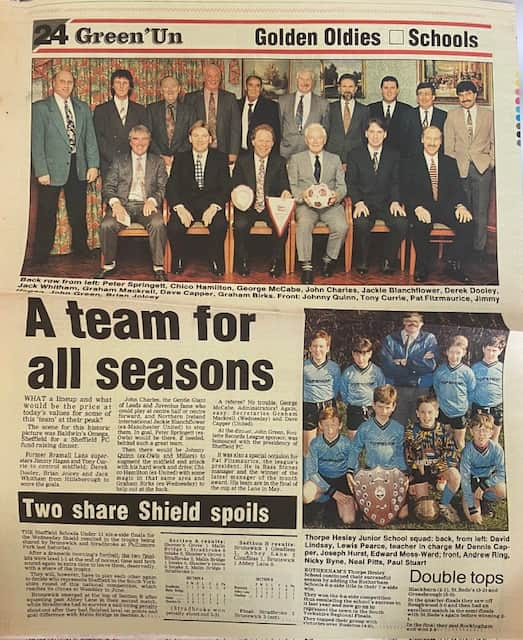
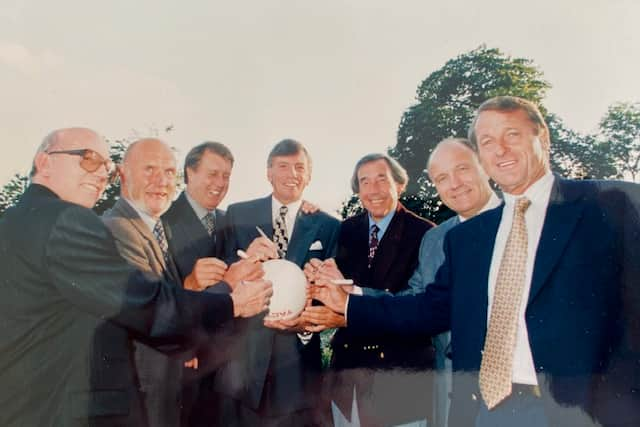
By the mid-1990s, John sought a new challenge, finding it in sport. He had already begun organising football dinners and fundraising events. In 1996, working with Aston Hall Hotel, he orchestrated an event commemorating 30 years since England’s World Cup victory, attended by eight of the boys of 1966, as well as Sir Stanley Matthews. “It was a magical night,” he recalls.
In 1998, Sheffield Wednesday recruited John to manage events at Hillsborough. For a lifelong Wednesday supporter, whose first game was a 5-3 victory over Chelsea in October 1961, it seemed a dream job. However, the reality of long hours and demanding schedules led him to move on after two years.
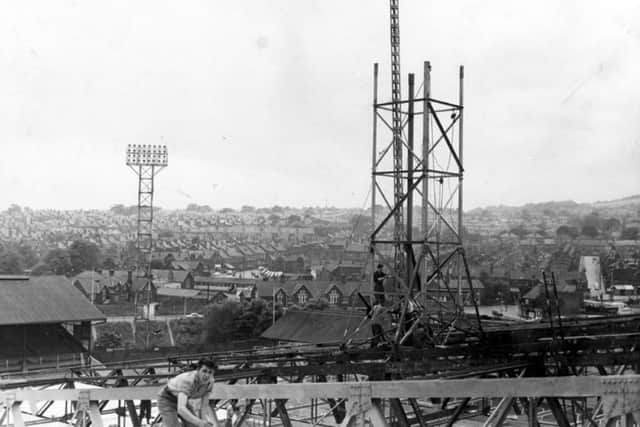
Then, in 2001, came the role that would place him at the heart of one of English football’s most bizarre scandals. John joined Chesterfield FC in a commercial capacity under owner Darren Brown. Within months, he grew concerned as other directors departed and finances tightened. Football League investigators soon arrived, leading to national news coverage. Chesterfield faced charges of financial irregularities, initially receiving a nine-point deduction and a £20,000 fine, a punishment later deemed too lenient by the League.
John, by then acting as chief executive, became the public face of a crisis he maintains he knew nothing about. “I went outside and there were television cameras everywhere. I was on Live TV, Sky Sports, BBC and CNN to name but a few,” he recounts. “I thought: what the hell is happening?” Brown was later jailed for four years for fraud offences, having admitted to taking hundreds of thousands of pounds from the club.
John was cleared of any wrongdoing, receiving a letter from the Football League thanking him for his assistance and expressing hope he would remain in football. However, another letter awaited him at home: Chesterfield had made him redundant.
The immense strain and damage to his reputation took a severe toll. Shortly afterwards, he was diagnosed with testicular cancer, marking another overnight shift in his life.
John returned to what he knew best: events, football, and people. Leveraging decades of contacts, he organised dinners, charity events, and awards. In 2007, he helped establish The Star/Green Un Football Awards, a new format involving clubs across the region. At 72, John shows little interest in retirement, continuing to organise events and advise charities on fundraising. He still cherishes records, remains a devoted Sheffield Wednesday supporter, and lives by his enduring philosophy: “You never know what’s going to happen next. So if you want to do something, do it.”
- You can read John Green's full story in Neil Anderson's Steel City Survivors, which is fundraising for Sheffield homeless charity Roundable. It is available at https://dirtystopouts.com/products/steel-city-survivors-collectors-edition-signed-and-numbered