
I went to Birley to explore the fascinating local mining history walk with a retired priest
Local historian, geologist and retired priest Philip Ireson recently contacted The Star to raise awareness of a mining tragedy that occurred almost 150 years ago.
South Yorkshire has an incredibly rich and varied history in a number of ways, something that I’ve recently been exploring. This time around I spent some time with local historian and former Anglican priest Philip Ireson to explore Shire Brook Valley Nature Reserve and its surroundings to discover more about about Birley Collieries, a series of now long-gone coal mines.
“Where you are standing right now, you’re on top of the Silkestone seam,” Philip said as we look down a steep drop. “It was once an incredibly sought-after low-sulphur coal seam, which courses its way through to Barnsley.”
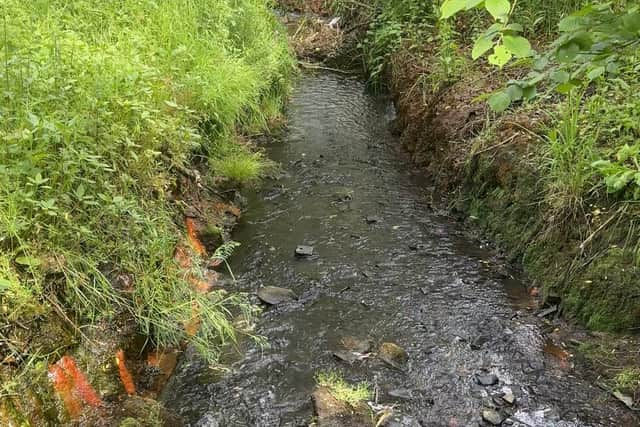

Our first task is to head across the road and towards Shire Brook, a small stream which flows in an easterly direction towards the River Rother. In the past this very brook was used as a boundary between Yorkshire and Derbyshire, which gives an insight into the name which is essentially the ‘Brook between the Shires’.
Historically, Shire Brook also formed the boundary between the kingdoms of Mercia and Northumbria, but for the past 900-years it’s been the boundary of both Derbyshire and Yorkshire.
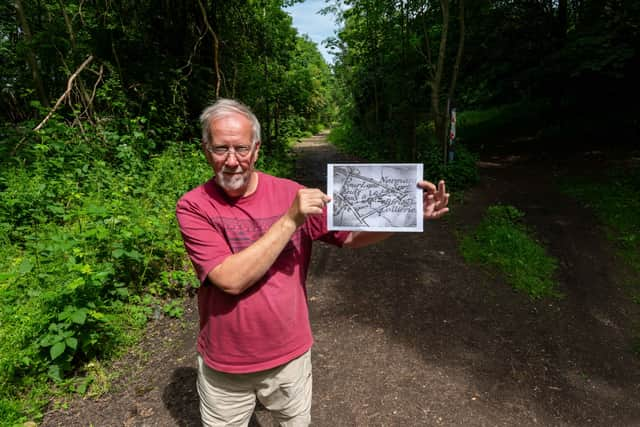
Philip is a font of knowledge when it comes to this part of the city, he points out that both Birley, Frecheville and Hackenthorpe were originally their own villages and a part of Derbyshire before being amalgamated into the City of Sheffield in the ‘60s due to a boundary change.
The true purpose of our expedition was to find any evidence of Birley West Colliery, the first of a group of coal mines in the Shire Brook Valley that made up Birley Collieries (Birley West, East and Vale Collieries).
It is also the site where in 1876, six miners were tragically killed, just underneath Occupation Road in an explosion, after what (at least so far) seems to have been a hurriedly haphazard check on the working conditions – an incident that resulted in a manslaughter charge being levied.
It’s a bleak reminder of the numerous tragedies that occurred in the area over the course of the 92-year period that the collieries operated locally. You can read more about the Birley West Colliery Explosion here.
Despite being retired, Philip is more than willing to stride through nettles, thorns and even scale objects in order to find historical remnants that may tell a story.
There is little remainder of the colliery, other than some of the crushed masonry and various other bits of debris of that have been discarded over the years.
“The Birley Collieries were owned by the Sheffield Coal Company, who had an agreement with Earl Manvers to work below his lands,” Philip said. “It was a lucrative trade for Earl Manvers, who was making around £1million in rent.” That would be around £175million today.
Not to be deterred, Philip points out how the Shire Brook stream was diverted and even covered over by buildings, instead flowing underneath, during the coal mining era.
We set off in pursuit of richer fragments of local history, making our way through what was once the group of Birley Collieries, the Shire Brook Valley Nature Reserve – a peacefully serene place perfect for a walk. We step out onto the roadside at Normanton Hill, of which the Birley West and East Collieries were based on either side. Further up the road to our left is Jazzy's Crossing, a modern permanent memorial to the teenager, Jasmyn Chan, who was tragically killed by a speeding driver in 2014.
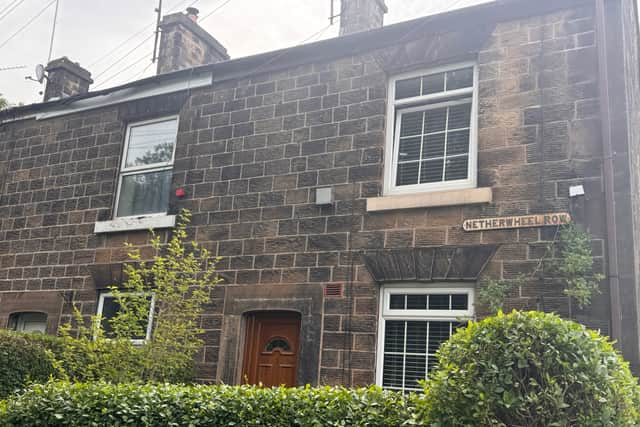
As we pass through Normanton Spring, we see a number of terrace houses that date back to at least the 1850s, which serve as remnants of the region's shift from a rural farming hamlet into a busy mid-19th to 20th-century coal mining settlement.
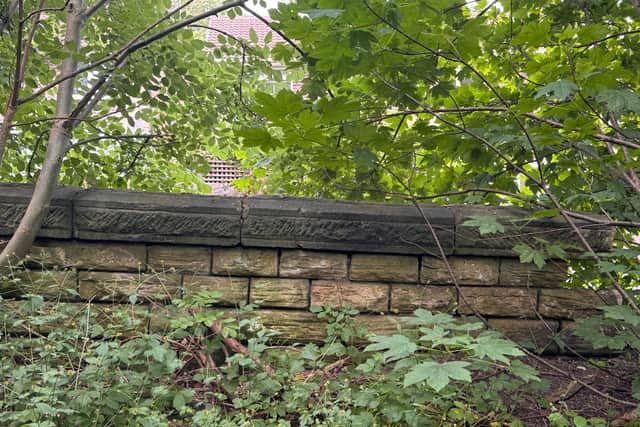
If you were to head up Normanton Hill, you can see the stone wall which originally served as the railway bridge, underneath which the Birley Coal Branch used to carry the coal from the collieries on a single-line track – serving the West, East and Vale collieries. It was also used in the summer for excursion trains which took the miners and their families to the seaside.
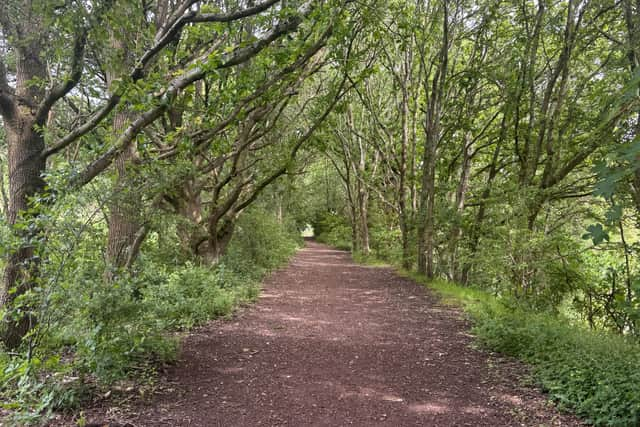
The line was worked by the M.S.& L.R. (Manchester, Sheffield and Lincolnshire Railway) and now forms part of the Transpennine Trail, which you can experience with a walk towards Sally Clark’s Meadow on Stone Lane – Folklore would inform you that Sally Clark was believed to be a witch.
Like much of the coal mining heritage of the area, the railway is now gone. Replaced by or covered with trees and housing. Though there does remain a reference to the railway with a single sleeper, bolted to a log, near to the Birley East Colliery commemorative stone at Shire Brook Valley Nature Reserve.
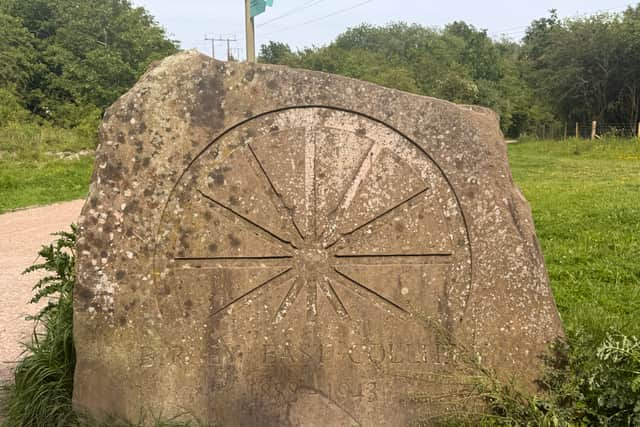
It’s strange yet hugely interesting taking this walk through what was once a bustling mining industry. There barely remains many elements or even memorials to an industry that once was. Sadly there is nothing that pays homage to the many miners who perished while working here.
Although I’d be happy to be proved wrong in this regard.