
The miners that time forgot - the haunting story of the 1876 Birley Mine Disaster
Birley West drew its last coal in 1908 with production switching to the Birley East pit.
Early on Monday, June 26, 1876, a serious explosion occurred deep underground in the Birley West Colliery, just below Occupation Lane in Hackenthorpe, resulting in the deaths of six men.
It was a catastrophic event, one that could possibly have been averted were stringent checks made, concerns firmly raised and the correct basic lighting equipment provided.
It was also a fatal event that only further emphasised the unsafe conditions that miners were working in, and would continue to work in long after the dust had settled in those bleak dark pits.
Local historian and retired priest Philip Ireson said: “The miners got to this point where they tried to build this upshaft to find the coal, with their lit candles there was an explosion and six of the miners were killed.”
On the Sunday night prior to the explosion, three deputies (or fire-triers), Thomas Ward, William Clayton and Martin Wilson entered the pit to examine the working conditions.
William Clayton is key to this tragic tale, as it was he who was tasked with checking a district of the pit populated by ‘low headings’, where the height of a mine tunnel or seam is restricted.
Clayton’s job was to conduct safety checks on the Monday morning, he reported at 4am that he had found gas, ‘but not in sufficient quantities to report the headings as dangerous’, in doing so reporting the entire district as ‘safe’ – a fatal miscalculation on his part.
Around 30-minutes after the fire-triers and Clayton’s checks were completed, miners began making their way into the colliery. The miners whose work was focussed at the end of the drift entered carrying naked lights, oblivious to the presence of gas – as noted by Clayton but not escalated as cause for concern.
The time was 6.15am, an explosion was heard and a gust of wind burst through the tunnels, causing alarm and a stampede as miners rushed to the surface while some rushed to warn others. A rescue party consisting of nine-men and Mr Mosby, the manager of the colliery, set out to find survivors. Nothing could have prepared them for the scene they were about to see.
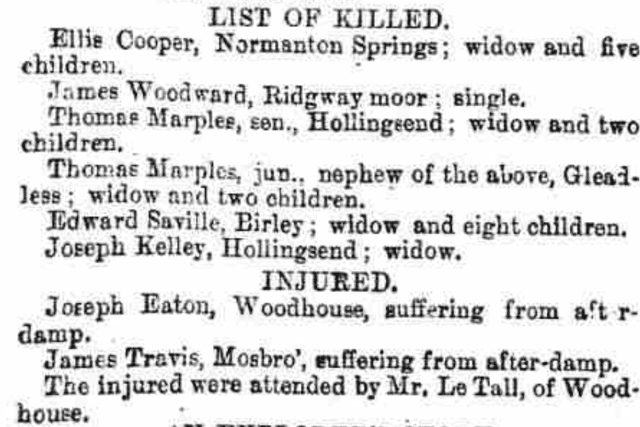

In an extract from the Sheffield and Rotherham Independent (later incarnations became the Sheffield Telegraph), the horrific scene was described in detail.
“They saw abundant evidence of the violence of the blast, for the roadway was torn up, the roof was in places knocked down, corves were overturned, and brick-settings were smashed to pieces.” One of the corves (a manually operated mine cart), was blasted with such force that it destroyed a thick door entirely.
“Two men were found in the main road-way, suffering from the effects of after-damp. Both were taken to the surface for treatment for toxic gas inhalation.”
But the truly brutal scale of the disaster was yet to be revealed, as the rescuers pressed on into the low headings they found the body of James Woodward, 26. The rescuers soon found a deceased Edward Savile, 56. Then they came across the bodies of the two Marples men, an uncle and his nephew, Thomas Marples Senior, 49 and Thomas Marples Junior, 26. The two men to be recovered last were Ellis Cooper, 31, and George Kelly, 20.
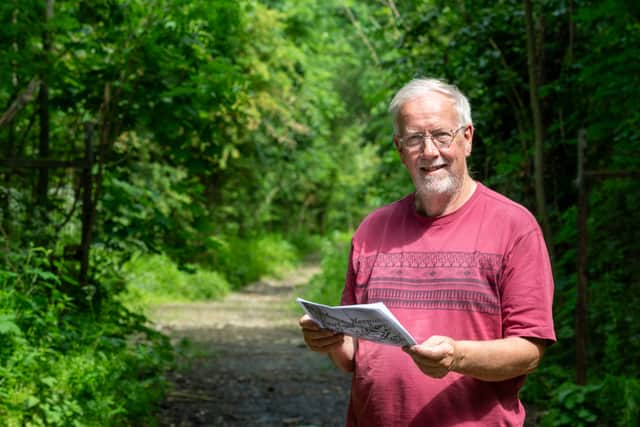
“A newspaper report went into fairly graphic detail on what the rescuers saw just half an hour later,” Philip added. It was thought that the men became aware of the danger and were attempting to get away, although they were not to be quite so fortunate.
In the aftermath of the tragedy, an inquest got underway. John Spencer, one of those involved in the rescue said that safety lights (Davy lamps) were not being used, he also spoke of the horrors witnessed. “The first we discovered was Ellis Cooper.
“His face and arms were fearfully scorched.”
In the report, he went on to talk about the other men found following the disaster. One of the Marples’ men had the flesh and hair burnt away from his chest.
The horrific destruction in the drift was outlined in the inquiry, and the disaster was also brought up in Parliament where it was said that ‘there were only two safety lamps for the mine’. It was also noted that another explosion had taken place months before (April 1876), but that safety measures had not been acted on.
The government agreed that action should be taken under the sixty-first clause of "The Coal Mines Regulation Act, 1872.” The colliery manager and under-viewer were heavily censured by the jury for ‘loose and inefficient management’.
As for William Clayton, a coroner's jury returned a verdict of manslaughter. He was held responsible for not conducting a thorough safety inspection before miners entered the working pit.
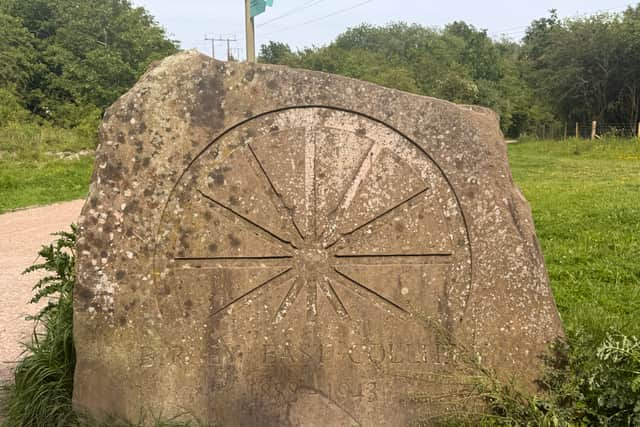
“It was a very tragic thing that left six men dead, and 17-children without fathers,” Philip said at the Birley East Colliery commemorative stone at Shire Brook Valley Nature Reserve.
In the years following the horrific events of June 22, 1876, conditions didn’t change, well not nearly enough. While the owners of the collieries benefitted from the trappings of incredible wealth, miners were still seen as easily replaceable, poorly equipped and paid a pittance. The lengthy accident record at the Birley Collieries indicates how perilous the job was in the following decades.
Birley West drew its last coal in 1908 with production switching to the Birley East pit. This remained in use until 1943 when coal production ceased. The site was then used as a training site for the Bevin Boys from 1944 until 1948. In 1990 both the upcast and downcast shafts were capped, marking the end of the mining era. The site where Birley West Colliery was based now forms part of the beautifully idyllic Shire Brook Valley Nature Reserve.
The miners who perished on that fateful day left behind families, wives and 17 children. These are the miners that time forgot:
Thomas Marples Sen. 49.
Thomas Marples Jun. 26.
George Kelly, 20.
James Woodward, 26.
Edwin Saville, 56.
Ellis Cooper, 31.