
How the French Revolution and an invention stolen by the government led to Sheffield’s Industrial Era
Although he may not have been a Yorkshireman by birth, much of Sir Henry Bessemer’s legacy ultimately centered on Sheffield
Sir Henry Bessemer’s inventions and innovations in metallurgy tie him to the history of Sheffield and the industrial era – but it may not have happened at all if not for the French Revolution and an invention stolen by the British government.
Let’s go back a step...
In 1792, Anthony Bessemer, who much later would become a father to Henry Bessemer, was an accomplished inventor, engineer and member of the French Academy of Sciences.
Forced to leave Paris by the advent of the French Revolution, fearing persecution due to his Huguenot (French Protestant) religion, Anthony invented a process for making gold chains; it was successful enough to buy him a small estate in Charlton, Hertfordshire, where he was married and started a family.
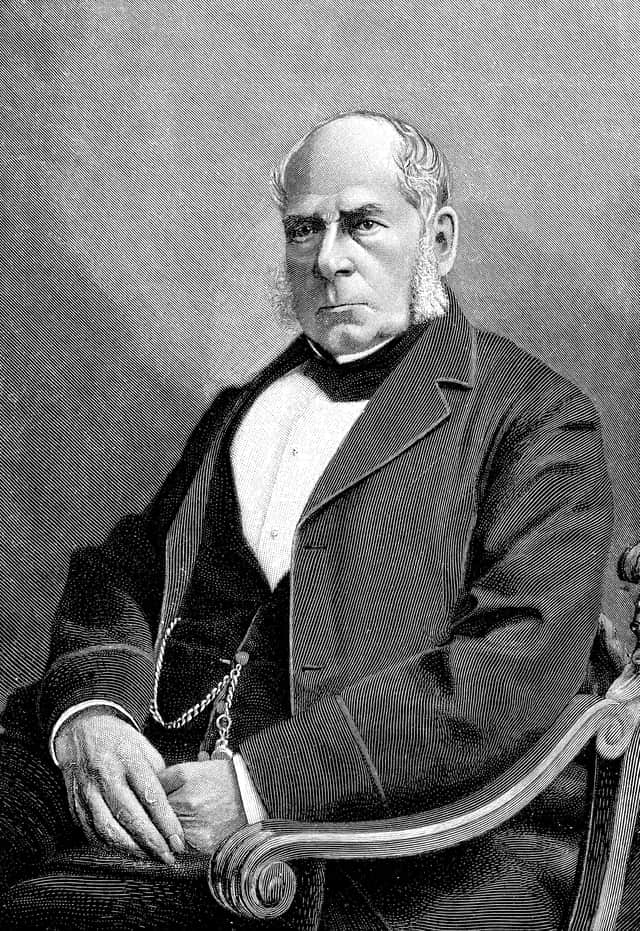

Henry Bessemer was born on 19 January 1813 in London to Anthony and Elizabeth Bessemer. From a young age he displayed great talent with inventive skills, while he learned greatly from his father’s type foundry (a typesetting facility for printing), and it wasn’t long before he started creating things.
On April 7, 1834, Henry married Anne Allen in a loving marriage that lasted until Anne’s death in 1897, a year before Henry’s death on March 15, 1898. They had four children, of which three lived until adulthood.
The first invention that created a name for Henry was in 1833 with the development of a unique press and die that embossed official stamps into the fibers of official paper documents. This invention would permanently stop the forging and reuse of old stamps.
For the invention of his stamping press which would save the British government around £100,000 a year in losses to fraud, Bessemer was promised a government job – but it never materialised.
Not only was Bessemer denied a promised job, he wasn’t paid for his idea that was essentially stolen by the government.
This huge slight led to Bessemer seeking patents for each invention going forward. He would later go on to register more than 130 patents for his inventions over the course of his lifetime.
The first invention that brought him both fame and fortune was a steam-powered machine that could produce bronze powder for use in gold paint. Previously only produced in Nuremburg, Bessemer reverse engineered the costly process to create a product that was far cheaper.
It proved to be very profitable providing Bessemer with the necessary funding to pursue his passions for invention.
After creating a method of effectively refining sugar, which didn’t reap the profits that he would have liked, Bessemer turned his attention to the Crimean War and artillery.
It was during this time that he came up with an improved artillery shell design, which was ultimately flawed because the guns in use could not withstand the force created by firing the shells.
This perceived failure drove Bessemer to revolutionise the steelmaking industry in his determination to find a stronger material for artillery. This is what led to his solution that would change the steelmaking process and in doing so shake the industry to its core.
This new method would be called the ‘Bessemer Process’ and it would transform the world.
Previously the means of manufacturing steel was both time consuming and very expensive, but that was all about to change with this invention.
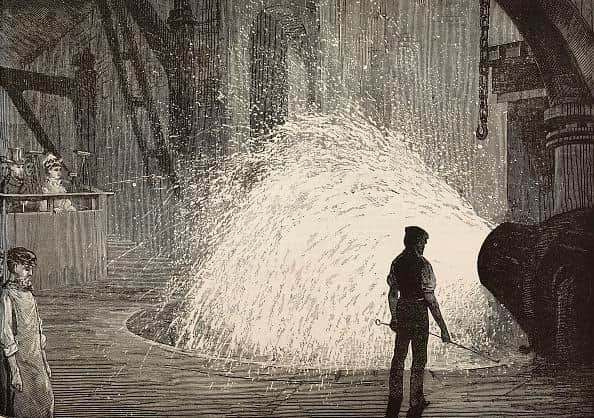
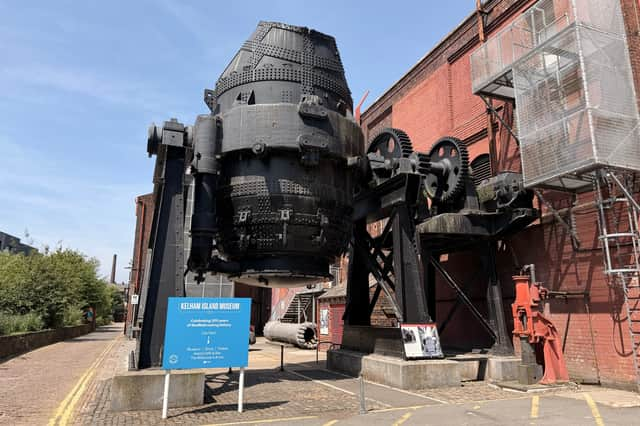
Utilising the Bessemer converter, a large, pear-shaped refractory-lined vessel, pressurised air was blown through molten pig iron (a raw liquid metal that was created by smelting iron ore with coke and limestone in a blast furnace).
The ‘Bessemer Process’ was successful in removing the impurities (carbon and silicone), while also reducing the time it took for the production of steel from a full day to just twenty minutes.
Not only was the process of producing steel much quicker, it was far cheaper than other methods were able to achieve at the time.
This revolutionised the global steel industry, dramatically reducing costs and making steel much more accessible to a variety of industries – transforming the manufacturing and construction of railways and shipbuilding.
For the next 120-years, the ‘Bessemer Process’ was used commercially before gradually being phased out in the 1900s by the open-hearth furnace because of the advantages it had in recycling scrap metal, in larger batch sizes, and in quality control.
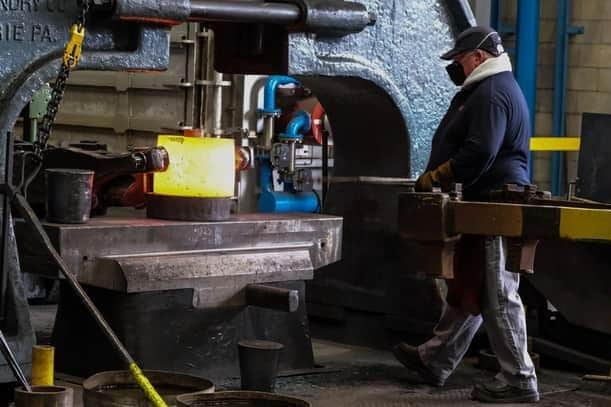
Sir Henry Bessemer was knighted by Queen Victoria for his contributions to science on 26 June 1879, and in the same year he was also made a fellow of the Royal Society.
Today there remain references to Sir Henry Bessemer endeavours in the naming of schools, roads, towns, a community-run pub in Fountain Place, Sheffield, and also outside Kelham Island Museum which houses a 30-ton Bessemer Converter – a prominent artifact of the city’s manufacturing and steel heritage.
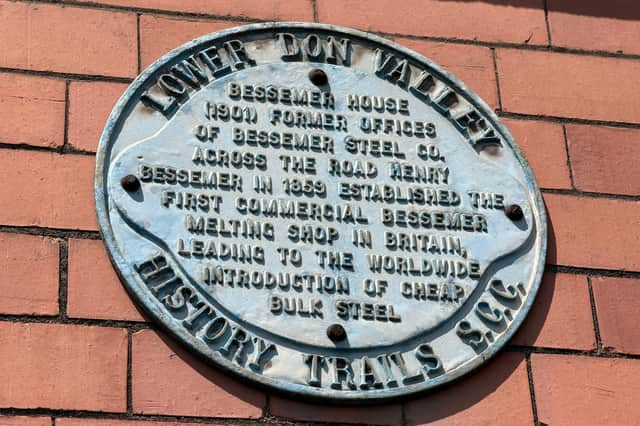
There is also a blue plaque at Bessemer House on Carlisle Street East, the former offices of Bessemer Steel Co and opposite the site where Bessemer opened his first steelworks in Sheffield.