

It is now almost 85 years since two villages in the Peak District were flooded to create a new reservoir.
The churches, pubs, farms, schools and homes of Derwent and Ashopton were submerged in 1943, and what remains today is usually hidden beneath the surface of Ladybower Reservoir in Derbyshire's picturesque Upper Derwent Valley.
The creation of the reservoir was to help provide water to the raplidly growing nearby cities of Sheffield, Nottingham, Leicester and Derby.
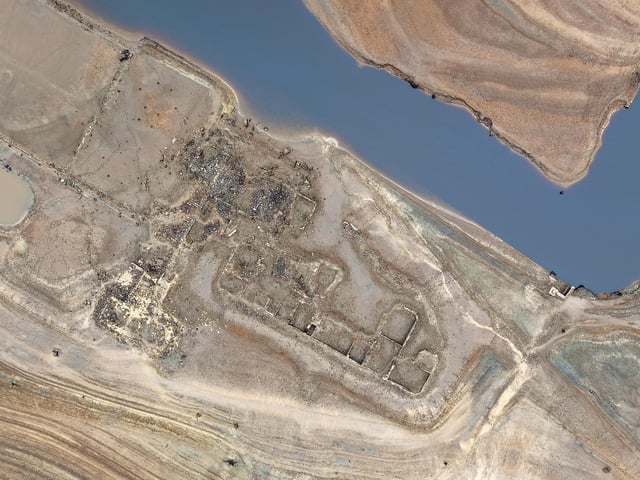
However, this summer’s heatwaves and the drought conditions created by the historically low rainfall means water levels are so low the wreckage of those once-thriving communities has once again been exposed, giving visitors a fascinating insight into the area’s past.
Historically, Ladybower is between 50 and 100 per cent full at this time of year. However, Severn Trent Water, which looks after the reservoir, said it is currently 31.6 per cent full.
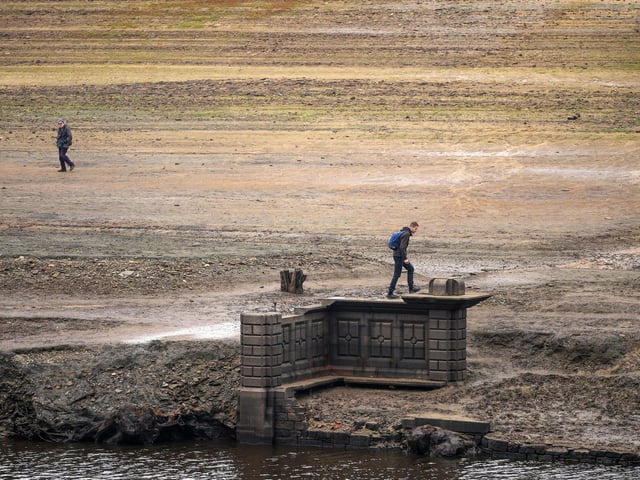
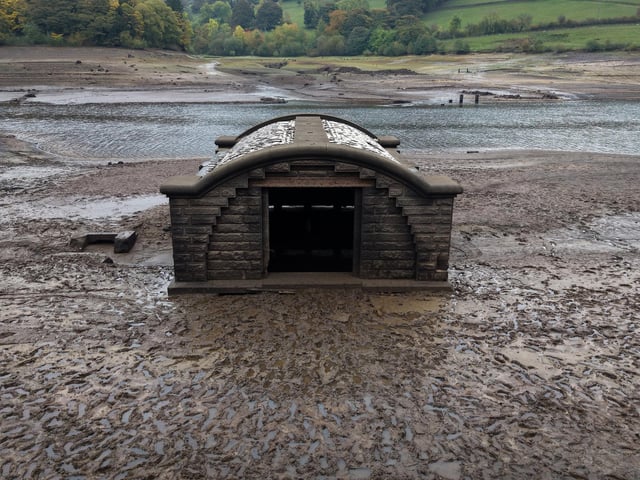
As well as buildings from the villages, a pump house and the plug holes which usually sit beneath the water are also visible.
1. Ladybower Reservoir
People inspect the ruins of Derwent Village, flooded in the 1940s to provide drinking water for the East Midlands and Sheffield, become exposed due to the low water level at Ladybower Reservoir and drought conditions. (Photo by Christopher Furlong/Getty Images) Photo: Christopher Furlong
2. Ladybower Reservoir
An aerial view of the of the pump house which provided water to the village Derwent Village, flooded in the 1940s to provide drinking water for the East Midlands and Sheffield, exposed due to the low water level at Ladybower Reservoir and drought conditions. (Photo by Christopher Furlong/Getty Images) Photo: Christopher Furlong
3. Ladybower Reservoir
An aerial view of the ruins of Derwent Village, flooded in the 1940s to provide drinking water for the East Midlands and Sheffield, exposed due to the low water level at Ladybower Reservoir amid drought conditions. (Photo by Christopher Furlong/Getty Images) Photo: Christopher Furlong
4. Ladybower Reservoir
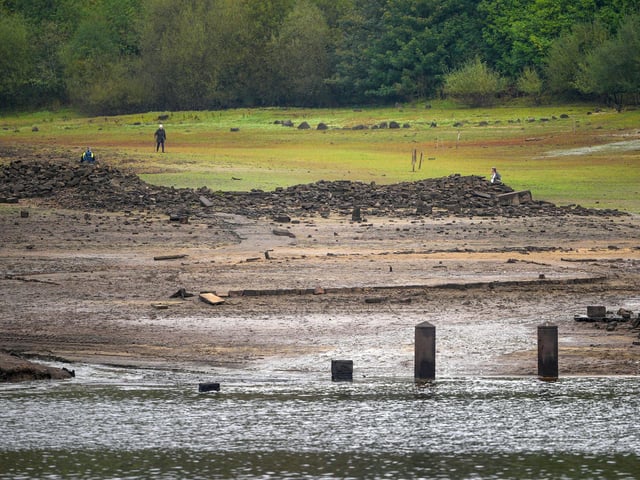
People inspect the ruins of Derwent Village. (Photo by Christopher Furlong/Getty Images) Photo: Christopher Furlong