
Special education needs: Parents highlight special needs failures in Sheffield schools as 'a constant battle'
Two heartbroken Sheffield mothers have described their fight for special needs support for their children, against the backdrop of a recent protest in the city.
Last week, a demonstration organised by The SEND (Special Educational Needs and Disabilities) Sanctuary UK took place outside Sheffield Town Hall, using around 60 pairs of children’s shoes to highlight the thousands of young people in Sheffield and across England whose education has been disrupted or denied due to inadequate special needs support.
For parents like Rebecca Bailey, the shoes were more than a symbol - they reflected years of struggle and frustration.
Rebecca’s daughter, Alice, has an acquired brain injury (ABI), epilepsy, and secondary ADHD.
Despite these complex needs, ABI is still not recognised as a form of diversity within education, leaving children like Alice without the tailored support they require.
Alice spent two years in alternative provision, alongside mainstream schooling, even though AP is designed only as a short-term measure.
Her journey to secure the right placement was long and fraught.
Rebecca fought tirelessly from the age of five to ten to get Alice into the school she needed.
In 2024, Rebecca won a tribunal securing her a place at Holly House, a specialist school equipped to support her needs, which she says has been amazing in supporting her daughter.
But the battle didn’t end there – funding for the placement remained in dispute with the Local Authority, forcing Rebecca to continue advocating for her daughter.
“It’s taken from age five to ten to get her into the placement she needed,” Rebecca said.
“And settling her into a new placement was a battle of its own. Lots of children suffer from trauma when and if they do secure a place in the correct setting, because of years of being inadequately treated and isolated within mainstream schools.”
Rebecca described the impact: “This had such a negative effect on her. It is a constant battle – we need help and support for families. So many families have been failed; we’re talking hundreds in Sheffield alone.”
Another mother, Paige Fisher, shared her family’s experience securing a special school placement for her son, Harry, who has autism and ARFID, a restrictive eating disorder.
She described the daily challenges at mainstream school: “We started our battle for SEND provisions back in 2022. He would have horrific mornings, he just wouldn’t get dressed or go to school. It was clear he was masking once he was inside.
“One day, during a trial exposure therapy at school, recommended by the NHS, he had bitten all his fingernails off. I had to take him home.”
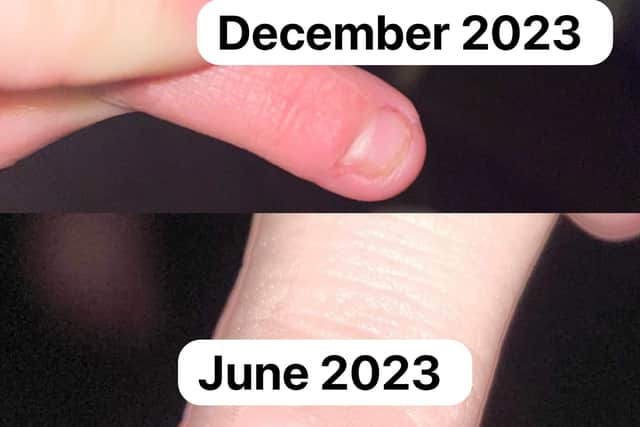

The family faced resistance from the school, which argued there was no evidence her son required extra support.
“The doctor agreed he had anxiety and should get an EHCP (Education Health and Care Plan). Health comes before education, so I pulled him out of school. The school argued there was no evidence and that him being distressed wasn’t enough to prove it.”
“The legal process was long and stressful.”
An EHCP sets out the child’s needs and the additional support they need.
Paige recalled: “We went to tribunal and had an assessment. We also consulted a psychologist in Liverpool who confirmed he needed support, and that he needed it now, through a special needs school.
“Finally, in 2025, we were finally awarded a placement at a great school.
“But was such a lengthy process and so stressful for us all. It made him miss so much school.”
.jpeg?crop=3:2,smart&trim=&width=640&quality=65)
She also spoke of the mental toll on herself.
“People don’t realise the mental side - the constant emails and fighting is its own kind of work. It has left me wobbly.
“I worked as a special needs assistant myself, but I had to come out of work to fight for my son.
“I’ve had to fight for years, and it’s hard to feel like you can stop fighting, I’m going through the healing process now.
“Little did I know through all this stress I was actually pregnant too.”
Despite the challenges, Paige praised the new school and its supportive environment.
“I love our new school, and there are amazing schools with great attitudes. We are not numbers - we are real people, and our children need help.”
Both parents explained why the shoes were such a powerful symbol. “We used the shoes because it was an impactful way of showing the issues,” Rebecca said.
“We don’t always have to use banners and shouting, though that also has its place. We just hope it makes an impact.”
Aimee Bradley, founder of The SEND Sanctuary UK, said the shoes tell the stories of children who want to learn, play and be included.
“No child should be left behind because the system decided their needs were too complex or too inconvenient.
“This is about every child failed by broken promises and endless red tape. Our children deserve real change, and they deserve it now.”
The charity reports that over 7,000 children in Sheffield currently have an Education Health and Care Plan (EHCP ), an increase of nearly 60 per cent since 2019, with families often waiting more than 35 weeks for assessments - far beyond the 20-week legal limit.
A June Ofsted report found “widespread and/or systemic failings” in Sheffield’s SEND services, noting weak EHCP quality and a lack of consistent involvement of parents and children in planning.
For families like Rebecca’s and Paige’s, the demonstration offered a small moment of visibility in a long, exhausting fight - and a reminder that behind every statistic are children and families struggling to secure the support they are legally entitled to.
The Star contacted Sheffield City Council and the NHS individually for comment, but received a joint response from an unnamed spokesperson, as decisions are made through a partnership approach rather than by either organisation alone.
It reads: “The Local Area Partnership (LAP) takes the findings of the multi-agency inspection on being a child or young person with SEND in Sheffield very seriously and acknowledges there is still considerable work required within organisations across the city to ensure the needs of children and young people are met in a timely manner and to improve outcomes.
“Together, and with parents, carers, guardians and children, we must continue, at pace, with our high aspirations to improve the quality of our Education, Health and Care Plans. In particular, we will continue to focus on children and young people who are neurodivergent, striving to ensure their needs are met early regardless of diagnosis and look to reduce the waiting times for diagnosis.
“We are encouraged that the Inspectors recognised the potential impact of our SEND Manifesto that is being developed by partners across the city, led by Learn Sheffield.
“As a LAP, we are committed to transforming Sheffield's approach to ensure we meet the needs of children and young people with SEND and improving their outcomes. It is important we work collaboratively, including with parents through organisations like the Sheffield Parent Carer Forum, to ensure every child and young person has the right opportunities to succeed.”