
Campaigners fear "historically significant" Quaker burial site will be destroyed in greenbelt housing plans

“These are major pieces of history which are buried underneath top grade farmland that the council proposes to bulldoze for housing”
Campaigners fighting to save a Sheffield greenbelt site say that a Quaker burial ground dating back hundreds of years could be lost if housing development plans go ahead - and they have commissioned specialist investigators to find out more.
The Save S13 Greenbelt group say that evidence of Quaker burials dating back to the 17th century have been found on land near Handsworth, including gravestones that may be of historical significance.
Quakerism was founded in response to the English Civil War and at the time was considered a radical movement arguing that a spiritual connection to God did not require priests or the Bible.

Early meetings were recorded in Balby, Doncaster, during the 17th century, while Quaker groups are believed to have been operating in Sheffield since as early as 1652.
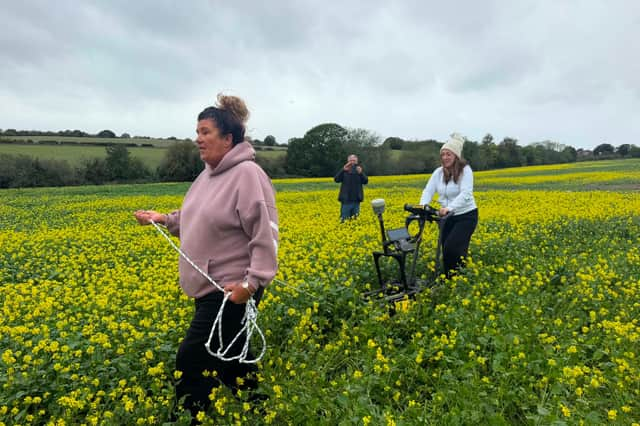
Residents in opposition to Sheffield’s draft Local Plan - a blueprint for development in the city which would see more than 1500 homes built in the area - have now begun working with specialist investigators, one of whom travelled in from Holland, to discover the history of the city.
They claim that numerous gravestones have been found on land near Beaver Hill Road, which was known as Cinder Hill Green and formed part of a Quaker Cemetery from the 1650s.
Meanwhile, other historical records suggest that archaeological evidence of 12th century iron-workings has been found on the fields, which campaigners wish to explore further.
Becci White, a spokesperson for the group ‘Save S13 Greenbelt: The Sapphire McCarthy Campaign’, said: “We have found this area to be not only of ecological importance full of historic trees, shrubs and protected species but also of historical significance which spans across the Atlantic and actually led to the founding of a key city in New Jersey.
“Going further back there is also evidence of an iron age settlement and the first ironworks in the area which will have had an influence on this going forward in the area as steel was invented here in Handsworth and this led to the modern day steel industry which Sheffield became so famous for across the globe.
“These are major pieces of history which are buried underneath top grade farmland that the council proposes to bulldoze for housing.
“We are trying to make sure these historic and archaeological finds are explored further before they are lost forever under the local plan which the community is vehemently opposed to. We also believe land that feeds us should not be destroyed for housing - it makes no sense.”
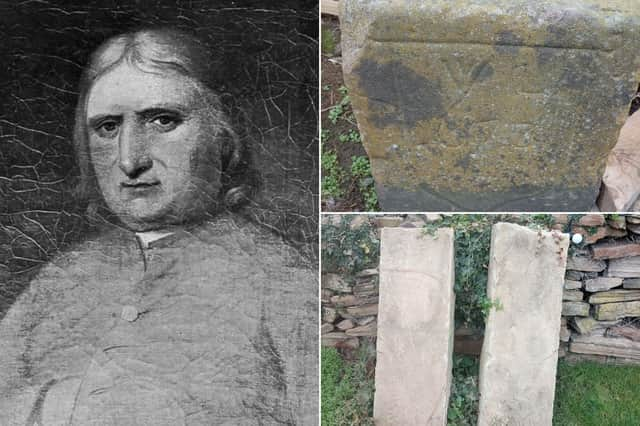
A Quaker from Handsworth, Mahlon Stacy, travelled to the United States in 1678 and settled a new plantation on the banks of the Deleware River in West Jersey.
He named the site Ballifield, after his home in Sheffield, with the area developing into Trenton, the capital city of New Jersey.
Archaeological records also show a lost medieval settlement in the area just two decades after the Battle of Hastings between 1086-1395 known as Synderhill. More charters also link the area to monastic iron age iron-working in the 12th to 14th Century .
Campaigners fear that this history will be lost in mass housing developments, which they claim will also put additional pressure on existing infrastructure like transport networks, GPs and schools.
There work has also been supported by Hollywood actor Sean Bean, who grew up in the area.