
Sheffield City Council rated 'requires improvement' by adult social care watchdog

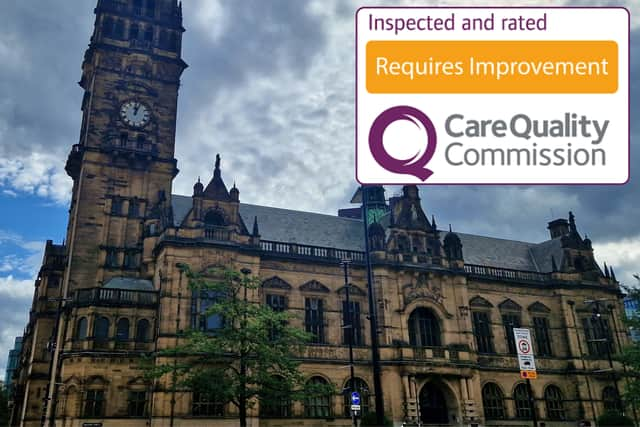
A national watchdog has said that Sheffield City Council ‘requires improvement’ after assessing its care offerings.
The Care Quality Commission (CQC) typically asses services like care homes, however it has recently been handed a new duty to inspect local authorities.
The CQC evaluates the care opportunities provided by local councils, looking at how they meet their responsibilities to promote and protect the wellbeing of disabled adults, older people and unpaid carers.
Altogether, nine areas were assessed, being rated from one - which shows significant shortfalls - to four, where the services are of an exceptional standard.
Across the board, Sheffield City Council’s offerings averaged at a rating of two, with ‘equity in experience and outcomes’ and ‘learning, improvement and innovation’ getting a higher rating of three.

Chris Badger, CQC’s chief inspector of adult social care and integrated care, said: “During our inspection of Sheffield City Council, we found a mixed picture of people’s experiences accessing adult social care.
“While leaders had clear plans to improve services, these weren't fully joined up into a single, coherent approach. This made it harder for the local authority to track progress and demonstrate consistent improvements for people.
“People told us they waited longer than expected for assessments and reviews, which disrupted continuity of support and reduced their confidence in the system.
“Unpaid carers also told us they had the same experience around consistency and often spoke to different duty workers each time they contacted Sheffield. As a result, carers had to repeat their circumstances and this slowed care planning as each duty worker had to familiarise themselves with each person’s unique circumstance.”
While in Sheffield, the assessment team was told by some people that the council didn’t provide accessible telephone or website options, which made it harder to access information and advice.
They also said that despite the city having a range of support available, this wasn’t communicated effectively by leadership.
The processes for people aged 65 and over accessing care was frequently interrupted or disjointed, people told the CQC, while unpaid carers said that leaders needed to ‘improve consistency’ with safeguarding and risk management.
However not all feedback was bad, with some people saying their assessment were completed promptly and praise given to staff’s handling of equality, diversity and inclusion.
“People consistently praised staff for being kind, dedicated and person-centred,” Chris Badger continued.
“We saw staff supported people to use direct payments flexibly, which enabled greater independence and choice. For example, people used direct payments to access activities that suited them and to purchase equipment that supported independence at home. The uptake of direct payments was significantly higher than the England average.
“Staff spoke positively to our assessment team about the local authority's vision which had been created with them and people using services, and it was clear this had become embedded in how they approached their work. Leaders had made good use of performance data in some areas and were actively supporting innovation and promoting a culture of learning. Senior leaders had identified the changes they needed to make, and the interim director of adult social care had brought both experience and momentum to drive improvement forward.
“Sheffield City Council's leaders understand what needs to change and have already begun implementing improvements. Staff remain committed to the vision, and there's a strong foundation of workforce development and community partnerships to build on. We'll continue to monitor progress and look forward to returning to see how their plans mature and the impact this has on their community.”
Sheffield City Council said it welcomed CQC report, pointing out the ‘requires improvement’ rating, meaning that some areas were rated good and in some areas there is room for improvement, placing Sheffield “in the middle of the pack nationally, with several strengths and some challenges highlighted by inspectors”.
The council said it will now focus on publishing its targeted improvement plan, with the aim of making at least a seven per cent improvement in its next assessment which would mean a ‘good’ rating.
Councillor Angela Argenzio, Chair of the Adult Health and Social Care Committee at Sheffield City Council, said: “This outcome reflects the difference that we’re making to people’s lives in Sheffield. We’re clear on what we need to do to make improvements in some areas, as highlighted in the report. The teams delivering adult social care are determined, hard-working and committed and we are so grateful to them for the services that they deliver to our residents every day.
“Their approach to new and innovative ways of working is transforming services. They are managing hospital discharges so that people can return home from hospital as soon as they are medically fit and promoting single-handed care to help people stay well and independent at home for longer is progressing well. Introducing new technology to enhance and support care packages in the home is planned next year.
“Whilst it’s reassuring to us that the report didn’t say anything that surprised us, it has validated the plans that we already have in place to transform areas of adult social care that need to be better; including a stronger prevention offer to help people live independently for longer.
“We’ve already come a long way and we value the care and support that our staff and carers provide to our most vulnerable residents and who make a huge difference to so many people’s lives.
“We will continue to support them and continue to innovate, improve and work hard. Whilst working within budgets is extremely challenging and demand is constantly rising that doesn’t mean that we will lower our expectations about the quality of the services that we deliver.”
Inspectors reported that Sheffield’s ‘Living the life you want to live’ strategy was embedded in improvements and developments.
Their findings included strong corporate governance structures and good performance data, equity of access and outcomes and this was complemented by pockets of good practice and innovation which are driving change.