
“I came here and my life changed”: Survivor says Sheffield refuge helped her understand extent of domestic abuse
“He said ‘you abandoned me’, and I didn’t see it. That's the nature of coercive control"
A domestic abuse survivor said it took her a year and a half at a Sheffield refuge to understand the coercive control she had experienced.
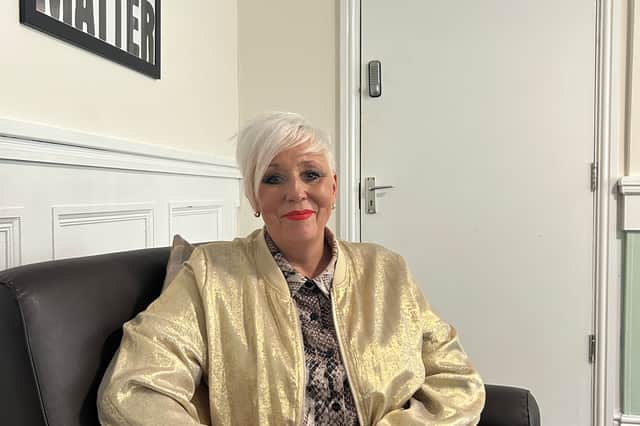

Charmian Owston had four days' notice to move from her home of 20 years in Scotland to Sheffield Women’s Aid, after being in an abusive relationship for 10 years.
Ms Owston met her perpetrator 17-years-ago online on a worldwide recovery forum when she was in recovery from alcoholism.
After years of being friends, things became romantic and he moved up to Scotland to live with her.
She said: “It wasn't until about a year and a half after I'd come to the refuge, I looked back and thought, oh my god, the very first day he moved up. He’d stamped his authority.
“He had a go at me in front of his friend, saying ‘why did you walk off and leave us on the beach?
“I’m like it's your best mate, it was, I was leaving you to spend time together.
“He was like, “we're together now, you abandoned me,” and I didn't see that.
"That's the nature of coercive control."
They were together for 10 years and married for five, but Ms Owston said: “I always found the relationship really difficult. There always seemed to be an issue.
“In the end, he was controlling what I was wearing, what I was eating, where I was going, who I was seeing. I ended up walking away from recovery. He became a higher power. He just controlled every single aspect of my life.
“He caused rows when I was going to bed, so I'd be sleep deprived. He got me to take credit cards out in my name that we didn't need.
“He had hidden cameras in the house. He was leaving weapons around the house.
“It was all just to terrify and unsettle me.
"I ended up relapsing after 13 years' recovery at the end of the relationship, and it saved my life, because he relapsed as well, and then he couldn't spin his plates anymore. He unravelled really, really quickly."
Her perpetrator was held down by six police officers and arrested after threatening to end his own life.
He ended up dying at 57-years-old, six weeks before Ms Owston was first due in court.
Before he passed she tried to keep her location secret, but found that he was tracking her, which led to her moving to Sheffield Women's Aid for 15 months.
She came to the refuge because it was the only one in the country that took pets, when her dogs were “the only thing that was keeping me going.”
“If I hadn’t had my dogs, and I couldn't have fled down here, I would have committed suicide to escape,” she said.
“I came here and my life changed. It was hard for a while. The trauma was absolutely horrific. I was on suicide watch for a year while I was in here.”
She said ‘power of change’, an eight-week course for survivors about healthy relationships and all the different types of abuse “revolutionised” her life in giving her answers and understanding.
Ms Owston also benefitted from trauma therapy while at the refuge, and went on to start women's only meetings for recovery in Sheffield.
She moved on to her own flat four years ago and got back into recovery three years after that.
She said: “Some of the biggest challenges that you face when you're in refuge, is having to retell your story over and over and over again to different agencies. It is really traumatising, it keeps you stuck, it stops you from healing."
Ms Owston explained that after moving out of the refuge, survivors are passed to another agency.
“We have to start all over again,” she said. “Whereas if it was the people in here, who’ve seen our growth and development, if they did the follow-on, it would be a much better progression.
“I didn't go back into recovery again for another three years after leaving here, so I was still really quite vulnerable. If I'd have still had the support from here, I think the story might be a little bit different."
She also wants to see the process of referrals to Sheffield Women’s Aid improve, explaining that they don't directly come through to the refuge.
“It goes back through the council housing department, that everybody else in Sheffield is using.
She said waiting for the council to send the referral on can take days.
“I want to know how many lives are lost in that process,” she said.
According to Refuge, on average one woman is killed by an abusive partner or ex every five days in England and Wales.
If you are at risk of domestic abuse, call 999 or find support within Sheffield Women's Aid.