
Sheffield council high-rise campaigner criticises policies on vulnerability and suicide
A Sheffield high-rise flats campaigner has called at a council meeting for urgent attention about vulnerable people housed in tower blocks and the number of suicides that take place.
Peter MacLoughlin told Sheffield City Council’s housing policy committee (January 29) that he has been living in a Netherthorpe tower block for 40 years.
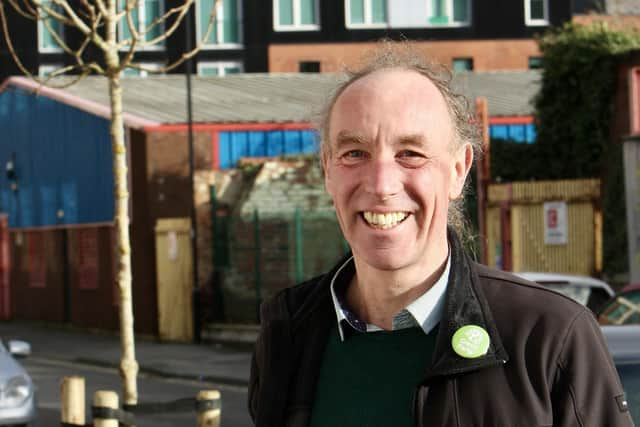

He said: “I think I have an understanding of what living in tower blocks is like and particularly about the amount of vulnerable people that are housed in these tower blocks at an increasingly rapid rate and I believe that is something that this committee needs to consider very seriously.
“I don’t think from what I’ve seen from my own eyes and ears that we’re doing a very good job at housing some of the most vulnerable in these tower blocks.
“This council needs to be mindful. I’ve uncovered nearly 767 people who have died nationally over the last 20 years in tower blocks.
“That is an horrendous number when you think of it, a waste of human life, and it needs urgent attention, both from local government and national government.
Prevention
“Questions need to be asked – why has it taken this council so long to produce a vulnerability policy in the first place?
“I’ve been raising vulnerable issues for over 30 years, so why has it taken this council all this time to now come with a vulnerability policy which has not actually been discussed at the citywide high-rise forum?
“Also last week there was a report submitted about suicide prevention. That I’ve been seeking to actually have some input about with, to share with you all the evidence I’ve got and the lessons that possibly this council and other councils should learn about the problems I’ve been highlighting.
“So I hope that when you do respond that you take the situation seriously because this needs some urgent attention.”
Committee chair Coun Douglas Johnson replied that the suicide prevention policy Mr MacLoughlin referred to was passed by the council’s strategy and resources committee the previous week. He said it is a big step forward.
Foundation
He said it is a high-level policy that does not go into the realm of housing or other services but will be the foundation of work right across the council. A new vulnerability policy being discussed at the meeting would overlap with that.
“I think it is helpful that you’ve brought this to all members’ attention today,” he said.
Mr MacLoughlin also asked how the council had reviewed its housing allocations policy to ensure that accommodation offered is suitable for vulnerable applicants’ needs, and alternative housing is offered to tenants who become vulnerable.
The response was that the allocations policy update being discussed by the committee “includes analysis of the impact on vulnerable people and an equality impact assessment”.
Mr MacLoughlin also asked when the council will make public its commissioned report by an independent chartered building surveyor into a risk assessment of all windows and safety catches in high-rise blocks.
He was told the question could not be answered within the time frame allowed. A response would be provided as soon as possible after the meeting.
Counselling
In response to a question on whether the council offer bereavement counselling to those neighbours that have been affected from high-rise falls either by accident or suicide, the council replied that is a health service function available via GPs.
Mr MacLoughlin questioned what action the council took when residents of the now-demolished Cliffe tower block in Norfolk Park asked in 2017 for better safety measures to windows after two deaths in 18 months.
He was told that a response would be provided as soon as possible after the meeting.
Councillors approved the vulnerability policy at the meeting.
A report to the committee said: “As a social landlord, our responsibility to customers extends beyond simply providing a safe and secure home in exchange for rent.
“We are committed to understanding our customers and using this insight to remove barriers and ensure our services are accessible to all. “Our customers have diverse needs, and many may experience vulnerability. By moving beyond a transactional approach to housing services, we can support customers in overcoming challenges, accessing the services they need, and achieving successful, sustainable tenancies.
Barrier
“Customer vulnerability must never be a barrier to tenancy sustainment.”
The policy recognises that vulnerability is not always a permanent state. Overarching factors affecting it include physical and mental well-being, significant life events, resilience to stress and change and the capability to perform actions or make decisions.
The policy says that one visit from a neighbourhood housing officer is insufficient for a vulnerable person and “engagement needs to be more often and more persistent”.
Other tenants need to know where to get help and support if they need it.
Coun Matt Dwyer said: “Someone got a letter from the council saying ‘we’re going to evict you’. Immediately we got in touch with staff and they reacted really well.
Unacceptable
“Getting that letter really stressed the resident who was vulnerable, so I’m really glad we’re going to be looking at our communications, also doing our work in community settings.”
Coun Fran Belbin said it is clear that the policy is not about “letting people get away with unacceptable behaviour because of vulnerability”, as many tenants believe.
She said the policy involves supporting people to change anti-social behaviour as well as dealing with it.
When life is difficult, Samaritans are here – day or night, 365 days a year. You can call them for free on 116 123, email them at [email protected], or visit samaritans.org to find your nearest branch.