
Holocaust survivor who fled Germany and found a home in Sheffield warns of 'extremism getting into politics'

“Antisemitism has increased rapidly in the past years, past months.”
A Holocaust survivor who found refuge in Sheffield in a journey that saw him avoid Nazi death camps fears the UK could become more divided than ever if people don’t learn to respect one another.
John Fiedslend spoke to The Star about his concerns after Nathaniel Menday - a newly-elected councillor for the Woodhouse ward - was suspended from Reform UK only five days after this month’s local elections, when his social media posts supporting dictatorships and speaking of a ‘subhuman underclass’ in the UK were exposed.
94-year-old John said he is “concerned about the extremism getting into our politics” after noticing a rise in antisemitism and discrimination across the country.
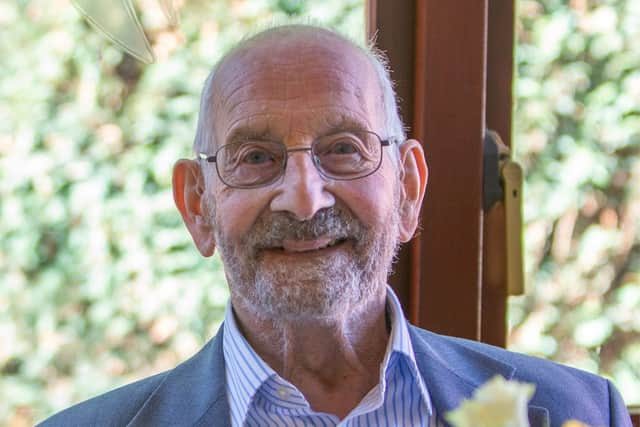

“I think there always has been, everywhere, for some reason a tinge of antisemitism,” he told The Star.
“But there’s been a big change, a big change, in the past few years.
“Antisemitism has increased rapidly in the past years, past months.”
Before the election, Coun Menday said that he was a fan of ‘risky humour’ when challenged by The Times over a number of his social media posts.
However, John says that these jokes can lead to something more serious.
He continued: “What they actually do is they say something terrible and then they say it wasn’t meant to be taken like that, they apologise, but you can’t un-say what you’ve said. You cannot un-say it.”
While the conversation was prompted by Coun Menday’s suspension, John did say he “didn’t want to get into a flogging match on camera,” adding: “If I got involved in this at all, I would first of all want to speak to him face to face.”
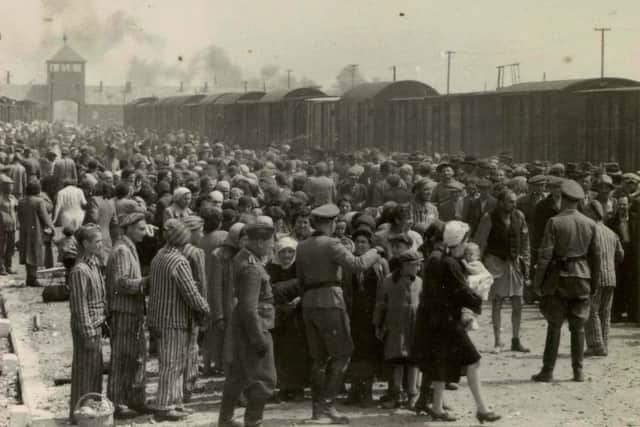
John was born in Czechia - formerly Czechoslovakia - in 1931, however moved to Dresden in Germany at a young age.
There, his family faced persecution, and in one instance a doctor refused to treat John after a fall, saying: “I don’t stitch Jews.”
Adolf Hitler himself visited Dresden while they were living there, and while John’s family remained indoors during the event he has written about hearing the dictator’s amplified voice insulting Jewish people.
John’s parents made the desperate decision to send the young boy and his brother on the Kindertransport to Britain alongside hundreds of other children in the hope of saving the youngsters’ lives.
Tragically, his parents were later deported to a death camp in Poland, believed to be Auschwitz.
John lost 10 relatives in total to the Nazi’s extermination efforts.
Both he and his brother were placed with a foster family in Sheffield, with John describing growing up in a loving environment where he learnt to speak English and received a good education, and he says the Steel City holds “a great place in my heart.”
“I found a wonderful people, I didn’t get any kind of opposition,” he said.
“The welcome was unreservedly great and Sheffield people were great.”
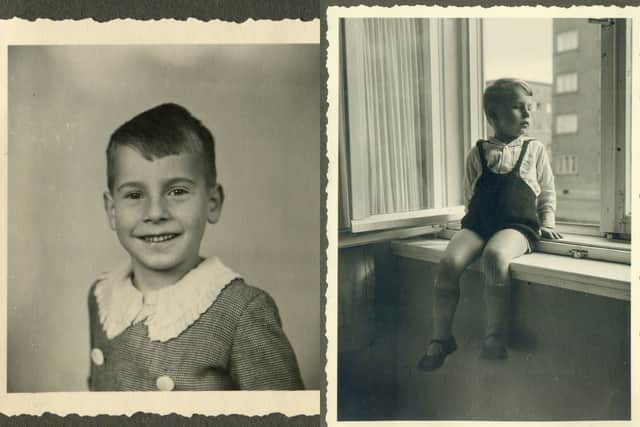
He admits the move wasn’t easy, as he faced challenges over “little things” like the food, or even not being sure which blanket to use having only ever had continental quilts.
However, one experience in which he was helped by firefighters remains bright in his mind all these decades later.
He added: “I lived in Handsworth and to get to school we had to go through a little wood. I was with a group of other lads and one day we were late and we had to climb over a fence.
“Everybody else climbed over the fence but I was not tall enough, so I tried to go through the fence and I got my head stuck and Sheffield Fire Brigade had to be called.
“Up to then, from my experience, anybody in uniform was my enemy, and here was Sheffield Fire Brigade in their uniform and they were so friendly, so caring.
“They were just full of fun and laughter - it was a great experience.
“I would never have had that experience in most places, but I certainly did in England, I certainly did in Sheffield.”
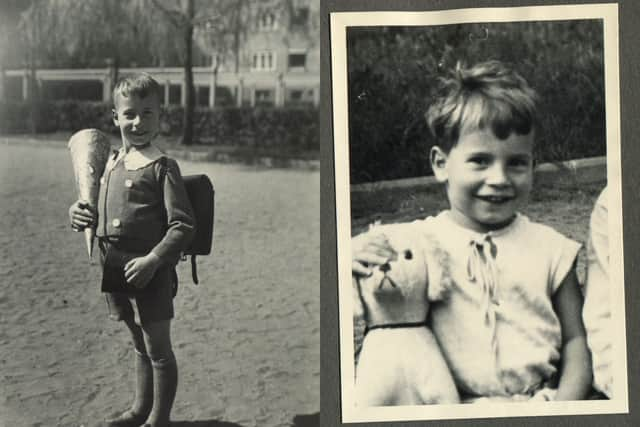
In 1946, after the war ended, John received a goodbye letter along with three family photo albums from his mother and father thanks to the Red Cross.
To this day he cherishes these photos.
He has spent much of his adult life teaching about the horrors of the Holocaust that led to his parent’s demise, while his brother Arthur went on to become a GP in Gleadless.
Arthur remained in the region for the rest of his life, with John joking that he “developed a good Sheffield accent.”
However, John - who went on to serve as an Anglican vicar and now lives in a retirement village in Watford - fears that the UK is heading down a dangerous path despite our country’s proud history of fighting persecution.
“What’s happened in this country, and I don’t quite know what it is, [but] free speech has been abused,” he continued.
“Free speech actually in my mind is not an absolute right, free speech is a privilege.
“Free speech is a very delicate flower and it can easily be abused and it is being abused by a number of different people.”
He went on to explain that views have been “personalised” and that rather than attacking beliefs, many now simply attack people.
Compared to Nazi Germany, John says that this is accelerated by mass media and that now extremist beliefs are “carried out impersonally and that is much more difficult to deal with.”
“To move forward, I think to some extent first of all we have to move backwards,” he said.
“We have to move to a place of respect, first of all, for one another.
“I think it’s partly the international situation, but I think it’s partly the media.
“We don’t talk to one another, we talk to the camera - we don’t relate to people with whom we disagree.
“We don’t relate to one another anymore - and that’s not just in the antisemitic, but in so many different areas.
“We don’t talk to one another. We don’t listen to one another. We just attack one another.”